Tyler and I just published a list of the recipients of the New Aesthetics grants: https://t.co/aLhVgYXrbi.
Thank you very much to all who applied. There were far more applications than we expected. We funded 28 grantees and are excited to see what they create.
My reflections on the whole thing:
• Though there are clearly selection dynamics afoot, figuring out some route beyond the current aesthetic moment seems to be of wider interest in the art community than I would have guessed. Many applicants described their dissatisfaction with the status quo, some in strong terms. We had to close applications after a few weeks because there were so many.
• It's too early to call it, but it seems that both beauty as an unapologetic goal (contra much that is in modernist and contemporary approaches), and ways to channel pre-modern styles into something new for the present era, are of growing interest.
• The awards made me reflect on the perhaps obvious issue of how hard it must be for an artist to persistently do something new: schools, galleries, buyers, etc., all have structurally embedded preferences as well. These individual awards made me wonder what form supporting new clusters could take.
• Architecture seems to me like the discipline most ripe for new ideas. One correspondent observed: "American architects are somewhat constrained by the association with the academy, in addition to the well known regulation issues. There is a tendency to overthink things so that the designs are formally interesting to someone deep in the conversation, but lacking poetry and magic. There are more firms in Europe, South America and beyond that “just do things” (especially in places where it is easier to build)." This was evident in the submissions.
• AI seems to be making people rethink things in a quite fundamental way, just as urbanization/industrialization/popularization of photography did at the end of the 19th century. For some that will mean interesting new forms of AI-augmented art, but the effects of the rethinking will likely be wider.
• Arts funding is clearly as precarious and scarce as ever. That's unfortunate, but it probably also means that individual actors can have meaningful impact, and I encourage others to get involved if interested.
• There's a lot to know that is not written down, and I'm very grateful to those who have helped and advised me along the way.
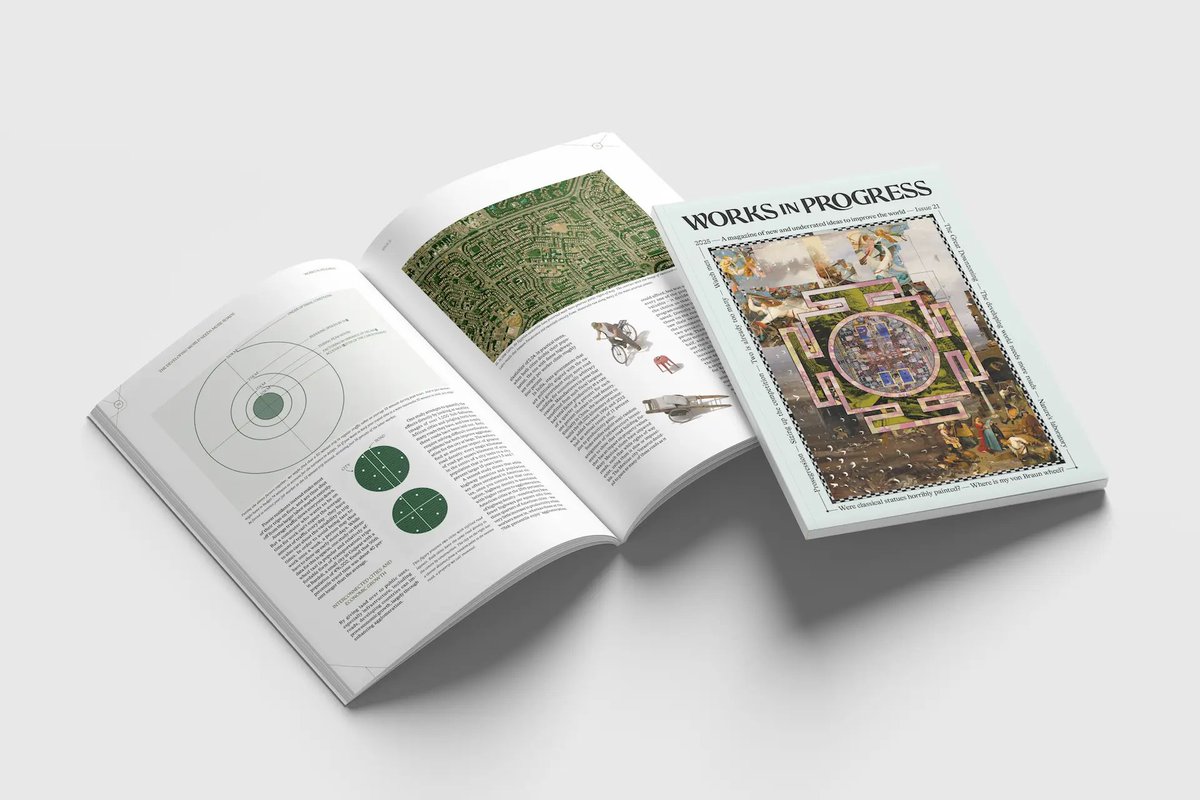
I’m excited to share that I’ve joined @WorksInProgMag as an editor, where I’ll be focusing on AI and European progress.
At Works in Progress, I’ll focus on a topic that is both important and underrated: how Europe should grapple with the changes brought by artificial intelligence.
Europe is in a challenging position. But I also believe it is crucial that Europe remains able to influence how the coming years and decades play out. It is one of the world's most liberal regions, and has been central for the world's moral progress.
Right now, the number of people working on European AI policy is really low. Many things need to happen for the continent to be adequately equipped for what's to come: data center construction, ensuring frontier AI adoption in governments, better risk-tracking across European capitals, and a broader policy agenda that ensures Europe can capture more of AI’s surplus.
I’ve recently started writing up my thoughts on AI in Europe at https://t.co/TWTYZflEOm, with a much larger piece coming out soon.
Works in Progress is an amazing home for this type of work. It has published many canonical pieces on big challenges of our time, economic stagnation first among them. But it has also covered lead elimination, far-UVC for pandemic prevention, organ donation, and many other important ideas. If one wants to paint a picture of how Europe can succeed in the age of AI, Works in Progress is the ideal place to do so. (If you haven't subscribed yet, do it; you'll be in great company.)
Joining Works in Progress also means leaving the US, and the project I’ve spent the past three years working on: the Nucleic Acid Observatory, now SecureBio Detection. At MIT and SecureBio, we built a pathogen early warning system that I’m incredibly proud of. The people I was lucky to work with in Cambridge were among the smartest, most mission-driven, and most focused people I’ve ever spent time with. The impact SecureBio is having on biosecurity is immense, and we are all safer for it.
I’m proud to be joining Works in Progress as the next step in my career, and I’m looking forward to working with such talented colleagues during such a turbulent, fast-moving time.
China is winning the drug discovery race. There's no better example of this than multiple myeloma.
https://t.co/YaJSUquRoa
It's one of the most painful cancers, destroying bone from within. For decades, patients endured cycles of brutal treatment and relapse. Then came Carvytki: a one-time CAR-T infusion that appears to cure some patients who have failed multiple treatments.
Its development story, beginning in 2016, was an early signal of a shift now making headlines: the US is losing biotech dominance to China. Though the foundational science was largely American, a nimble Chinese company moved faster with a better molecular engineering idea.
Unless the US addresses clinical-trial bottlenecks slowing early in-human data, more breakthroughs will be developed elsewhere, weakening the ecosystem American biopharma depends on.
Some key points from my article for @WorksInProgMag, with my friend Amol Punjabi, of @EvidenceOpen:
1) Multiple myeloma is not only extremely painful in and of itself, but also one of the most brutal cancers to treat. As first-line therapy, patients endure four drugs simultaneously, then a stem cell transplant, followed by continuous maintenance therapy. And most still relapse, with each treatment round carrying worse chances.
2) A drug called Carvykti, approved in 2022, is changing the treatment landscape. Carvytki acts as a single, one-time infusion. It's a CAR-T therapy, part of a new wave of transformative immunotherapies: made from the patient's own immune cells and reprogrammed to hunt cancer. In patients who had already failed 4+ other treatments, 33% were still disease-free after 5 years. The results as earlier line therapy look even more promising.
3) Most of the foundational science was American. Decades of CAR-T research, and in 2013 the NCI showed BCMA-targeted CAR-T cells could kill myeloma in the lab.
4) But the drug that ultimately changed myeloma, Carvytki, originates from China. Carvytki beats Abecma (the American CAR-T for myeloma) by a wide margin: 36 months of progression free survival in heavily pre-treated patients versus Abecma's 9 months.
5) In 2016, Legend Biotech was just beginning clinical trials. This was the same year the American team was publishing their first-in-human results. Legend started later, but moved faster. Clever engineering and China's ability to get drugs into humans quickly gave them the edge. Large American biopharma J&J ended up striking a deal with Legend and developing the therapy.
6) Never underestimate the llama: US-developed Abecma used mouse antibody fragments to target BCMA. Chinese startup Legend used llama nanobodies instead. These are smaller, more stable and bind more cleanly to BCMA. The usage of llama as opposed to mice antibodies is what is believed to lead to Carvytki's superior efficacy.
7) In retrospect, Carvytki should have been an early warning. China is winning the drug discovery race through deliberate policy. Their first-in-human clinical trials can launch in 6 months vs 18+ months in the US, letting them iterate faster between lab and clinic. The @nytimes recently reported that ~50 percent of major drug deals this year involve Chinese-origin drugs, up from nearly zero a decade ago.
8) The US still leads in late-stage development, as shown, but the pipeline feeding it is increasingly Chinese. The worry is that this will mirror what happened in solar, batteries, and EVs, where early-stage dominance eventually became control of the entire chain.
9) A proposal to streamline early stage trial regulatory requirements to keep the US competitive has made it into the President's 2027 budget for the FDA. But Congress has to act to make it a reality.
For millions of contractors, a paycheck travels through exchanges they didn't choose, at rates they didn't set. Every stop costs something.
That ends today.
Introducing the Deel stablecoin wallet — hold earnings in DLUSD, be eligible to earn rewards, spend anywhere. All inside the Deel mobile app.
Get paid. Hold. Earn. Spend.
Launching today in Latin America, starting with early access in Argentina — APAC, MENA, and Africa to follow.
Thanks @Stablecoin, @privy_io, @tempo, @Morpho and @SentoraHQ for making this possible!
Sad to hear that Ada's Technical Books in Seattle is closing this week -- it's a wonderful bookstore. I always found something obscure but interesting when I visited.
https://t.co/T4FmebqXyw
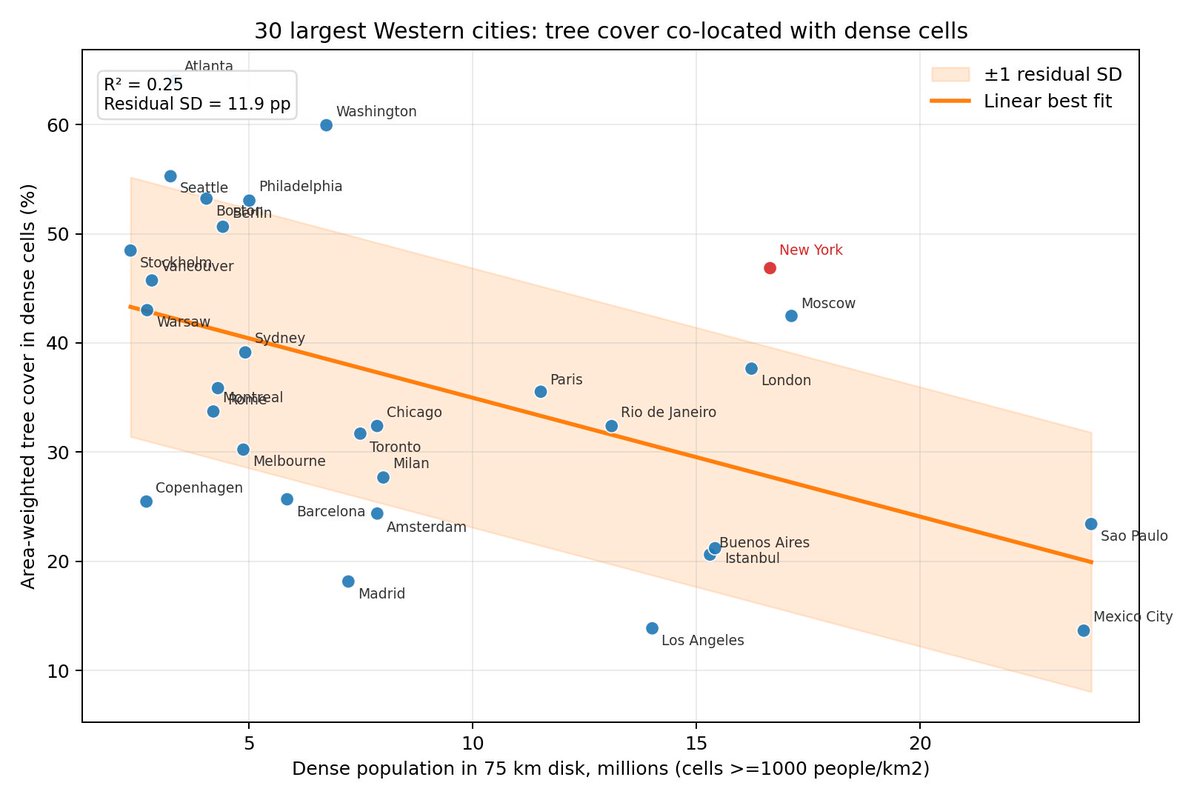
Every time I fly to New York, I'm struck by how many trees there are in the densely-populated areas around the city. (Coming from the West Coast, one arrives over the Garden State, and the suitability of the sobriquet is quite apparent from the air.) It feels like this degree of tree cover in highly populated areas is atypical (the environs of places like Paris, London, Los Angeles, Melbourne, Tokyo, etc., look very different), so I asked the LLM to investigate.
It found GHSL 2020 population and ESA WorldCover 2021 10m land-cover data, and concluded that New York is in fact quite unusual.
As far as I can tell, it's because of some combination of:
* A very favorable climate. (Trees grow quickly without irrigation.)
* Marginal farmland. (Readily outcompeted by the Midwest in the 19th century.)
* Together yielding reforestation before the advent of suburbs.
* And a preference for development patterns that include trees. (Japan's climate is very hospitable, but one sees far fewer trees in the populated areas around the major cities -- forest and habitation are more disjoint.)
I’ve been struck by this phenomenon in much of the discussion around Hormuz. Who exactly should one listen to for systems as complex and reflexive as energy? (Evidently not IEA.) Is it even possible to make meaningful predictions for out-of-distribution shocks like strait closure given all of the second-order effects that one has to model? Are all forecasts fatally conceited?
And again, and again, and again, the market proves to be more flexible and adaptable than the engineers, extrapolating, with their calculators expect. When prices change, behaviour changes. Believe in substitution, in elasticity, in human ingenuity, that is, in the market, and you will get a closer approximation than all doom-mongers. For this of course, a market must exist (e.g., does not apply to the fertility collapse).
Back from a German conference. Stayed at a not-cheap hotel (fittingly called "Bad Hotel"): hand towels instead of body towels, no air-conditioning in 30+ degree weather, a printed request that I skip room cleaning. I checked last night the instant electricity mix: most electricity produced was from coal.
Germany has made the choice to be poor. It could have cheap, safe, abundant energy from nuclear. Instead it has chosen expensive, high carbon energy.
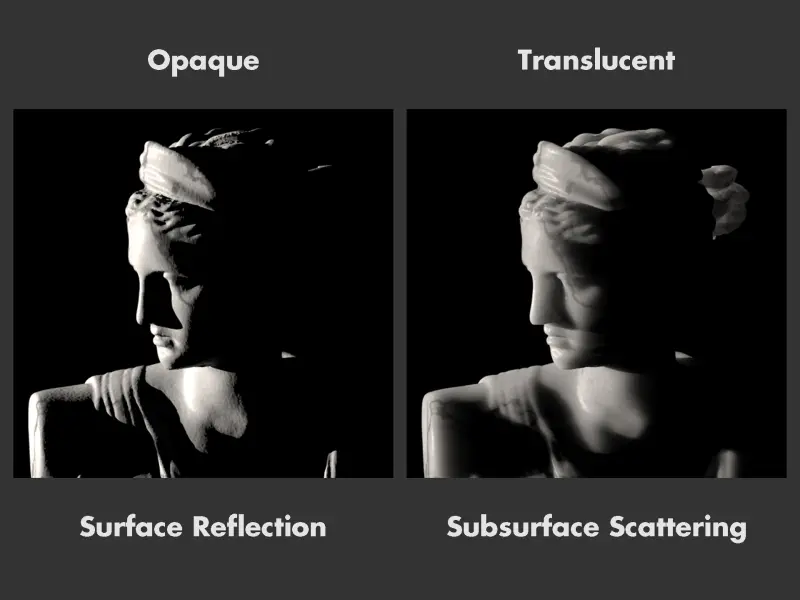
Marble has a property called 'subsurface scattering', meaning that sunlight not only illumines its surface, but a millimetre or so of its depth. This yields an effect of softness and luminosity. In the few cities in which architectural marble is common, the aggregate effect of this is astonishing. This is true above all in Washington DC.
I discuss this and other impressions in my travel diary from Washington DC: https://t.co/DxbiqicAPz
I was waiting for the chance to write an essay on the topic—and I will soon, because I can't wait to share some exciting details with you all—but now seems like as good a time as any to announce that I am the recipient of a New Aesthetics grant award, thanks to the generosity of @patrickc (who will be speaking with me about New Aesthetics and Life at the ZOE Conference by @ClunyInstitute in Napa this summer) and @tylercowen.
In the age of Artificial Intelligence—and Social Contagion—the kind of disarming beauty that breaks through, surprises, and dislocates will be required to express the magnificence of our humanity in the 21st century.
I hope to see you this summer: https://t.co/XJvtMp4eMm
Cool release from @p0. I think this use-case (agents paying content creators for access via @mpp) will be very big. Micropayment walls haven't worked (as Clay Shirky anticipated many years ago) because of human cognitive overhead, but agents can make arbitrarily granular determinations without decision fatigue.
Owing to a variety of historical reasons (including, but not only, protectionist lobbying), the U.S. is the only G7 country where regulated payments companies can’t directly access government-run settlement rails. Yesterday's EO from the White House calls for that to change.
This is a very good idea. If regulated payments companies can integrate directly with the Fed, there will be less unnecessary coupling between "fractional reserve banking/leverage/maturity transformation" and "quotidian payments activity", thereby reducing overall systemic risk in the financial system. This would also establish the preconditions for more competition, more innovation, and lower fees.
https://t.co/v2MxjfHdxe
New blog post: The third wave of American philanthropy
Hundreds of billions of dollars in new philanthropic capital will soon become liquid. The OpenAI Foundation holds 26% of OpenAI, worth about $220B at today’s valuation. Anthropic’s seven co-founders have pledged to give away 80% of their wealth and have instituted the most aggressive donor matching program for employees in tech history.
How much does this all add up to? And how meaningful is that in the context of philanthropy today?
I was doing some simple napkin math to wrap my head around the scale of what’s coming, and radicalized myself in the process. I had dramatically underappreciated the scale of the philanthropic capital that’s about to become available and the corresponding gap in talent and organizations that will be needed to make the most of it.
This piece aims to directionally sketch the scale of what’s coming, the gap in operational capacity needed to absorb it, and what we can do to fill it.
(Link to full post in reply)
Excited for Paradigm to co-lead this $110M investment in SendCutSend alongside @andrew__reed, @patrickc, and @collision.
24h turnaround manufacturing that your favorite robot, defense, space, and car companies all use.
Grateful that @jimbelosic allowed us all to get involved.