A month ago, I found myself in the unexpected position of founding an AI startup. Today, the Inference Cooperative adopted its first real governance charter. We can't make AI good, but we can own our own choices, and make them together. Want to join? https://t.co/V4jGqnI0q9
A month ago, I found myself in the unexpected position of founding an AI startup. Today, the Inference Cooperative adopted its first real governance charter. We can't make AI good, but we can own our own choices, and make them together. Want to join? https://t.co/V4jGqnI0q9
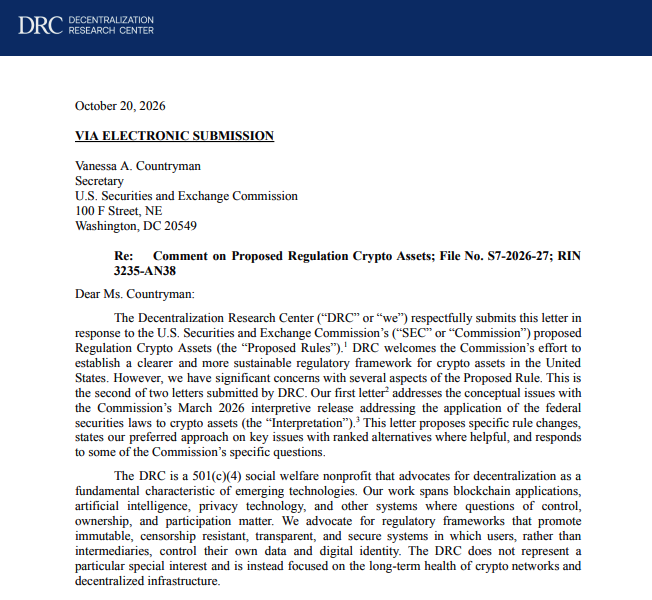
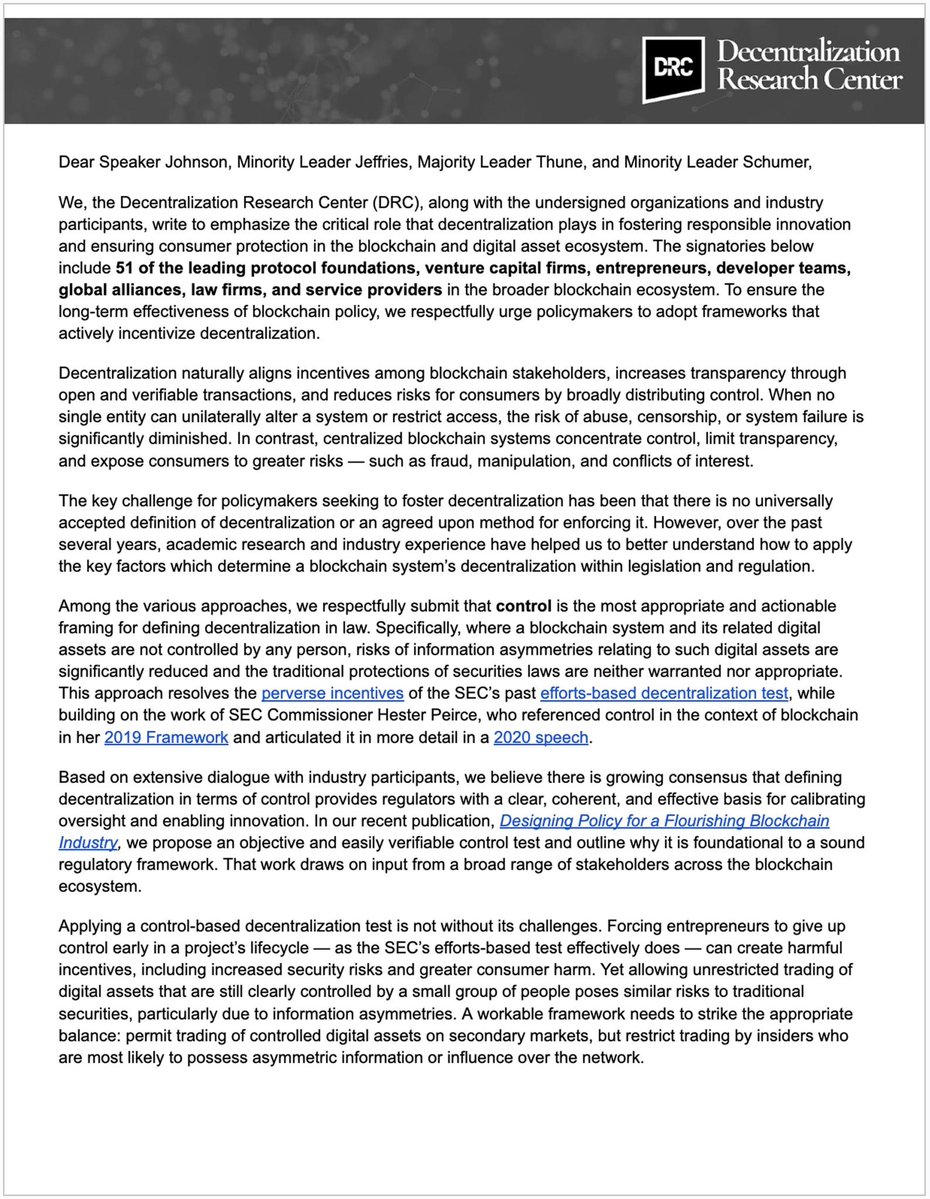
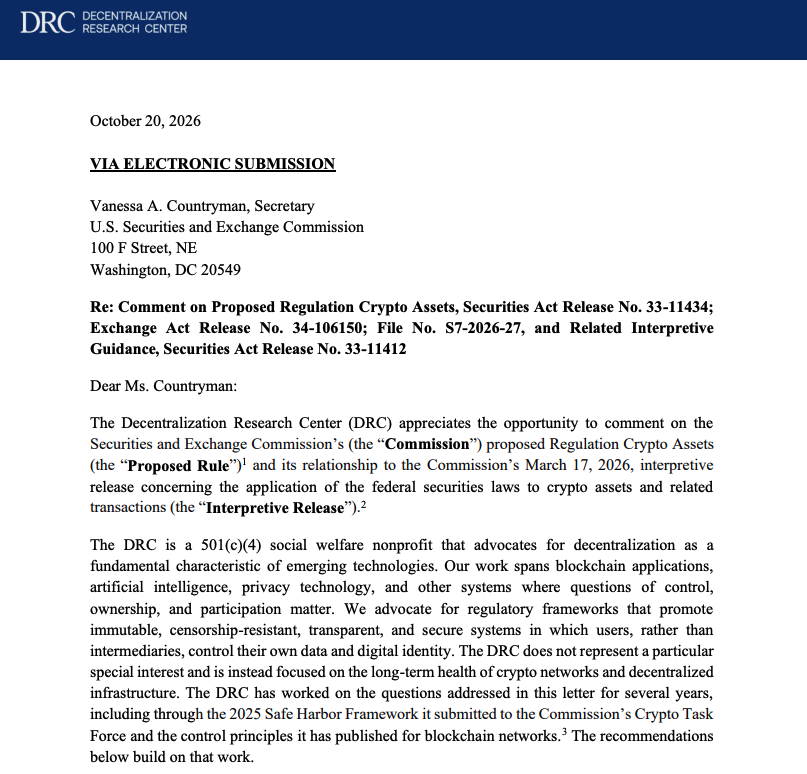
1/ The Decentralization Research Center has submitted two comment letters to the @SECGov addressing its March 2026 interpretive guidance on crypto assets and proposed Regulation Crypto Assets.
Our first letter examines the interpretation and its implications for the proposed rules. Our second recommends specific regulatory changes.
External verification of AI models is vital if the industry is to be trusted. In our report, @KyleBligen and I describe how outsiders can scrutinize advanced AI without holding the model or its data. The accord should let auditors choose what they test.
Six AI companies signed a White House accord that promises outside audits. Each still picks its own auditor and decides what that auditor gets to see.
Our head of research @samuelvancelaw writes for @CoinDesk on what would make those audits count:
https://t.co/0koWjm7LvL
Concentration in AI is not inevitable.
Over the past year, @TheDRC_ set out to understand what credible alternatives are actually being built across the AI stack. What we found matters for policymakers.
Policy should reflect the full range of what is technically possible, not assume that today’s market structure is the only one available to us.
Our new report maps those alternatives and makes the case for ensuring that decentralization is part of the conversation about the future of AI.
Proud to have co-authored this with @SamuelVanceLaw, and deeply grateful to the developers, researchers, academics, and organizations around the world who contributed their time, expertise, and perspectives to this work.
Much more to come.
A huge thank you to everyone involved in this project. It’s been a great pleasure working with you over the last year. Alternatives to concentrated AI development exist. This report will walk you through them.
1/ Today, the Decentralization Research Center published "Alternatives to Concentrated AI: A Layer-by-Layer Map of What Is Being Built," authored by our head of research, @samuelvancelaw, and our executive director, @KyleBligen.
Over the past year, we talked to people building AI at frontier labs, universities, startups, and open-source nonprofits on five continents.
APPLY NOW!! The DRC is launching our first ever Decentralization Research Grant 🚀
3 grants of $5,000 each for teams researching decentralized tech, governance & policy recommendations.
Full details ⬇️
"Leveraging Blockchain in a New Era of Antitrust," our new comment out in @Stanford_JBLP in collaboration with Flashbots.
@0xYager, @samuelvancelaw, @fiiiu_, @c_spelliscy
A big thanks to @steve_s_nam and the whole team at Stanford.
https://t.co/D5x7bnFmUF
Decentralized social media seeks to solve many of the problems inherent in traditional social media. But what if it's doubling down on some of social media's worst practices? @samuelvancelaw takes a look at how status operates online, and how social media of all kinds can exacerbate its worst tendencies. Link in comments 👇
As the UN opens the 80th General Assembly, Sarah Nicole, @samuelvancelaw, and Vidisha Mishra examine how data cooperatives and DPI can embed transparency, accountability, and data agency as foundational principles rather than regulatory afterthoughts. @techpolicypress
This week in New York, the @TheDRC_, along with seven other organizations, co-led the event "Scalable Alternative Governance and Business Models for a Fair Data Economy," an event fundamentally aligned with the DRC's mission to advocate for decentralization at both the technological and policy level. The session brought together global policymakers, civil society leaders, academics, funders, and technology builders to explore how people-centered governance models can transform the digital economy.
We were proud to be an official part of Digital@UNGA with the @ITU and @UNDP, where we co-hosted this dialogue with @aaptiinstitute, @Data2X, Data Privacy Brasil, @glob_solutions, @Data4SDGs, @pro_jectliberty Institute — with thanks to 1014 for the venue 🏛️.
Grateful to our distinguished speakers, including Ambassador Philip Thigo, MBS (Office of the President of Kenya), Francesco Stabilito (UN ODET), Gayan Peiriss (UNDP),Li Z.. (UN B Tech), Doug O'Brien (NCBA CLUSA International), Astha Kapoor (Aapti Institute), and Stefaan Verhulst, PhD (The GovLab).
Photos by Matthew Gilbertson
@helena__rong and @bah_eth join us on the @TheDRC_ blog with their insights from three of their most recent studies, breaking down the challenges of working with — and maintaining oversight of — decentralized AI agents.
https://t.co/MPKa0rfjel
Today, we are thrilled to be launching the DRC Blog, and we start off with a piece by @kelsiemvn from behind the scenes of the world’s largest hack. If you have an opinion or insight you would like to share on the blog, reach out to @samuelvancelaw.
https://t.co/SEai1jZQHu
We are thrilled to announce the release of our report, "How Can Data Cooperatives Help Build a Fair Data Economy? Laying the Groundwork for a Scalable Alternative to the Centralized Digital Economy" in collaboration with @pro_jectliberty. This report, including representative case studies, charts the path that cooperatives can offer for a more equitable digital future.
https://t.co/cQcMZFbfbG
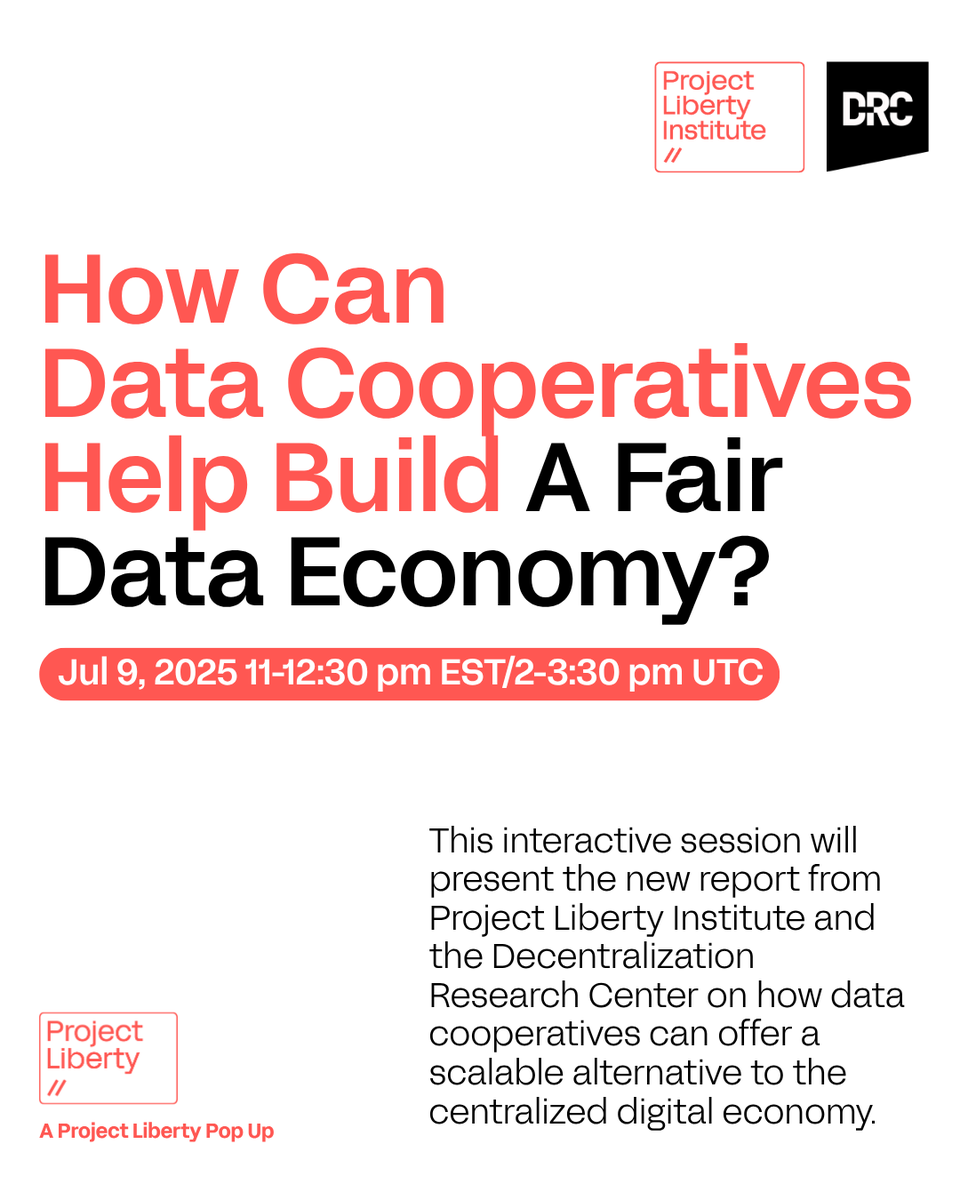
Join us for the launch of "How Can Data Cooperatives Help Build a Fair Data Economy? – Laying the Groundwork for a Scalable Alternative to the Centralized Digital Economy," the final report developed in collaboration with the @TheDRC_. RSVP here: https://t.co/IZg8suyT3o
New report from our co-founder @dao_officer:
“Decentralizing AI: Towards a More Equitable, Safe, and Transparent Future”
AI is inarguably going to reshape society, from the economy and economic beneficiaries, to governance of digital domains, to knowledge creation and accessibility — who controls it, benefits from it, and how, matters.
We make the case for decentralizing AI infrastructure, building on insights from @DCGco’s new polling and inspired by the impactful work from DRC partners such as @NEARFoundation and their work on @NEARProtocol.
🔗https://t.co/EPVcAJkmS9
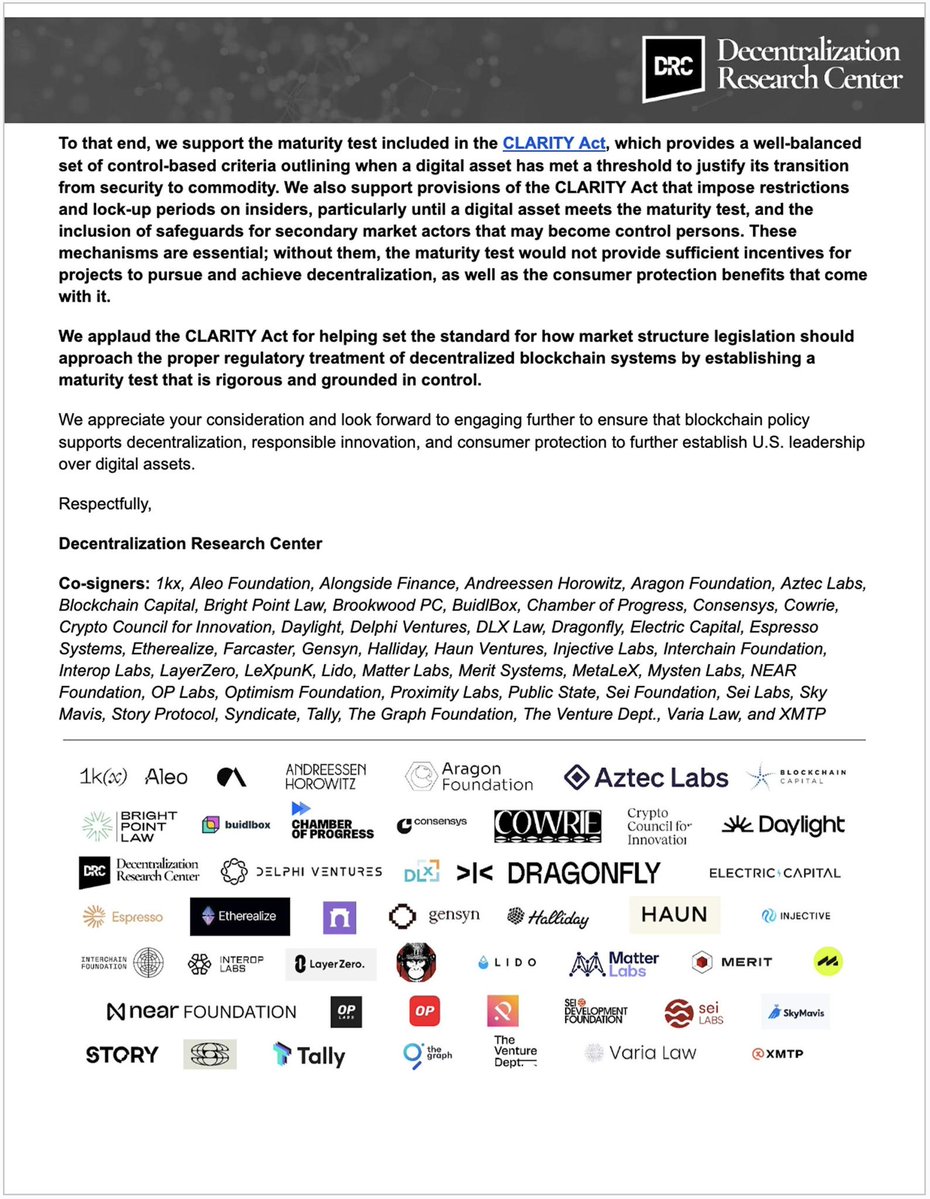
Thanks to @RepFrenchHill, @CongressmanGT, @RepBryanSteil & @RepDustyJohnson and their staff for advancing a regulatory framework for digital assets in the United States. The release of the market structure discussion draft marks an important milestone, and we commend their work to bring clarity and balance to this novel and evolving policy space!
We reviewed the discussion draft alongside a community of aligned teams, developers, operators, and lawyers, and we aggregated a list of constructive issues and recommendations to help strengthen and clarify elements of the discussion draft ahead of formal introduction and any potential markup. We submitted these comments to staff on May 9th.
Thanks to everyone who contributed and particularly to @SH_Brennan for helping to lead the process. For the full list of recommendations, see below.
We’re particularly encouraged to see several control-based decentralization principles, similar to those from our Designing Policy for a Flourishing Blockchain Industry report, reflected in the draft. And to see the discussion draft incentivizes decentralization (aka network maturity), which will be critical in enabling a flourishing ecosystem of digital infrastructure, applications, and businesses that provide significant autonomy and economic opportunity to users.
Please reach out to us if you have any feedback on our recommendations or want to contribute to our work in future!