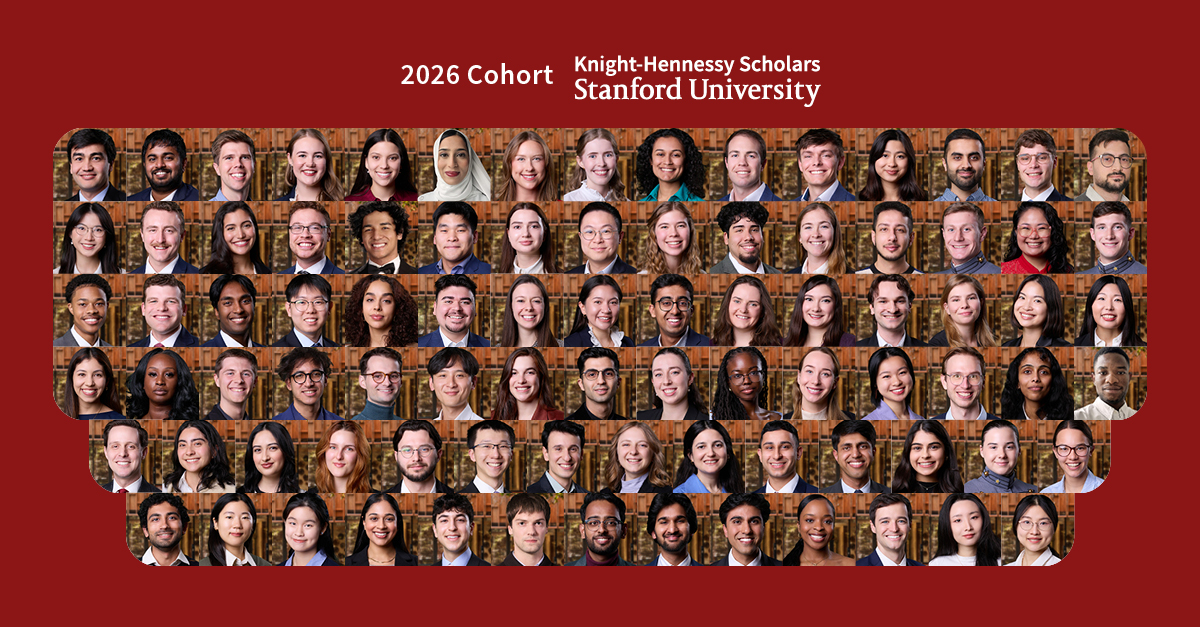
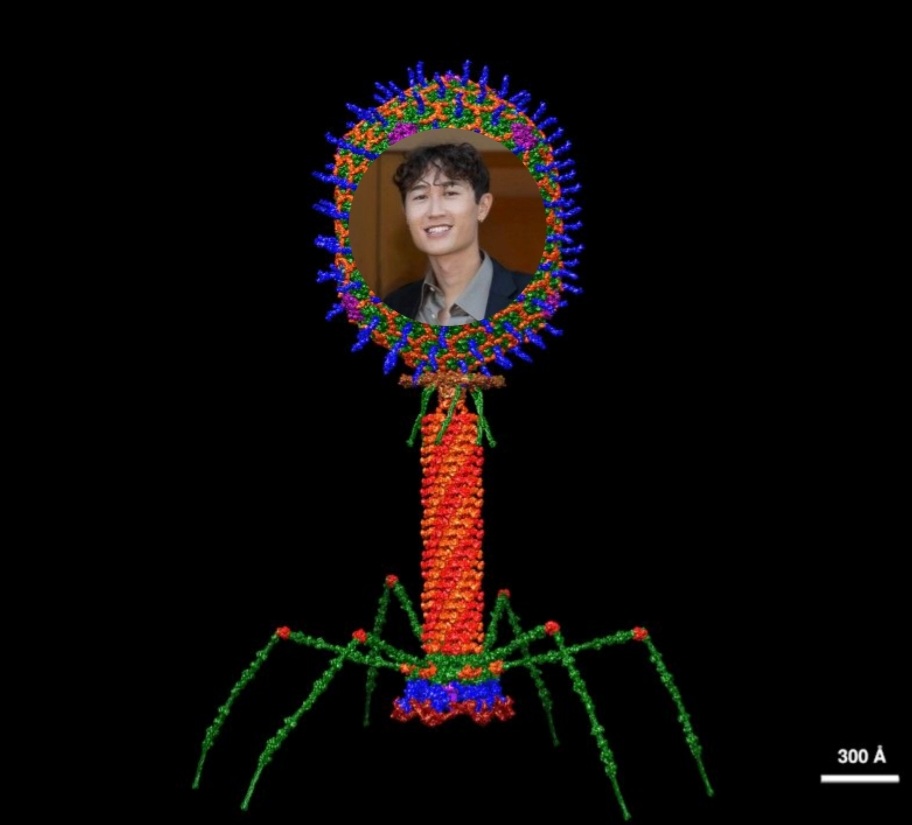
Meet the 2026 cohort of KH scholars! These 87 new scholars make up the most global Knight-Hennessy Scholars cohort to date, and will pursue degrees in 45 graduate programs across all seven graduate schools at @Stanford: https://t.co/Ksw21DOnnw (1/2)
AlphaFold-based models like Boltz-2 and BioEmu train on atomic conformational structures in order to predict protein dynamics. But is it possible to train these models directly on cryo-EM map ensembles, harnessing conformational data that is typically not deposited in the PDB?
Introducing CryoSampler: a new approach for fine-tuning Boltz-2 with raw supervision on cryo-EM map ensembles.
1/6🧵
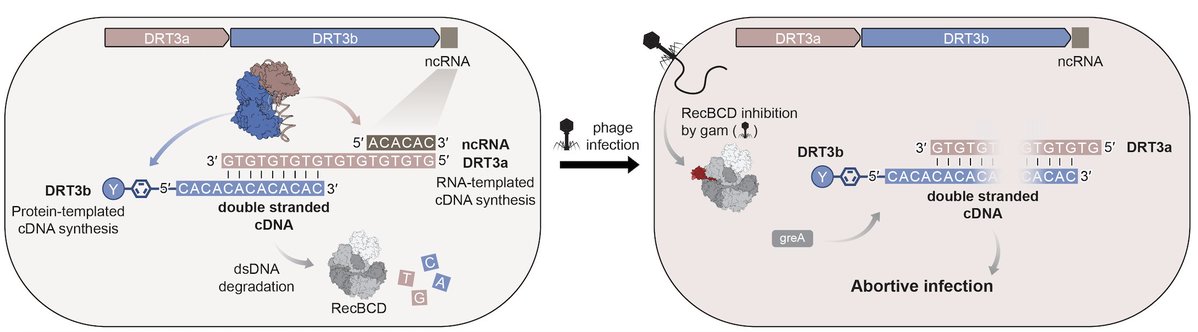
1/9 New preprint from the Sternberg Lab in collaboration with the Nishimasu Lab! We uncover how the DRT3 antiphage immune system pairs two reverse transcriptases, one RNA-templated and one protein-templated, to build a double-stranded DNA effector. https://t.co/KvouqrCWDW
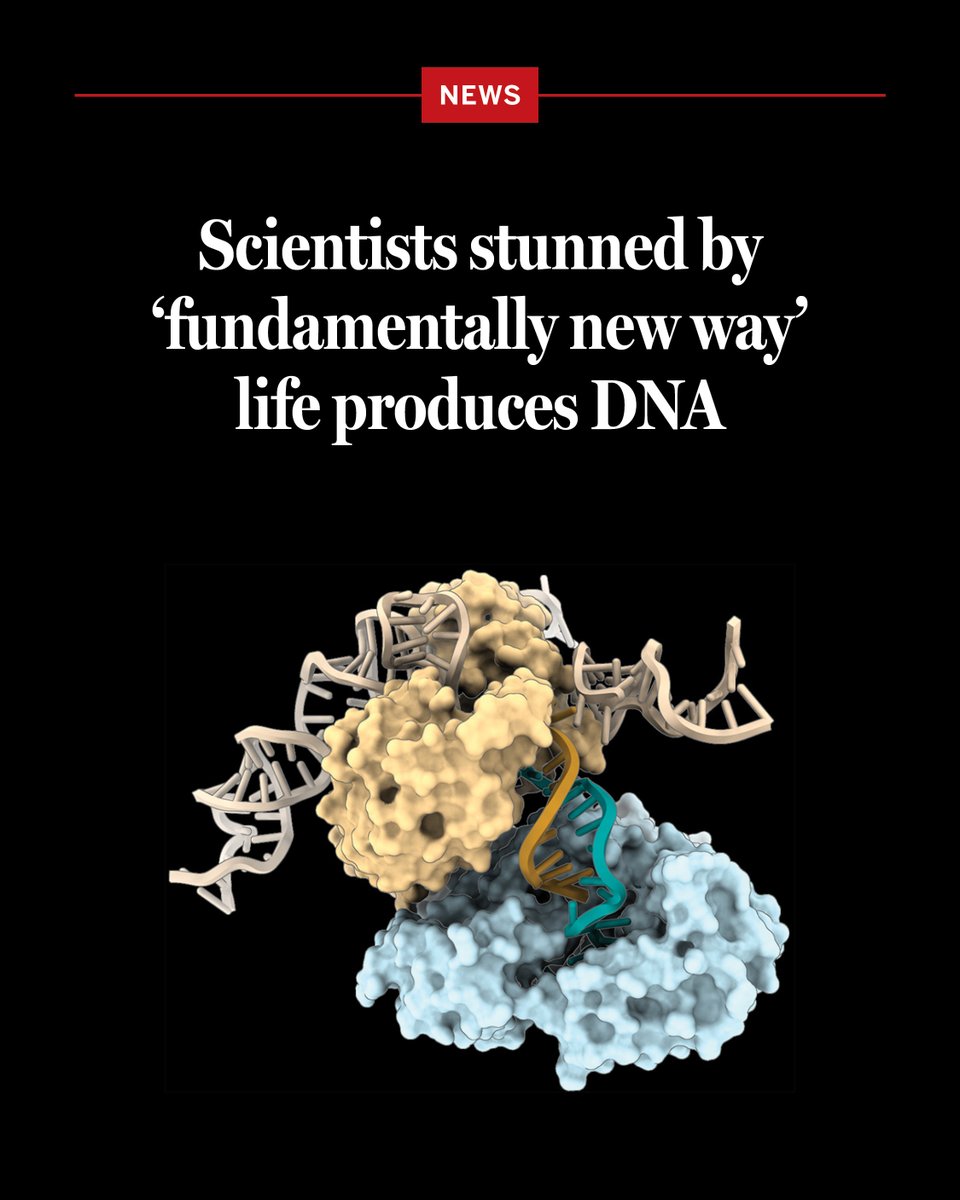
For decades, biology textbooks have enshrined a simple rule: DNA is made by copying a template. After one enzyme unzips a DNA double helix into separate strands, another called a polymerase builds a complementary sequence, base by base, for each strand. Presto: two copies of the original DNA.
But new research into how bacteria defend themselves from viruses now shows this synthesis rule isn’t absolute.
Now, a team describes a bacterial enzyme that synthesizes DNA without a nucleic acid template, using its own structure as a guide.
Learn more: https://t.co/TeUWvyO0OD @NewsfromScience
For decades, biology textbooks have enshrined a simple rule: DNA is made by copying a template. After one enzyme unzips a DNA double helix into separate strands, another called a polymerase builds a complementary sequence, base by base, for each strand. Presto: two copies of the original DNA.
But new research into how bacteria defend themselves from viruses now shows this synthesis rule isn’t absolute.
Now, a team describes a bacterial enzyme that synthesizes DNA without a nucleic acid template, using its own structure as a guide.
Learn more: https://t.co/bpVgr0KMdR
Pleased to announce that CellVoyager is published @naturemethods!
CellVoyager is a scRNA-seq AI agent that autonomously generates hypotheses and tests them in a live analysis notebook, where users can guide the discovery process.
Demo: https://t.co/J7M7j15xih
What's new 🧵⤵️
Evo 2 is out today! Check out the new 20b and Garyk's thread! Excited by the potential of genome language models for enhancing and expanding through design our understanding of biological sequence space
🧫 🧪 We're so excited to share our new preprint, where we systematically tackle the wealth of structural and functional diversity across antiviral STAND NTPases in bacteria.
Inspired by 2025 Stanford #RNA 3D folding @kaggle challenge outcome, we’ve collected cryo-EM of new-to-Nature RNA folds, RNA complexes with small molecules and proteins, and assemblies up to 6000 nts - and launched PART 2! Deadline: March 19, 2026. https://t.co/eHQ673sFm7
The beauty of symmetric, homo-oligomeric biomolecular complexes cannot be denied— nature builds these from RNA! Here’s to the years ahead, as the community uncovers what these assemblies can teach us about RNA biophyics and function, and how they may inspire future biotechnology.
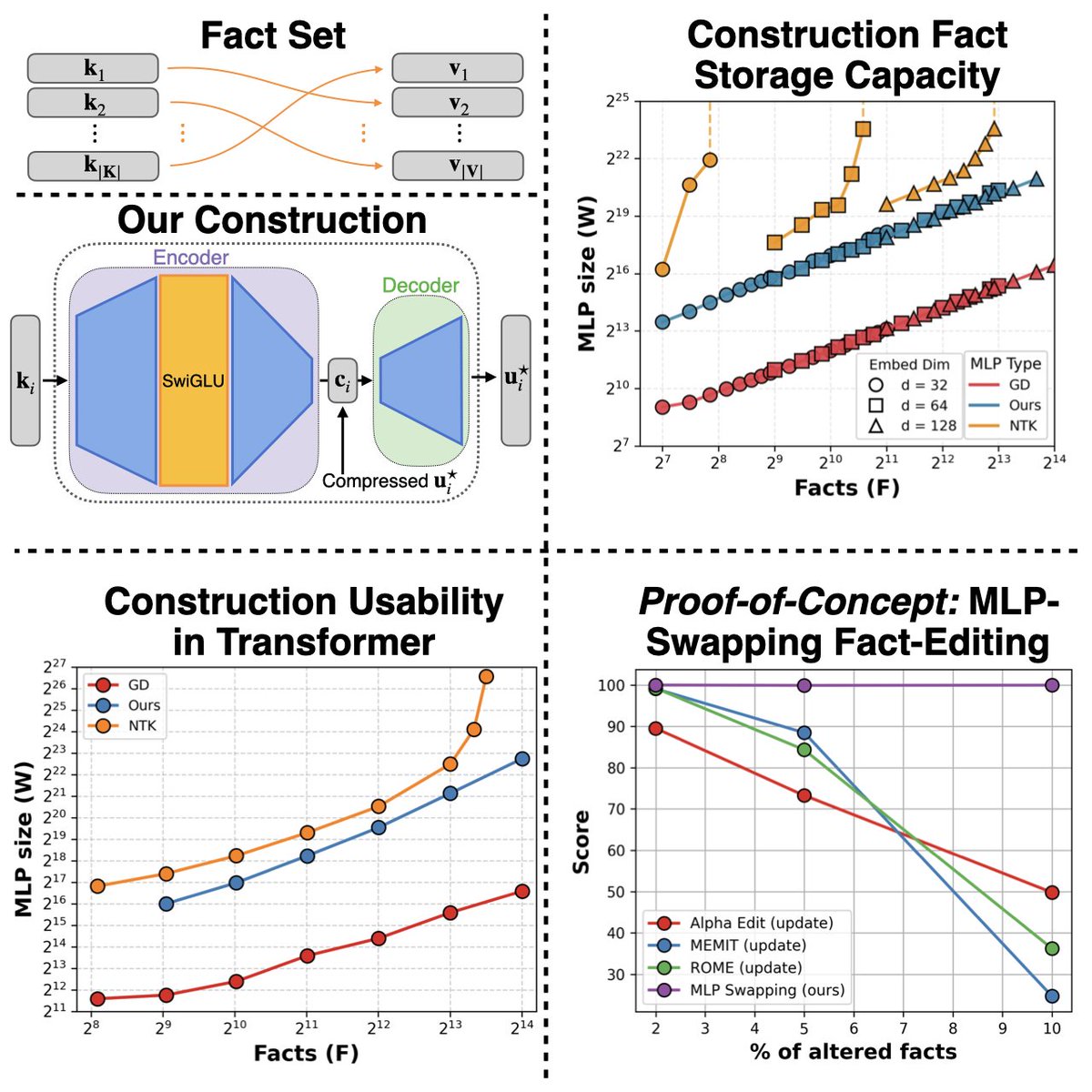
Happy 🦃 Thanksgiving weekend! 🍂 This year, we cooked up a new recipe for juicy fact-storing MLPs. Instead of picking apart trained models, we asked: Can we construct fact-storing MLPs from scratch? 🤔
Spoiler: we can & we figured out how to slot these hand-crafted MLPs into Transformer blocks as modular fact stores! 🧩
New work with @garctrob@ronnygjunkins@jerrywliu@dylan_zinsley@EyubogluSabri Atri Rudra @HazyResearch!
🧵👇
I am so excited to share our project with you! We find prokaryotic proteases activate toxic enzymes and pores as a modular strategy in phage defense. We studied four fascinating protease-toxin pairs that are abundant across bacterial genomes:
Many thanks to our wonderful collaborators and to the Gao lab for making this work possible!
https://t.co/9BgGXflsfi
Semantic design, our method leveraging contextual relationships between genes for function-guided biological sequence design, is now out in @Nature!
This work was led fearlessly by @aditimerch, who inspires all of us in the lab every day. She carried out this immense project with mind-blowing speed, while graciously supporting numerous other projects and being a genuinely brilliant and kind presence.
Please read more about the work in her thread below!👇
Had fun solving the cryo structure of Evo-Φ36 with the awesome team of @samuelhking, @driscoll_cl, and @maxewilkinson! Samuel is a beast and the reason there is a 'skevophage' react on Stanford slack.
Many of the most complex and useful functions in biology emerge at the scale of whole genomes.
Today, we share our preprint “Generative design of novel bacteriophages with genome language models”, where we validate the first, functional AI-generated genomes 🧵
We have restarted our global Nucleic Acid Strcuture webinar series to bring the expiremental and computational communities together to discuss new developments in the field. Join us this Thursday for the next webinar. Sign up to our mailing list here: https://t.co/Y6eiwuILLs
CryoDRGN-AI ❄️🐉🤖 is now published in @naturemethods!!! So excited to see this out and a huge congrats to @axlevy0 and team!
CryoDRGN-AI extends cryoDRGN from requiring input, fixed camera poses, to end-to-end ab initio reconstruction of biomolecules and their conformational landscapes!
Since our preprint, we have added ab initio reconstruction of cryo-ET subtomograms (@rishwanth_raghu@FeathersRyan 🙌) and several additional examples reconstructing large, messy datasets and discovery of new structures!
You can find a recent SBGrid webinar I gave about cryoDRGN-ET and cryoDRGN-AI here: https://t.co/3Td697kswV
Paper: https://t.co/z0h9UKZtR2
A few more thoughts ⬇️ (1/3)