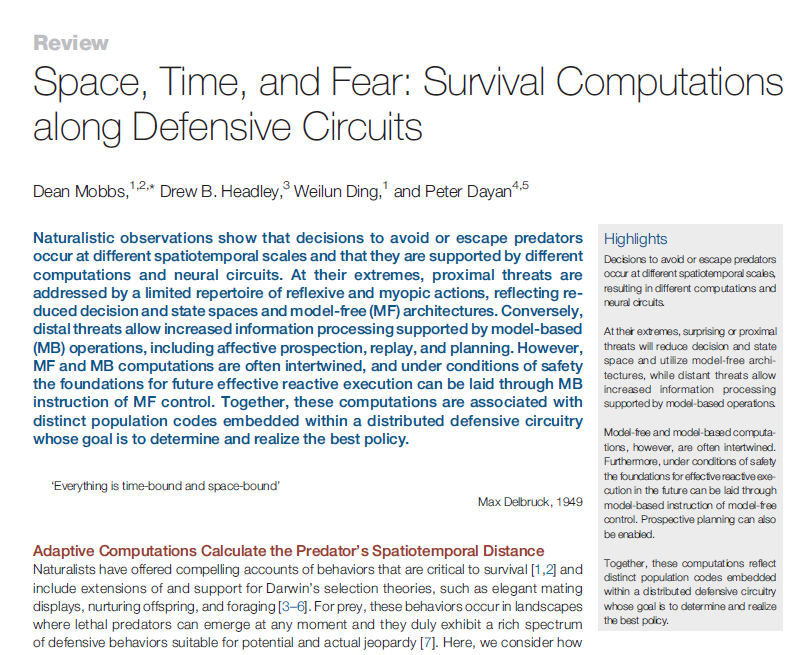
Space, Time, and Fear: Survival Computations along Defensive Circuits, https://t.co/ig055409XK
By @DeanMobbs , Drew B. Headley, Weilun Ding, & Peter Dayan
@MPICybernetics@caltech
Thank you for having me on Brain Inspired, Paul @pgmid! It was such an honor to be on my favorite show—a rare place where we can leisurely talk about manifolds, latent circuits, power laws, and other esoteric ideas, and still be taken seriously in knowing they are all real.
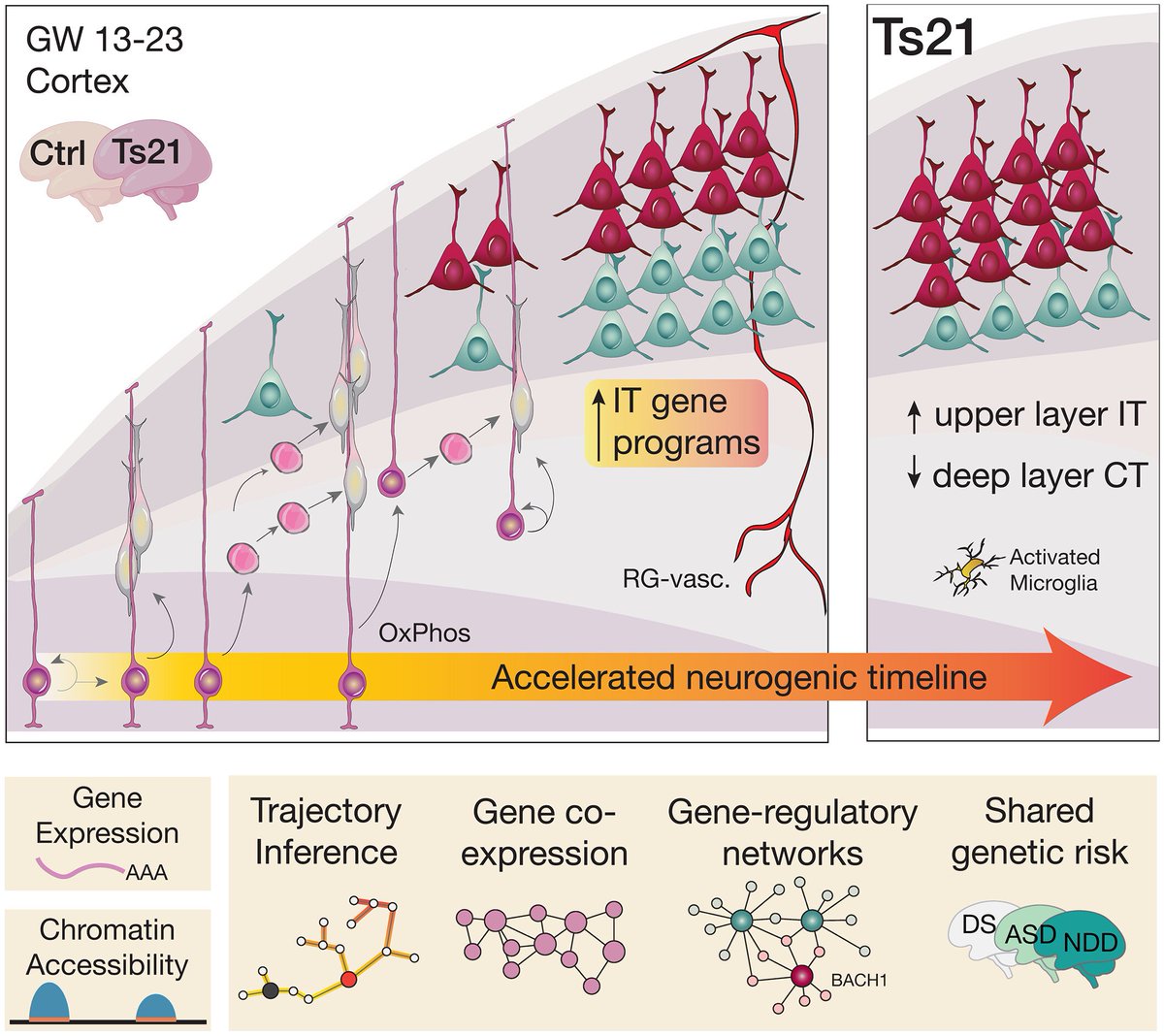
What happens in the developing brain before a child with Down syndrome is even born? Here, researchers used powerful single-cell tools to create a detailed map of how brain cells develop differently in Down syndrome, offering new insight into the earliest stages of human brain development. The study, led by folks at @dgsomucla helps illuminate the cellular changes that shape cognition & behavior later in life. Read more: https://t.co/ypxgd00udL
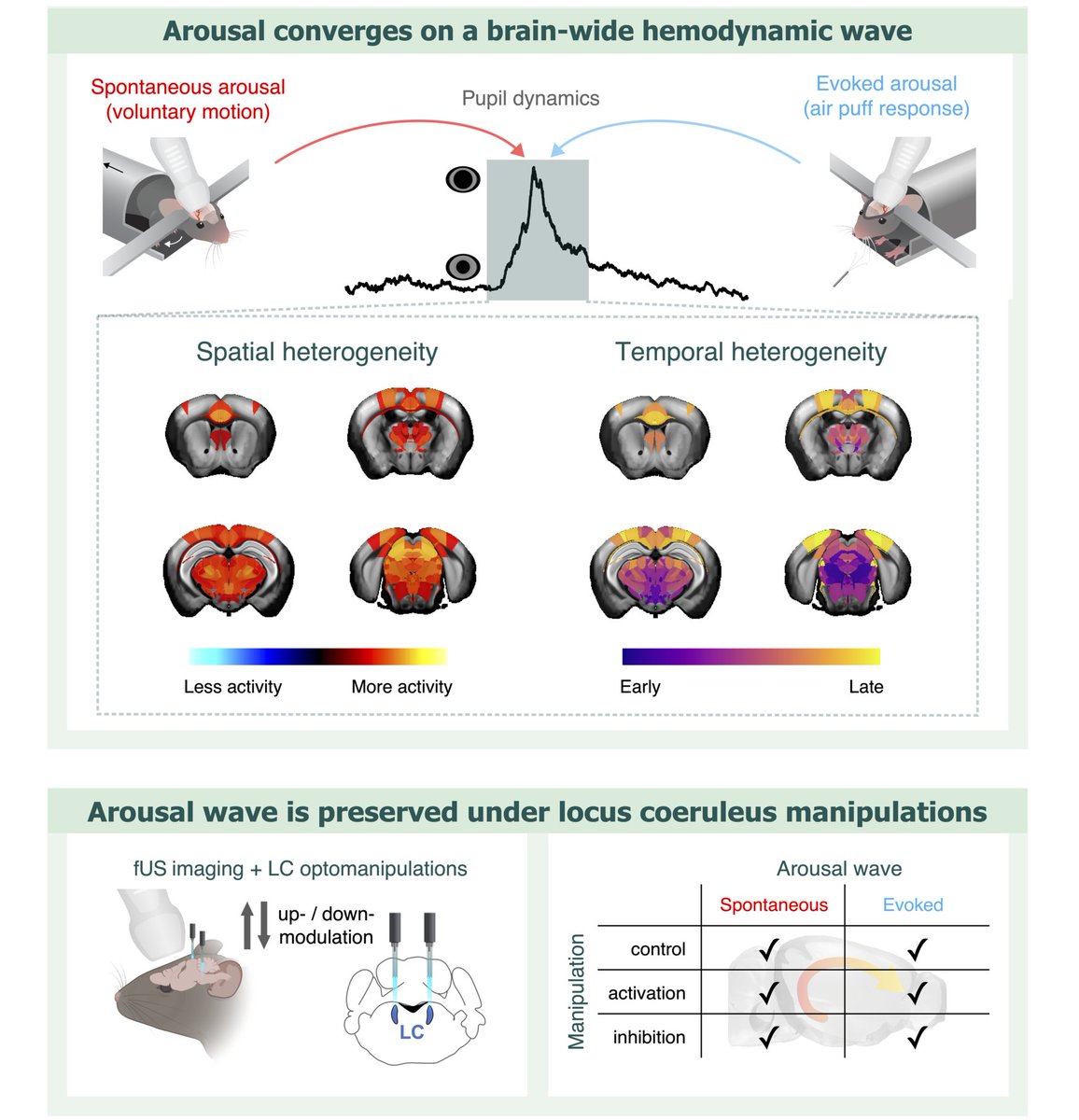
1/8. New preprint!
Using fUSi in head-fixed mice🐭, we found that arousal events trigger a brain-wide wave of activity 🌊🧠.
Surprisingly, this pattern was preserved during manipulations of the locus coeruleus, pointing to a minor role for noradrenaline.
https://t.co/TqB8VgQ4Hp
Aging may feel gradual… but what if it’s not?
In our paper out today, we tracked fish continuously from puberty until death.
This gave us a unique view of how aging unfolds across the adult lifespan.
🧵
My thoughts on connectomics and upload:
1) there is zero question connectomes are invaluable, and we need to get them for mouse, monkey, and human
2) the human, or even monkey, connectome seems a long ways off given costs (roughly $1/neuron). The projectome (map of all the axons) seems eminently reachable and should be a top priority imho
3) but even having the full connectome would only tell you numbers of synapses, not actual synaptic weights, and the two can be hugely divergent (eg only 5% of synapses onto V1 layer 4 neurons come from thalamus, even though this is the major driving input)
4) given #2 & #3, I think we can get to upload in the sense of building a functionally equivalent organism much faster through understanding the algorithms of the primate brain than through blind copying
5) in putting together something as complex as the human brain we would definitely want to check that the various pieces work as we go, which we can only do if we understand these pieces
6) I don't think upload in the sense of blindly creating a digital copy is the path to the abundant transhumanist future--actual understanding of brain structures so we can intelligently interface with them, and emulate their function in code without copying all the details, is.
All to say, we need functional understanding to go hand in hand with anatomical mapping!
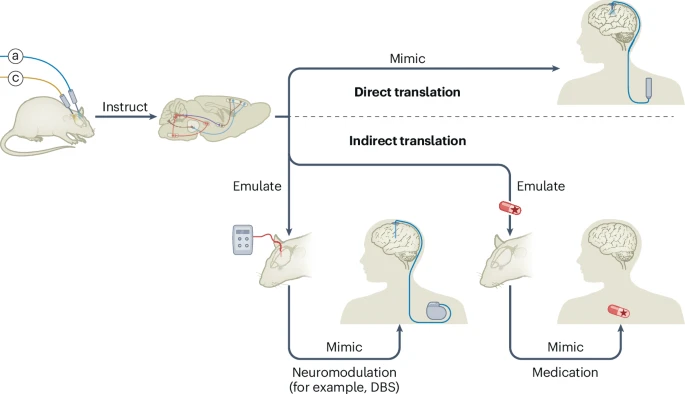
New perspective on the clinical translation of optogenetics in @NatureNeuro. The article discusses how insights from circuit neuroscience are guiding new therapies and highlights ethical and safety considerations as direct optogenetic interventions move closer to human application:
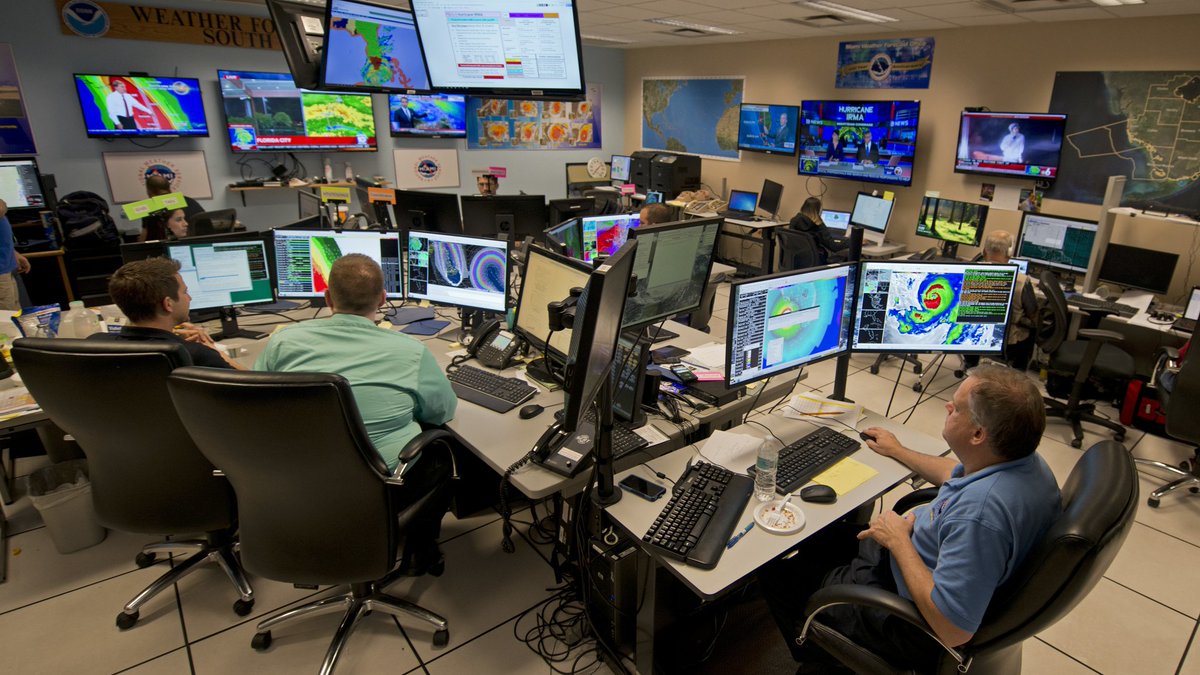
I never publicly comment on political matters because they are usually irrelevant to my work of providing hurricane data and forecasts to people in my personal capacity. Today though, it is highly relevant, and as a member of the meteorological community, I am angry.
Planned or ongoing bulk workforce cuts would irreparably harm the National Weather Service, NOAA, and their scientists who save innumerable lives by warning people in advance of tornadoes, hurricanes, wildfires, tsunamis, blizzards, and other life-threatening hazards. Many of you reading this may knowingly or unknowingly be alive today because of their work, or know someone who is. As a direct consequence of wounding the NWS and NOAA, the public would be less safe.
My personal mission to bring hurricane science, data, and forecasts to the public would not be possible without the weather observations, doppler radar stations, computer models, hurricane hunter aircraft, and weather satellites provided by NOAA and the NWS. Your favorite weather apps, TV meteorologists, and private weather companies would also be unable to function without this data or the civil servants who live and breathe it to synthesize it into public safety information.
All of these benefits cost each taxpayer the equivalent of a few cups of coffee per year, and surveys show most would be willing to pay much more. The American weather enterprise saves many, many times more money than it costs to run, making it one of the biggest bangs for your buck in the government. The impact of quality weather forecasts and infrastructure on society is multiplied many-fold by preventing economic disruptions, keeping public transportation efficient, and providing lead time to prepare for and mitigate disasters. Most importantly, it saves priceless lives.
Careful, long-term plans to streamline or reorient the weather enterprise in an evolving world are not bad, but *this plan* is insane. A feverish rush to take a cleaver to this workforce is self-destructive and dangerous to Americans who rely on the services they provide. It also cuts off the legs of young, passionate scientists who represent the future of meteorology in the new age of AI and other emerging technologies -- the very people we need in the field right now.
As a part of this community since the age of 8 when I began analyzing hurricanes with dial-up internet, I am heartbroken and concerned by what appears to be planned or already in motion. It also directly impacts my friends and family. I cannot be silent, despite knowing I do myself no favors by speaking out. I ask you to join me in advocating for @NWS and @NOAA if you value their work or the work that I am able to do because of them. There are many ways to make your voice heard.
That's all for now, thanks for reading.
Convergent and selective representations of pain, appetitive processes, aversive processes, and cognitive control in the insula @torwager nice preprint!
https://t.co/kKF2pUXJOZ
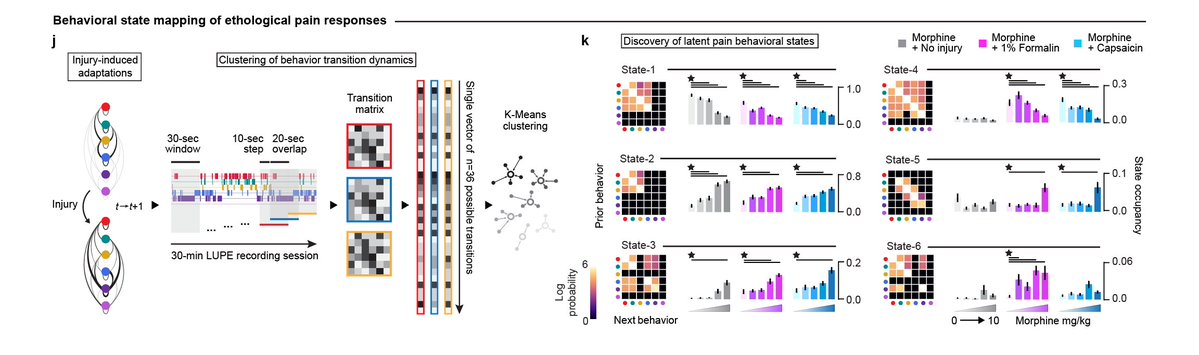
🚀 New LUPE Feature: Pain State Model—mapping pain dynamics over seconds to minutes ⏱️
🔹 6 unique states identified from 316,488 observations
🔹 State classification offers data-driven insights into chronic pain
🔹 Syncs with neural activity recording tech @Inscopix
🐭🧠🔬🤖
I’m very excited to share that my graduate work is now online in @ScienceMagazine today!
With generous help from my mentor @yuji_ikegaya and my amazing teammates, we investigated a top-down pathway for volitional heart rate regulation!
https://t.co/AoYwZ4J1Z0
My new investigation for @newsfromscience: Did a top @NIH official manipulate Alzheimer's/Parkinson’s research for decades? Neuroscientist Eliezer Masliah found to engage in scientific misconduct; 132 of his papers fall under suspicion
https://t.co/gF4fcjDipJ
Happy to be a part of this intriguing use of focused ultrasound (LIFU) to evaluate #interoception via modulation of the heartbeat evoked potential from the @WynnLegonLab. This is an early but promising approach for this focal noninvasive neuromodulation technique
A method that renders skin temporarily see-through could offer researchers a non-invasive way to look inside the bodies of live mice https://t.co/QywSdlvdNN