#AllMineralsConsidered: Remziye Akdoğan (@itu_aybe) explains how the presence of coesite in continental metamorphic rocks records deep subduction and exhumation
https://t.co/UbhiSJqjmX
A new online tool can show where any spot on Earth sat in latitude up to 320 million years ago. One surprise: 245-million-year-old Winterswijk once lay at about the latitude of Arabia. @UniUtrecht@PLOSONE https://t.co/d06AAE9kpU https://t.co/BkkRcXx5A6
The strongest El Niño in 150 years?
That’s not hype, it’s the actual median forecast right now for the developing event later this year.
It could rival — or even surpass — the legendary 1877 El Niño, the strongest on record, which was linked to widespread drought, monsoon failure, and global food crises in parts of Asia, Africa, and South America.
But what does that mean today?
It means a tremendous amount of excess ocean heat being released into the atmosphere - energy that can rearrange weather patterns around the world.
That typically leads to:
🌧️ Increased flood risk in some regions
🔥 More intense/ prolonged heatwaves, drought and fires
🌪️ A shift in severe storm tracks
🌀 And often a suppressed Atlantic hurricane season, but boosted in the East Pacific.
Since it’s so huge, when the Pacific talks, the atmosphere listens!
But this isn’t 1877… forecasting, infrastructure, and global awareness are far better today. We’ll be better prepared.
Now transparency on the science: the 1877 3-month Nino 3.4 ocean temp anomaly maxed out at +2.7°C. The latest median forecast for all ensembles in late 2026 is +2.75°C in the Nino 3.4 region. So, it may be stronger. Here’s the caveat: that region is now approx .75 - 1°C warmer than it was in 1855, so some of the heat building up there is on top of a baseline which is already warmer today. So in absolutes… this will probably rival 1877, but relatively speaking due to global warming, the event will likely fall short and thus its global impacts may not rise to that level. That’s why we now have the RONI (index) which accounts for our new warmed World. (Pictured here is the October NMME with a region of +3-4°C over the East Tropical Pacific)
Will certainly be interesting to watch from a scientific perspective.
Thanks to a satellite that happened to be flying over the 2025 Kamchatka tsunami not long after it formed, researchers have unprecedented insights—even more than land-based tools could provide—into the development and spread of this catastrophic wave.
The findings in Science establish the satellite as a powerful new tool for constraining earthquake source processes, with important implications for understanding tsunami hazards and the dynamics of subduction zones. https://t.co/MgNlMRNDGF
All DNA and RNA nucleobases are now identified in Ryugu samples, matching findings from Bennu and meteorites, strengthening asteroid delivery as a key source of Earth’s prebiotic chemistry. https://t.co/UJvdKakFBn https://t.co/IBcOCbPJj9
Music helps to understand the mind and the brain. Throughout the history of science, metaphors have shaped how we understand complex phenomena. The brain-as-computer metaphor has guided decades of theories and research. We propose music as a scientific metaphor for understanding the mind and brain via triplicate interfaces (listener, performer, composer) and a compound set of predictions. Multiple domains of music can be mapped onto different neural, cognitive and intersubjective processes such as network coordination, prediction, emotion and meaning. Neurocognition is not static but a dynamic, embodied, and time-sensitive system, much like a self-organized orchestra in which multiple processes interact simultaneously. Drawing on synergetics, predictive processing, and embodied cognition, we outline musical principles illuminating cognitive and action integration across time, offering new conceptual frameworks and testable predictions for future research. I enjoyed writing this piece with these stellar authors: @Kaiameye, @acolverson1, Christopher Bailey, @brucemillerucsf, @dafneduron90, Nicholas Johnson, Olga Castaner, @PierLuigiSacco, Eoin Cotter and Lucia Melloni. Science, like music, advances through new ways of listening to complex systems: https://t.co/W3pJRyXJOH
this is actually insane
> be tech guy in australia
> adopt cancer riddled rescue dog, months to live
> not_going_to_give_you_up.mp4
> pay $3,000 to sequence her tumor DNA
> feed it to ChatGPT and AlphaFold
> zero background in biology
> identify mutated proteins, match them to drug targets
> design a custom mRNA cancer vaccine from scratch
> genomics professor is “gobsmacked” that some puppy lover did this on his own
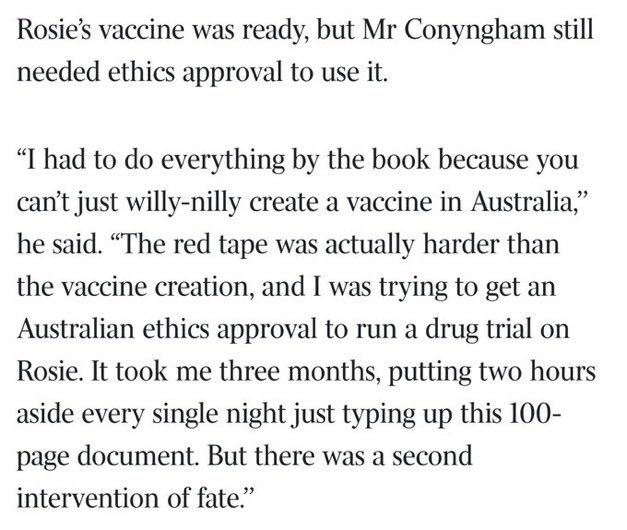
> need ethics approval to administer it
> red tape takes longer than designing the vaccine
> 3 months, finally approved
> drive 10 hours to get rosie her first injection
> tumor halves
> coat gets glossy again
> dog is alive and happy
> professor: “if we can do this for a dog, why aren’t we rolling this out to humans?”
one man with a chatbot, and $3,000 just outperformed the entire pharmaceutical discovery pipeline.
we are going to cure so many diseases.
I dont think people realize how good things are going to get
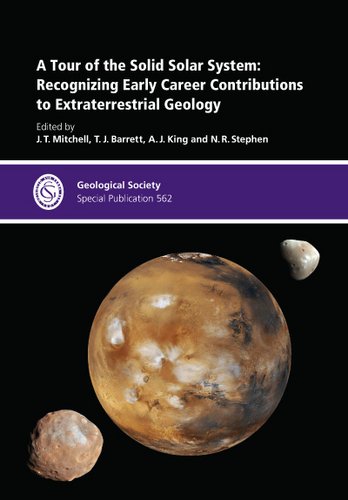
I am so pleased to share that my latest paper on the lunar meteorite NWA 12593 and its surprising chlorine isotopes has now been published in a GSL Special Publication all about early career contributions to planetary science!
Check it out: https://t.co/QLNb2iV3Pb
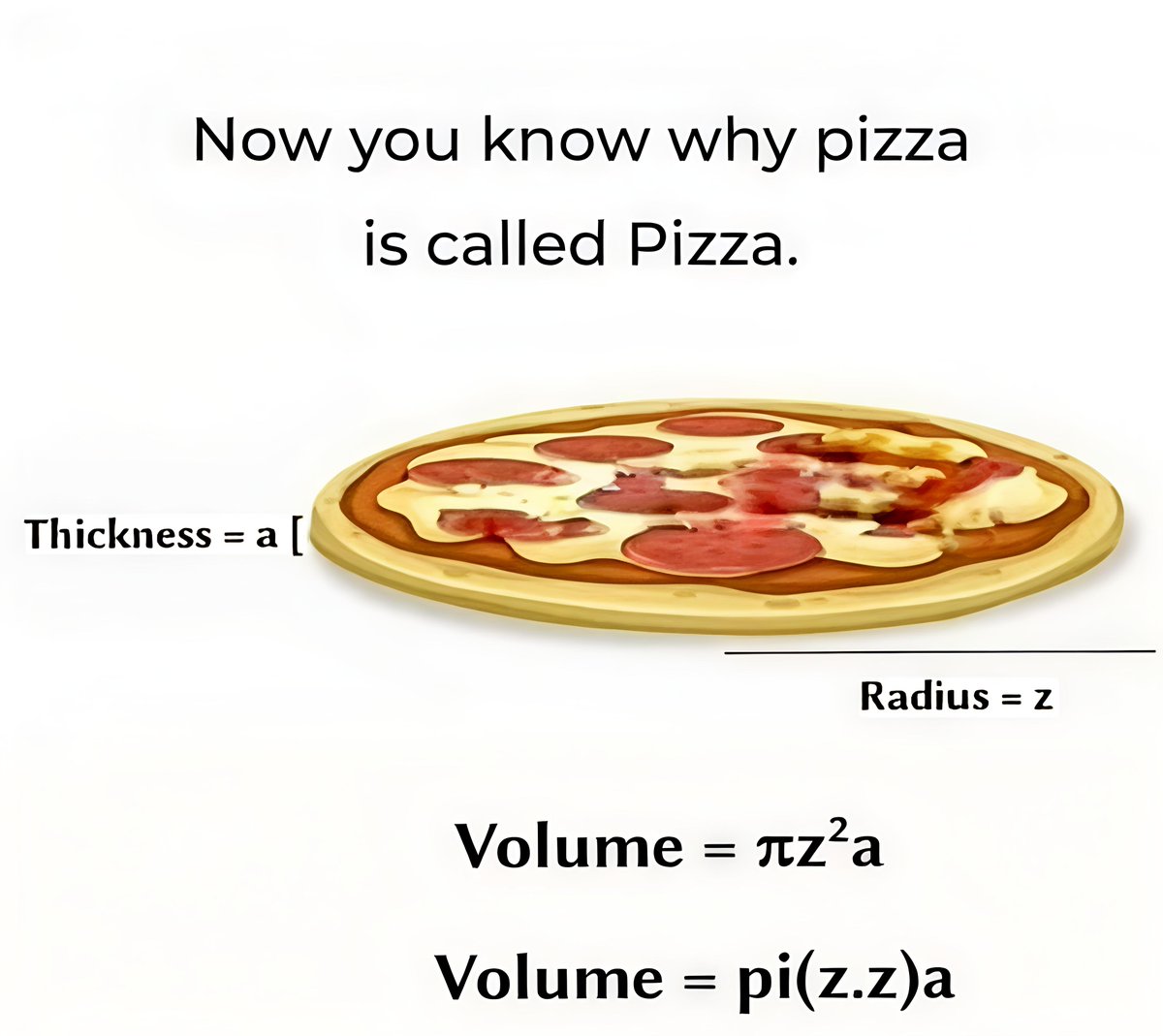
Most people know that π (pi) is about 3.14159…, but mathematicians have now calculated more than 314 trillion digits of it.
Even with so many digits known, no repeating pattern has ever been discovered.
The digits 0–9 appear roughly equally often, but this has never been mathematically proven to be perfectly random.
This mystery even inspired the novel Contact by Carl Sagan, where a hidden pattern is found deep within the digits of π, hinting at an advanced civilization.
Interestingly, π can also be written using a very simple infinite series:
π = 4 − 4⁄3 + 4⁄5 − 4⁄7 + 4⁄9 − 4⁄11 + …
In reality, perfectly measuring π is impossible because according to General Relativity, space itself is slightly curved, so extremely large circles in the universe may not follow the exact ratio defined by π.
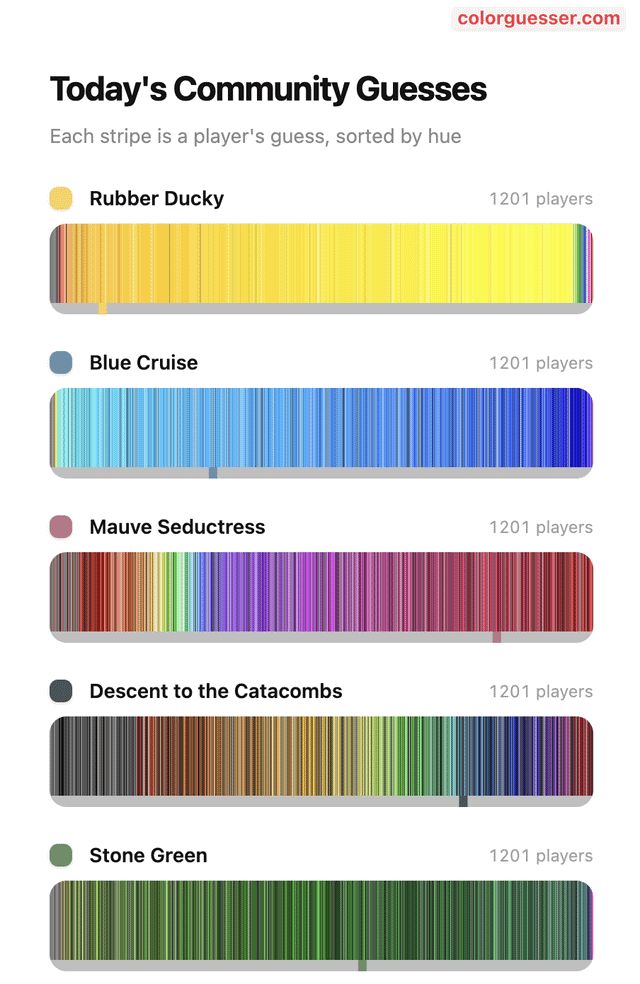
The Color Guesser game sounds dull but is great fun for a few minutes. You are giving the name of a color and have to pick the right color. The game gives you a proximity score. Even better here is data showing how the community of guessers did.
Play it here for free: https://t.co/1m4hTfFxZw
🚨: The impossible just happened: ultra-pure graphene electrons did something that contradicts 200 years of science── Graphene just broke a fundamental law of physics
Climate change is lengthening Earth’s day by 1.33 ms per century—an increase unmatched in at least 3.6 million years, now outpacing natural lunar and geophysical influences on rotation. https://t.co/k3hWZ4Aohz https://t.co/oN5DwzRVKT
🌌 DON'T MISS: A Rare Parade of 6 Planets Lights Up the Sky! 🌠
Get ready for a spectacular celestial event! On February 28, 2026, six planets will align in the evening sky, creating a breathtaking "planet parade." ✨
🔭 Which planets are taking part?
👁️ Visible to the naked eye: Mercury, Venus, Saturn, and Jupiter (though Mercury might be tricky to spot).
🔭 Need binoculars or a telescope: Uranus and Neptune.
🗓️ When and where to look?
· Best viewing time: About one hour after sunset.
· Where to look: Look towards the western horizon right after sunset. The planets will form a majestic arc stretching from west to east.
· West / Southwest: Mercury, Venus, Saturn, Neptune
· Higher in the Southwest: Uranus
· Southeast: Bright Jupiter, near the almost full Moon 🌕
💡 Pro Tips for the Best View:
· Find a spot with a clear, unobstructed view of the western horizon.
· Start observing immediately after sunset – Mercury sets quickly! ⏱️
· To easily identify each planet, use the Star Walk 2 app and its handy Planet Walk feature. 📱
This is a relatively rare evening alignment, perfect for both beginners and experienced stargazers. Mark your calendars and don't forget to look up! 🚀
Clear skies! ☀️➡️🌌
#planetparade #planets #venus #astronomy #starwalk
Newly released files from the investigation of convicted sex offender Jeffrey Epstein reveal that his ties to the scientific community were deeper than previously known
https://t.co/ysHvOgcWxj