Listen to my podcast on iTunes https://t.co/LnRquRpO6S | ascolta il mio podcast in italiano! https://t.co/BDP3S4SPDp | shop me at "stuff-N-go (sNg)" https://t.co/a7dk9GjGB5 #podcast#blog#humor#eShop#scicomm
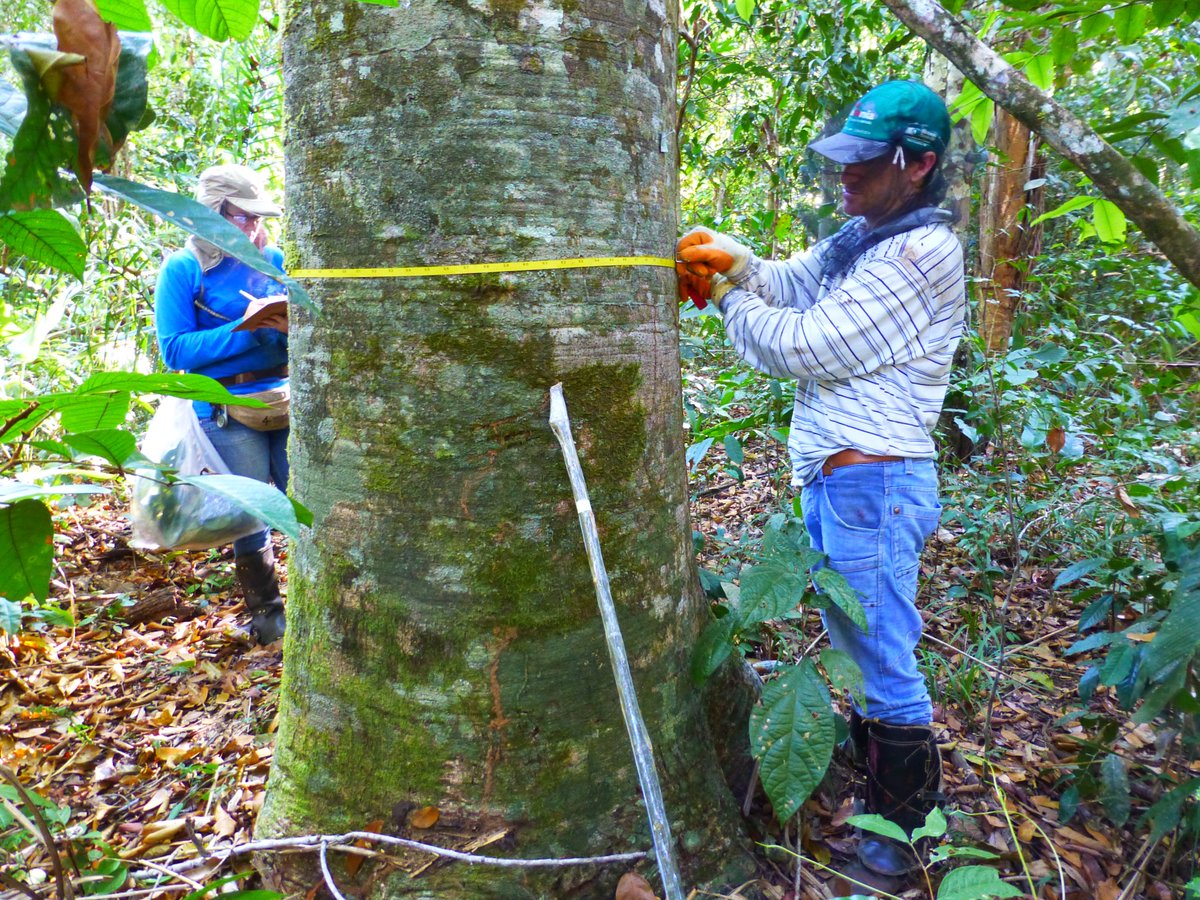
"The #ESA Biomass satellite’s P-band synthetic aperture radar is capable of slicing through even the densest forest canopies to measure tree trunks, branches, and stems – which is where most forest carbon is stored. These measurements act as a proxy for carbon storage" #carbon
Tomorrow @ESA 's Biomass mission will launch - its data will be essential in understanding the role of forests in the carbon cycle.
But the work happening on the ground, in the deep of tropical forests remains key: why?
Despite their sophistication, spaceborne instruments do not directly measure forest biomass or biodiversity. Ground validation is essential – especially in tropical forests.
https://t.co/wqP7yp717X
A new Science study finds that different dendritic segments of a single neuron follow distinct rules. The results challenge the idea that neurons follow a single learning strategy and offer a new perspective on how the brain learns and adapts behavior
📄: https://t.co/4eu4Rvw6NZ
#SciencePerspective: https://t.co/93KqQH1Ti5
Beautiful emission nebula NGC 6164 was created by a rare, hot, luminous O-type star, some 40 times as massive as the Sun. Seen at the center of the cosmic cloud, the star is a mere 3 to 4 million years old. In another three to four million years the massive star will end its life in a supernova explosion. Spanning around 4 light-years, the nebula itself has a bipolar symmetry. That makes it similar in appearance to more common and familiar planetary nebulae - the gaseous shrouds surrounding dying sun-like stars. Also like many planetary nebulae, NGC 6164 has been found to have an extensive, faint halo, revealed in this deep image of the region. Expanding into the surrounding interstellar medium, the material in the halo is likely from an earlier active phase of the O star. This gorgeous telescopic view is a composite of extensive narrow-band image data, highlighting glowing atomic hydrogen gas in red and oxygen in greenish hues, with broad-band data for the surrounding starfield. Also known as the Dragon's Egg nebula, NGC 6164 is 4,200 light-years away in the right-angled southern constellation of Norma.
Image Credit & Copyright: Daniel Stern
Jupiter: The largest planet in our solar system.
It’s known to have X-ray producing aurora around its poles. This composite image shows Jupiter in X-rays from NASA's Chandra X-ray Observatory (purple) and infrared from the Hubble Space Telescope (red, green, and blue).
What animal research was behind the 2024 Nobel Prize awarded for the discovery of microRNA?
The 2024 Nobel Prize in Physiology or Medicine was awarded to Victor Ambros and Gary Ruvkun for their discovery in nematode worms that tiny pieces of RNA, called microRNAs, play a key role in controlling and regulating gene activity in animals and plants.
The C. elegans worm was also in the spotlight for other Nobel prizes, including the discovery of the genetic regulations of organ development and programmed cell death in 2002 and of RNA interference in 2006.
The work being recognised currently can help scientists better understand embryological development, normal physiology and diseases such as cancer.
Read more about the Nobel prize-winning research in the C. elegans in our new article: https://t.co/CTYT4GFscZ
#NobelPrize2024 #NobelPrize #AnimalResearch #microRNA
The continuing spread #H5N1 has affected more than just dairy cows in the US. This updated animated video highlights key impact points in the timeline from early this year up to October 11th.
📽️ Watch here ⤵️
<The time from an antibiotic’s discovery to its approval 4 clinical use can be +than 2decades,“&there's not much money to be made w/a novel antibiotic[..]Around 10to20 new Gram-negative #antibiotics've been disc. in the last 10yrs”[..]but none has gained approval from the US FDA>
"the study’s authors started with compounds that don’t kill the #bacteria but are known to inhibit the ‘Lol system’, a group of proteins that is exclusive to Gram-negative bacteria" #antibiotics
<the study “proves the viability” of targeting the Lol system, but [...] “There is a long road from showing efficacy in mice to developing a drug for human use”>#antibiotics#bacteria#health#research
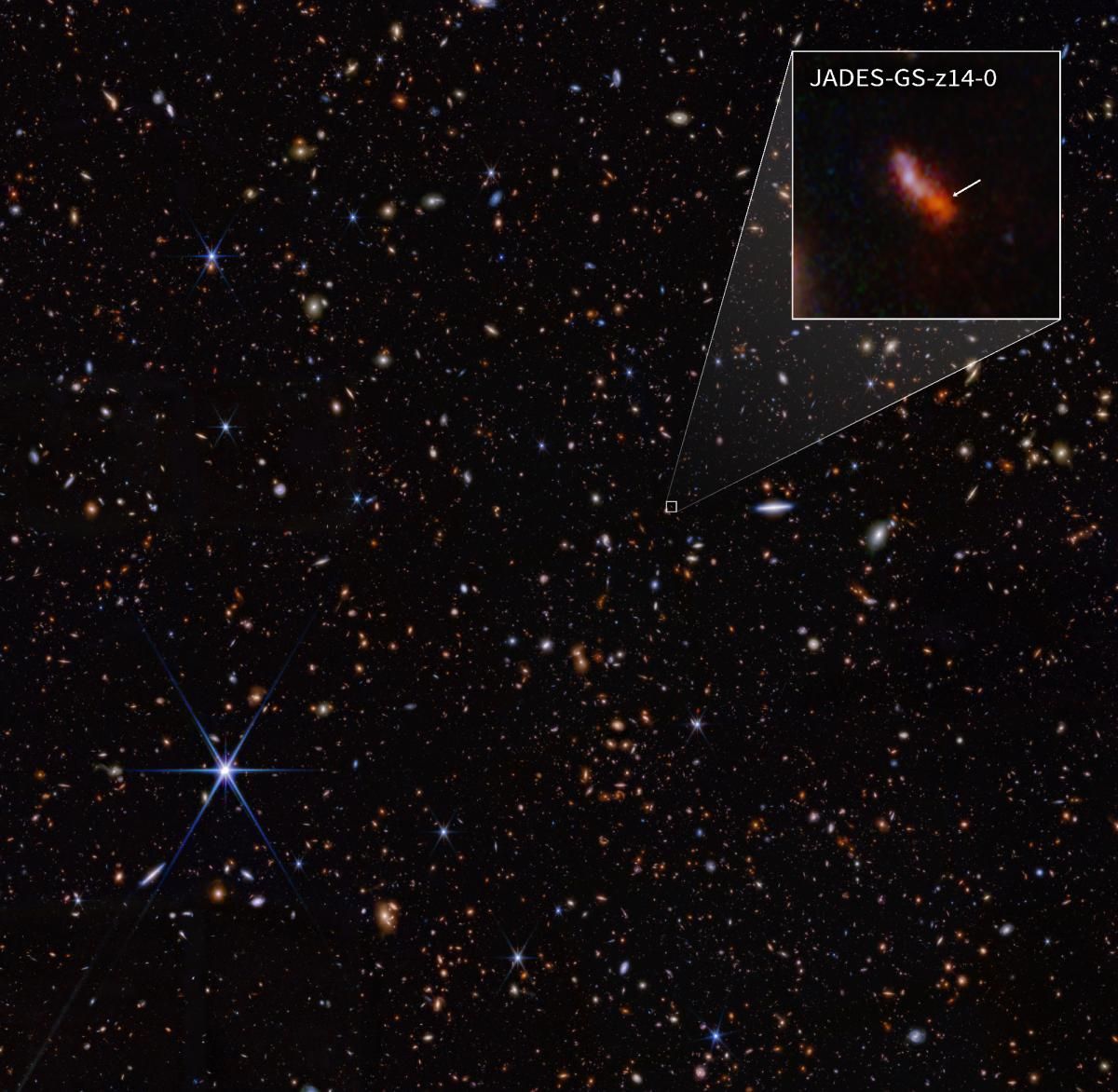
Webb, you outdid yourself. 🏆
@NASAWebb has found what appears to be the most distant known galaxy—beating its own previous record. This galaxy first formed less than 300 million years after the big bang. https://t.co/taTBOFRbyq
"Our findings suggested that #tattoo exposure was associated with an increased risk of malignant #lymphoma. More epidemiologic research is urgently needed to establish causality" https://t.co/pe5E2YQ2Gy #health#tattoos#ResearchPapers
"Over the next 6 years, #Euclid will observe billions of galaxies across 10 billion years of cosmic history. [It is] one of the most precise and stable space telescopes ever built, [&] was launched on 1 July 2023" #ESA#Astronomy#universe
🚨 #ESAEuclid begins its Dark Universe survey!
🔎 The #DarkUniverse 🕵️ detective is now ready for the gigantic task of understanding the nature of #DarkMatter & #DarkEnergy
🐾 Today, it has started the survey that will gather evidence from billions of galaxies across 10 billion years of cosmic history 👉 https://t.co/AiMq7LoBdC
Why do human brain cells grow so slowly?
With some neurons taking years to reach adulthood, researchers have been investigating what could be slowing the pace of cell development in our brains
<"This could be a warning for #climate engin.. If we eclipse the sun in the future w/tech. solutions, it may affect the clouds. Fewer clouds could partly oppose the intended effect of climate engin., 'cause clouds reflect sunlight & thus actually help to cool down the #Earth">
"The results may have implications for proposed #climate engineering ideas because disappearing clouds can partly oppose the cooling effect of artificial solar eclipses"
"The model explains that the rising air is almost immediately affected when the partial #eclipse starts. Above the sea, the clouds remain unaffected during a solar eclipse, because the seawater does not cool down that fast" #climate