3D genome architecture underlies health & disease, but its biochemical basis is hard to study at scale. We present Plate-C: a screening platform that profiles thousands of whole-genome 3D maps in a day ($4 each), discovering many pathways that rewire DNA: https://t.co/gC6j0xAbyg
KRAS is not a mutation problem, It’s a context problem
KRAS behaves as a dynamic node within a network
KRAS ≈25% of cancers
-NSCLC: ORR ~40%, mPFS >6 mo
-CRC: rapid EGFR-driven rebound
-PDAC: stromal, metabolic, immune resistance
⚠️⚠️Tumors escape through:
EGFR/SHP2 , MAPK/PI3K, YAP/STAT3, plasticity
What this means in practice:
-combinations matter (e.g., KRAS+EGFR in CRC)
-targeting networks works better than targeting a mutation alone 👀
-trials should be built around biological context
https://t.co/WHIk3WuDk1 @OncoAlert@KRASKickers
🚨Paper alert🚨 Very excited to share our manuscript, published today in @ImmunityCP, where we describe how ‘Nonsense-mediated mRNA decay inhibition reshapes the cancer immunopeptidome’. (1/16) https://t.co/S58jZLKZ7G
We are excited to announce the release of the Human Methylation Atlas Summary and Signals tracks for hg38 and hg19. The tracks display genome-wide DNA methylation profiles across 39 primary human cell types from 205 healthy tissue samples.
Learn more at https://t.co/GB3hxaYo1H
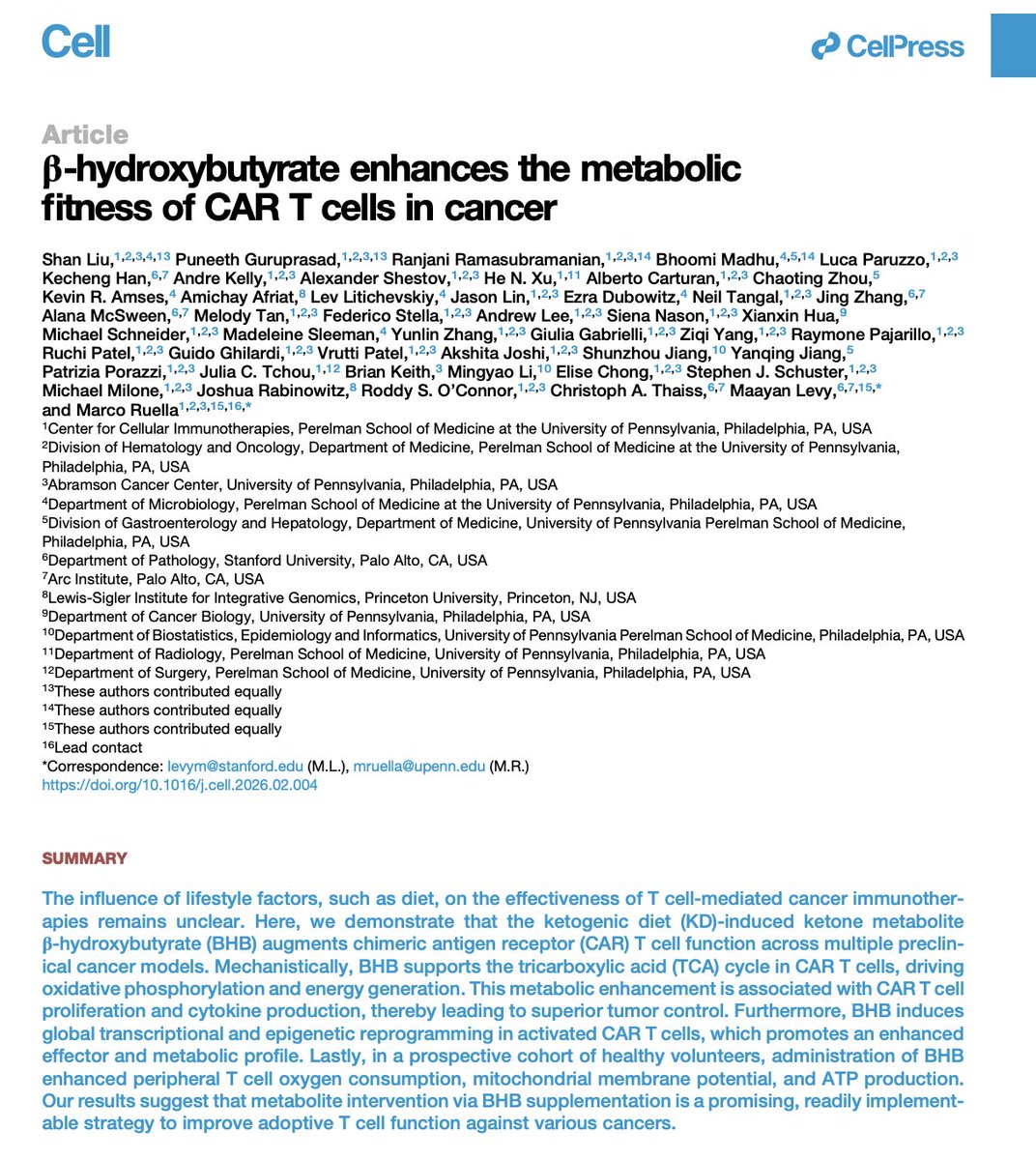
CAR T cell therapy has shown strong results against certain cancers, but metabolic exhaustion limits its effectiveness over time.
In @CellCellPress, the @MaayanLevyPhD & @ChristophThaiss labs report that a common supplement can fuel CAR T cells to fight cancer more effectively.
A century ago, “vitamin hunters” discovered micronutrients. Today, vitamins are taken adhoc. We revisited this with modern genetics: CRISPR screens -> new NAXD disease mouse -> over 40× lifespan increase w/ vitamin B3. Huge credit to Ankur & Skyler! https://t.co/0cRmrng7ux
🧵👇
Most drug discovery starts with a disease & searches for a cure. New research out in @CellCellPress from Arc investigator @ishahjain’s lab flips this model, starting with a potential cure (vitamins) & systematically identifying which diseases it could treat.
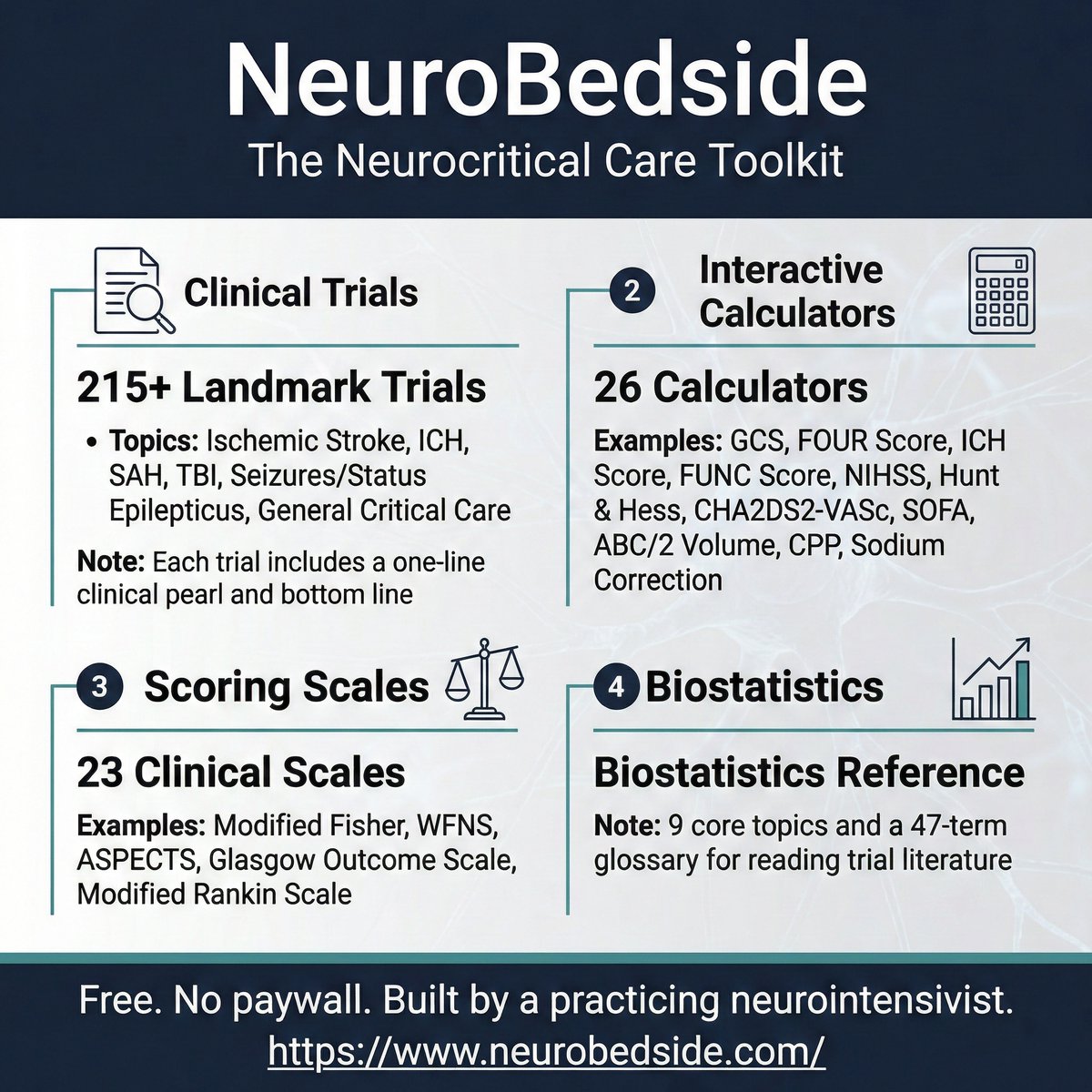
I built a free neurocritical care reference tool called NeuroBedside.
215+ landmark trials with trial details and one-line clinical pearls. 26 interactive relevant medical calculators. details of 23 scoring scales. Biostatistics reference. All in one place, on your phone or computer, at the bedside.
No paywall. No login required to browse.
https://t.co/xyBY0GeNCX
#NeuroCritCare #NeuroTwitter #MedEd #FOAMed #CriticalCare
Marc Andreessen: AI coding doesn’t eliminate programmers — it redefines them. The job is no longer typing code line by line, it’s orchestrating 10 coding bots in parallel, arguing with them, debugging their output, changing the spec, and pushing them toward the right result. But here’s the catch: if you don’t understand how to write code yourself, you can’t evaluate what the AI gives you.
The next layer of programming isn’t writing scripts — it’s supervising AI that writes them. Today’s best programmers spend their day jumping between terminals, managing multiple coding bots, fixing mistakes, and refining instructions. The irony? You still need deep fundamentals, because without them, you won’t know when the AI is wrong.
The job of the programmer has changed. Now it’s about arguing with coding bots, debugging AI-generated code, and understanding why something doesn’t work or isn’t fast enough. AI abstracts the work — but only people who truly understand code can tell if the abstraction is doing the right thing.
Programmers aren’t going away — they’re becoming 10x, 100x, even 1,000x more productive. Tasks are changing, the job is changing, but humans are still overseeing the process, evaluating results, fixing errors, and making judgment calls. AI changes how we code, not who is responsible.
The future programmer isn’t replaced by AI — they’re upgraded by it. You still need to learn how to write and understand code, because when the AI gets it wrong, humans are the ones who have to know why. That up-leveling of capability is the real revolution.
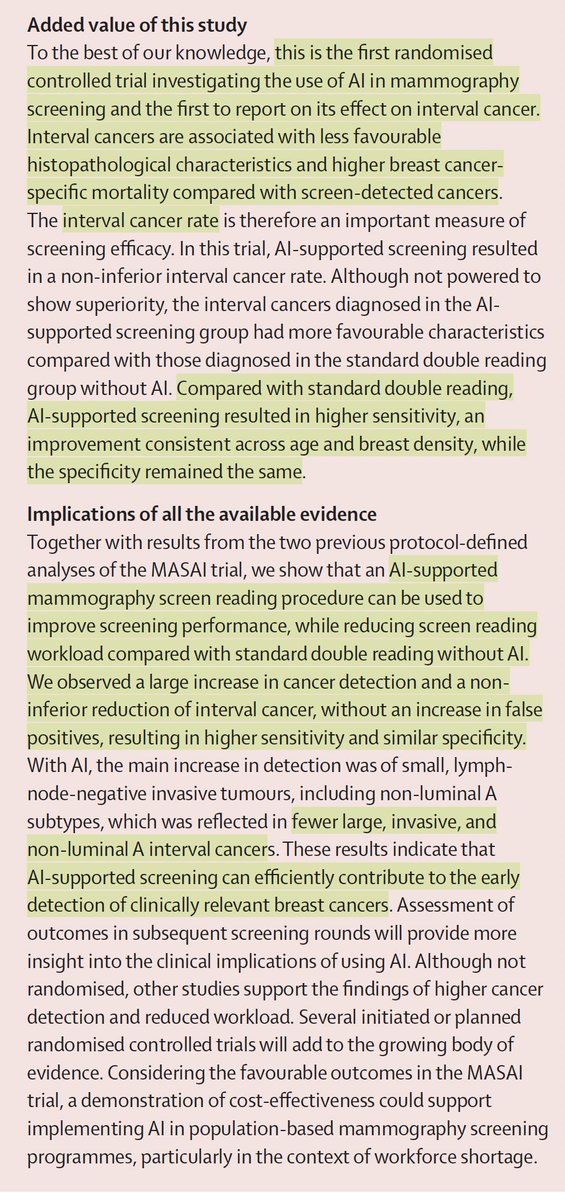
The largest randomized trial of medical A.I.
—Over 100,000 women in Sweden
—radiologist + AI vs 2 radiologists, in follow-up
—AI added led to 29% more cancer detected, 44% reduced workload, and
—Less cancer dx in subsequent 2 years, and, when found, less aggressive
https://t.co/e1hY3F0cGo
Watching the sunrise is better than waking up afterwards and getting sunlight in your eyes … for many reasons, not the least of which is that the natural transition from dark to daylight is the proper stimulus for your central circadian pacemaker. No lamp does it right.
1/ NEED vs SUFFICIENT: why this lifting debate misses the point.
There’s a big difference between what is needed and what is sufficient for muscle and strength adaptations. Confusing the two is where gym arguments go off the rails.
Thanks @foundmyfitness for reigniting 😂