Almost all plant metabolic pathways involve P450s, yet reconstituting them efficiently has long been a challenge. We’re thrilled to share our discovery revealing how inter-organelle communication is essential for plant P450 functionality in yeast! https://t.co/cwpu1ZaQ7g
When we lose the Arctic we lose the planet
Tariffs will be the least of your worries
'Ominous milestone for the planet': Arctic Ocean's 1st ice-free day could be just 3 years away, alarming study finds
https://t.co/sbnJTxDJn5
Butterfly populations across the U.S. are in alarming decline, according to a new Science study, with total abundance falling by 22% in just 20 years.
Such widespread and worrisome losses portend broader environmental threats and emphasize the urgent need for conservation action. https://t.co/Un9IacvMKN
Microplastic pollution is disrupting photosynthesis across ecosystems and cropland, threatening our food security in ways we've drastically underestimated.
These invisible particles degrade our soils and undermine the biological foundation of our food system...🧵
Put another way, I'm pretty sure a lot of Computer Science students are using ChatGPT to complete their coding assignments instead of actually doing the assignments themselves.
If true, it's a huge problem. The process of learning debugging is critical to growing as an engineer.
It's clear that many do not understand what @NIH-funded research does to improve health. It's time to revive a study published 10 years ago that provides incredible information about this. link in the comment
Every single new drug approved by the FDA from 2010–2016 was built on NIH-funded research—that’s all 210 drugs. But what the public sees is just the tip of the iceberg.
Pharma takes credit for the final product, but beneath each drug developed, there are ~20 years of basic research, and 90% of the cost is from basic research funded by the NIH, which discovers drug targets, understands disease mechanisms, and creates life-saving treatments.
Figuring out how cancer evades the immune system, how addiction rewires the brain, and how heart disease develops is the role of the NIH, creating the foundation for the breakthrough drugs that come 20 years later, and the NIH does all that with only 0.8% of the US budget.
Without NIH, there would be no cancer immunotherapy, no anti-overdose medication, no anti-heart attack or stroke medication, no cutting-edge treatments.
If NIH funding is cut, the iceberg will melt. That means fewer cures, more suffering, and more lives lost.
The science beneath the surface keeps us afloat.
Invest in NIH. Invest in life
Indirect costs are not free money for the university. What policy makers, tech bros, and many university faculty don’t understand about the cost of research and indirect costs. 🧵(1/n)
In a year with so little to cheer about so far, I am happy to share our manuscript on a copper-dependent halogenase. Unbelievable effort by GS Yorick Chiang and Scientist @phdmasao at @uclachem@UclaCBE . Thank you to all collaborators and @NIGMS.
https://t.co/fr9cuikhRH
Scientists have tracked microplastics moving through the bodies of mice in real time
The tiny plastic particles are gobbled up by immune cells and eventually become lodged in blood vessels in the brain
https://t.co/4u1nMZlfTC
Scientists are celebrating an adorable and remarkably well-preserved discovery—a 32,000-year-old sabertooth cub. Mummified in the Siberian permafrost, this baby apex predator is almost perfectly intact, right down to its reddish fur. https://t.co/CLyLe8rH7I
Our latest preprint. We show that a specific strigolactone structures, produced by CYP722A in Arabidopsis, function in flowering regulation rather than shoot branching inhibition. This highlights functional differences driven by SL structural diversity.
https://t.co/ORz79Hd8SQ
Lab-kept bumble bees roll small wooden balls around for no apparent purpose other than fun, reveals a study from 2022.
Learn more: https://t.co/db5j90eGw1 @NewsfromScience
The inaugural Kidney Cancer Patient Summit in San Diego. This event brings together leading kidney cancer experts, patients, and caregivers for a day of learning, networking, and sharing stories of hope.
Register here: https://t.co/a5BiVcqfga
#JoeysWings#UCSDkidneycancer
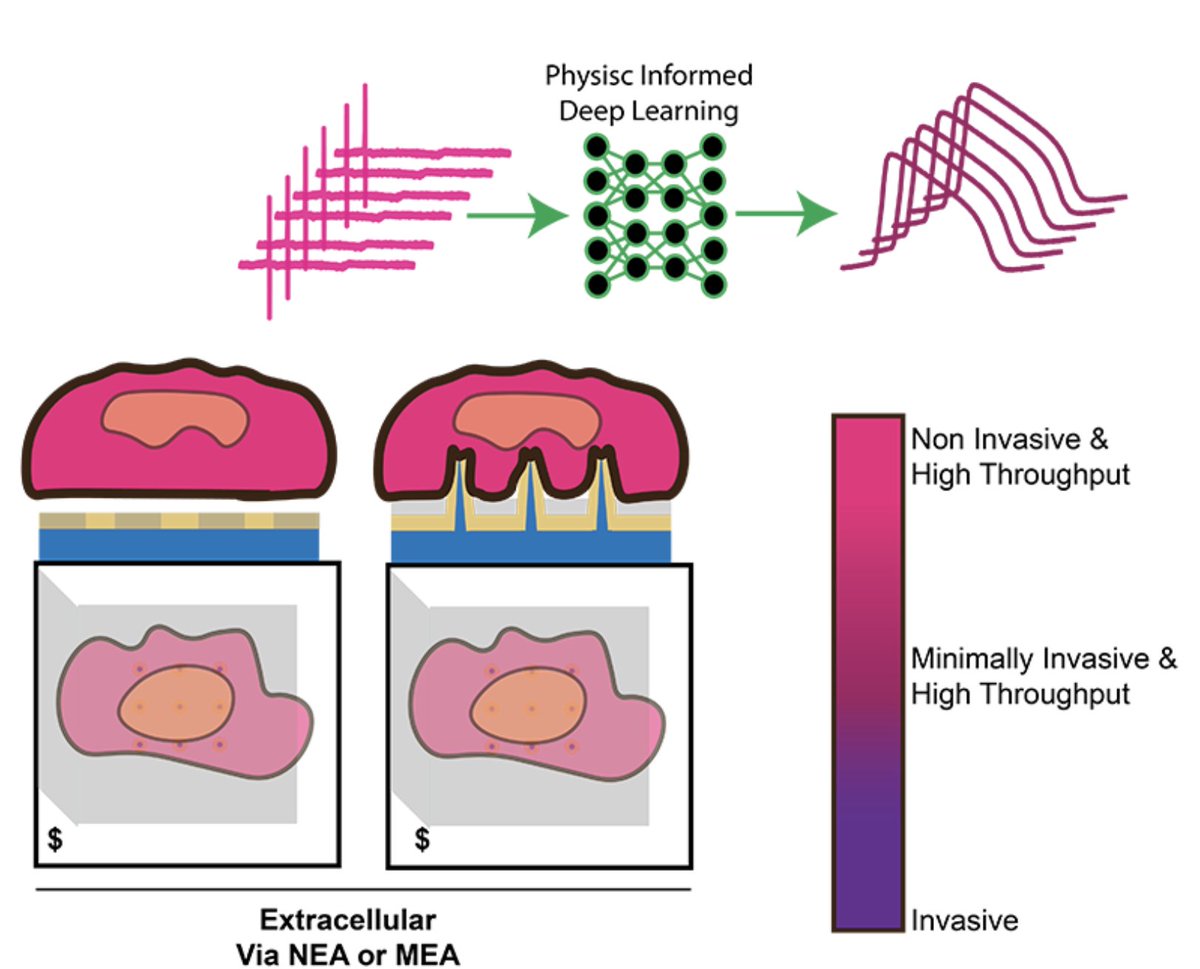
Very excited to share our latest work, "Intelligent In-Cell Electrophysiology," just published in @NatureComms!
Many drugs are withdrawn from the market due to harmful effects on the heart, jeopardizing patient safety and costing billions of dollars. In this study, we introduce an approach that combines nanotechnology and physics-informed AI to enable faster, more accurate cardiac drug testing, improving safety at early stages of development.
This work was led by our exceptional Ph.D. student, @KeivanRahmani , and was made possible through interdisciplinary collaboration with several outstanding scientists and engineers, including @CsabaForro1 , @yuqirose , Brenda Bloodgood , @BianxiaoC , @santorof14 , @YangYang0511 , Ethan Foster, Diego Alvarez, @dhivyapushpa , @chingtingtsai , and Ayush Gupta, with support from @AFOSRYIP@AFOSR.
Link to Paper: https://t.co/hVrYiU5JSZ
Read the story on our work by Liezel Labios : https://t.co/qo2iIMTMw7
Thrilled to share our work using microbial cell factory to investigate strigoractone biosynthesis and evolution. So fortunate to work with such an amazing team of scientists. @nelson_lab@ShabekLab https://t.co/GR8veS186F
Mysterious plant hormones called strigolactones have long eluded scientists. Yet understanding how plants use them to adapt & survive can help improve agriculture. New work by @UCSanDiego engineers could made it easier to get to the root of these hormones. https://t.co/YWtFZxoF96