Excited to present the first major work after starting our lab at Stanford and the Arc this year: CRISPR-All, a unified genetic perturbation language for programming any major type of genetic perturbation simultaneously, in any combination, at genome scale, in human cells.
Happy to share our new work describing DESynR genes!
The evolution of new human protein-coding genes relies on repurposing protein domains from ancestral genes, rather than de novo sequence creation. New genes evolved from old parts, and while we have methods that enable high-throughput generation and screening of base-pair level sequence evolution (mutagenesis, directed evolution, CRISPR, etc), we lack similar scalable technologies for domain-level evolution.
We developed a high-throughput combinatorial molecular assembly method to generate thousands of barcoded novel genes from the domain building blocks of natural genes, termed DESynR (Domain Engineered via Synthesis and Recombination) genes.
I'm wildly proud to share our FIRST Weber Lab paper, out today in @Nature! I want to share a story about how this whirlwind of a project came together. A 🧵 on teamwork, open science, and how far we can go when we intentionally build a culture of trust in research. 1/
Memory genes are enriched in CAR T cells that persist and control tumors in patients. But which transcription factors drive beneficial memory programs?
We answer this in our lab’s first paper in @Nature led by @alexdoan96@kpmueller1@andy_yhchen. 1/
https://t.co/qvTdqoeduz
Excited to share our work with @andy_yhchen, @SandorDanielne, @Satpathology, and others on how inflammation-induced 3D genome conformation can integrate distinct inflammatory signals, and provide transcriptional memory in macrophages. https://t.co/3q0JTcb5Fk
Excited to share my paper @NatureComms on the Taxol biosynthesis @Sattely_lab with some help from the @Keasling_Lab 🥳 🎉
Really happy to have contributed to the studies of this amazing molecule 😊
https://t.co/mpw3frSwVJ (1/2)
Our research introduces a system that enables you to generate 3D environments from text prompts and train embodied AI agents within them!
Website: https://t.co/NmNSPA1yqF
Code: https://t.co/iKgfPpHcwI
How did we leverage Objaverse assets to create interactive 3D environments? 👇
How to get lucky (without being rich):
Thought experiment: If you had to double your luck in 6 months, what would you do?
10 ideas:
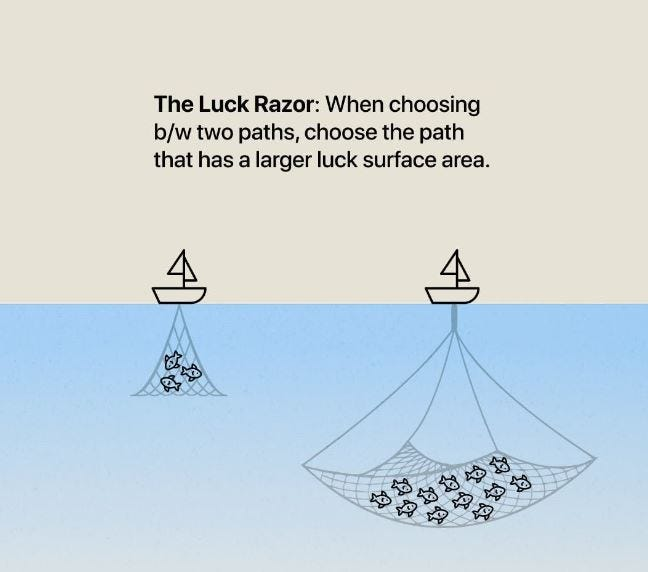
1. Luck Razor - If given 2 options, pick the one that has the most luck potential. E.g. Cocktail party vs watching Netflix. Which one has the highest potential for future luck?
2. Avoid Boring People - Avoid people that bore you. And avoid being the boring person in the room. The more interesting you are, the more interesting opportunities people share with you.
3. Poker Mindset > Roulette Mindset - Ridiculous but true statement...
Playing a game of roulette thinking it's poker is better than playing a game of poker thinking it’s roulette. Assume everything is a game of skill. There's usually something you can control if you look hard enough.
4. Delete The Scoreboard - Relentlessly give to good people with no scoreboard in your head keeping track. You’ll end up lucky, fulfilled, and have a packed funeral.
5. Introduce People - If friend A and friend B can get value from each other - introduce them. It's a 30-second email for you and may change their lives forever. Networks are unique because they don't divide when you share them -- they multiply.
6. Get More Curious With Age - Curiosity is like your joints - it weakens with age. Assume your first thoughts about new trends are wrong. Age like Gary Vee or Mark Cuban. Put 20 hours into a new trend before you have an opinion.
7. Pursue High Leverage Relaxation - Rank all relaxation activities on this:
A. Impact
B. Time it takes
Find the highest leverage one across both scores. Do it regularly. It's hard to notice lucky opportunities when your cortisol is through the roof.
8. Get Good At Advertising - The ultimate meta-skill. If you can create a persuasive ad or landing page, you can create a persuasive CV or job interview.
Lifehack: Most people are awful at advertising.
9. Don’t wait for the news - Historians now recognize the Roman Empire fell in 476 - but it wasn't acknowledged by Roman society until many generations later.
If you wait for the media to inform you to do something, you'll either be wrong or too late.
Work from first principles. Trust your gut.
10. Reverse Prison Advice - The cliche prison advice to a new prisoner is to punch the biggest person in the prison. Flip this on its head.
Find the best people you know and help them as much as you can. (Share their projects, give feedback, make intro’s, etc)
----
The beautiful part of this thought experiment:
It moves your focus from the visible 99% of luck you can't control -- to the hidden 1% of luck you can control.
And that 1% can keep you busy enough for 99 lifetimes.
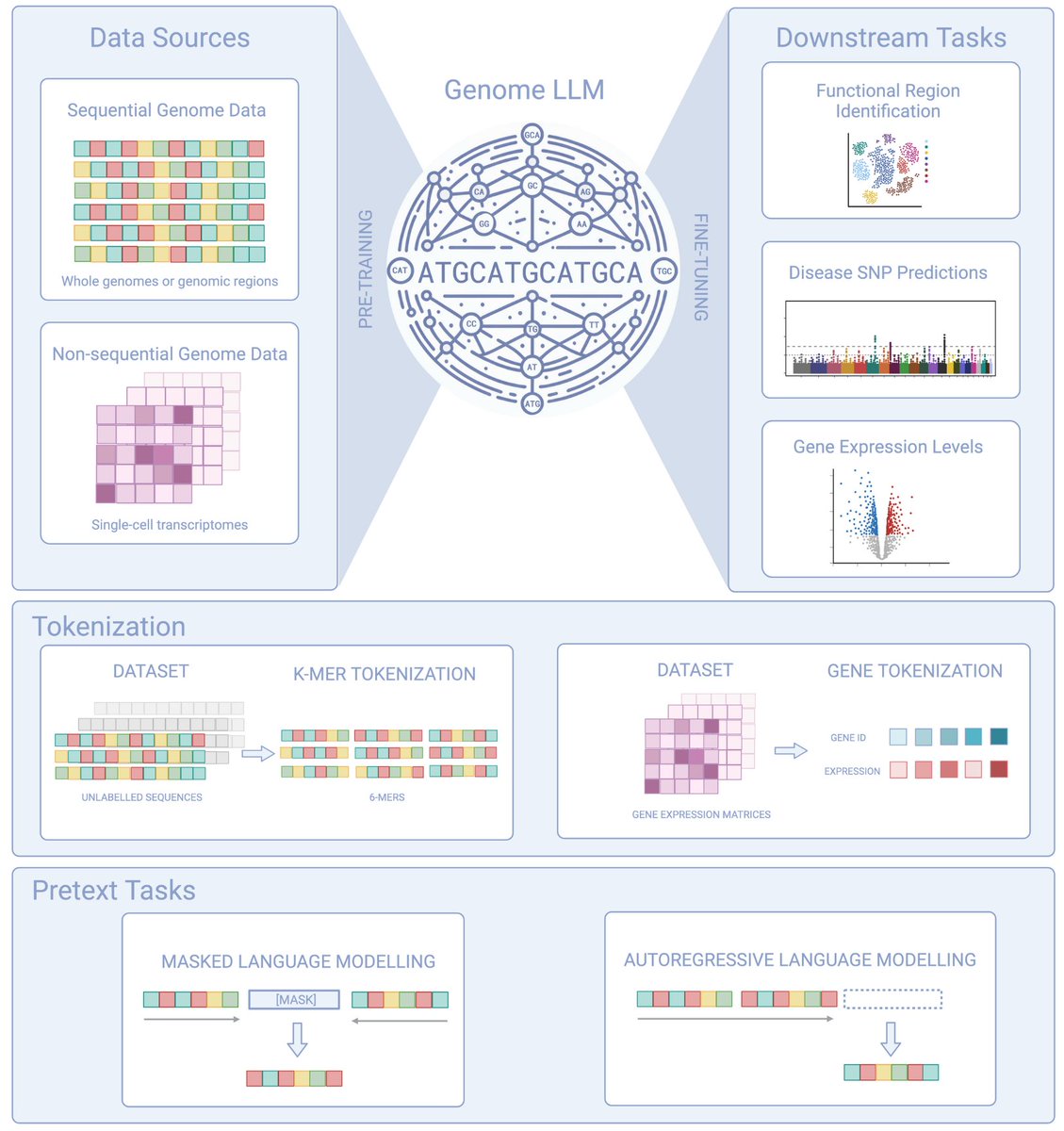
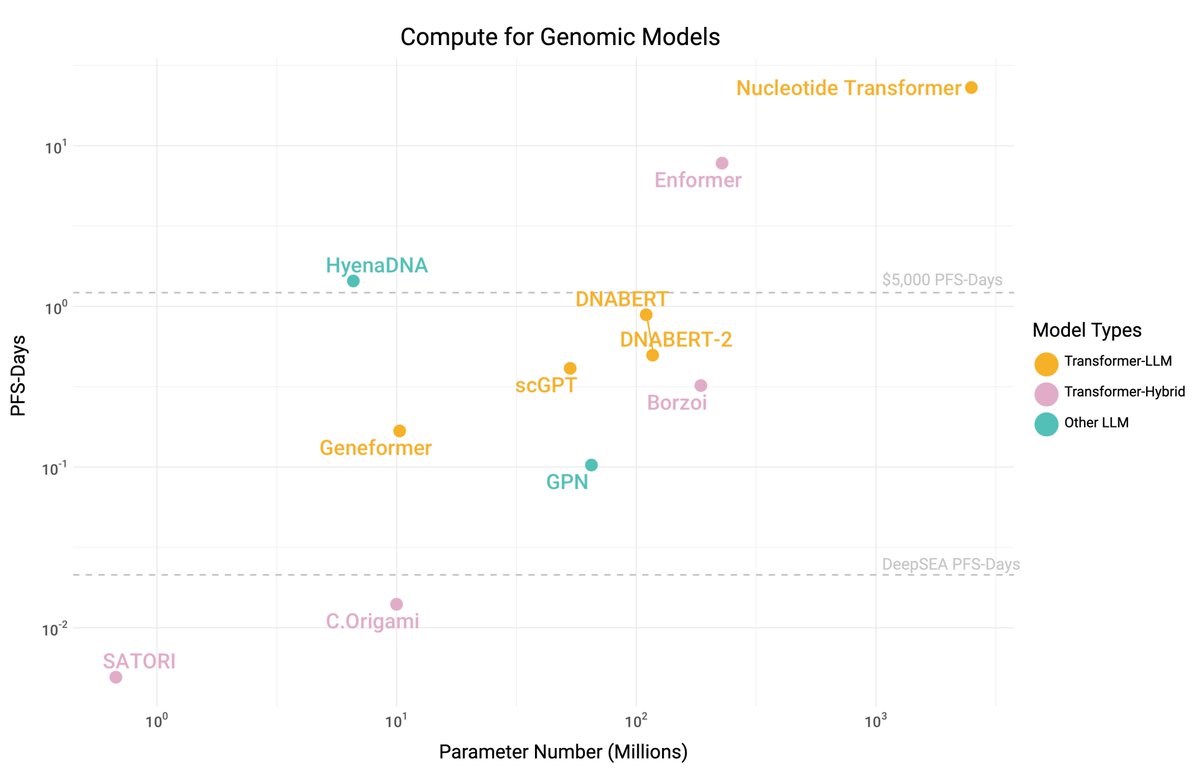
Interested in LLMs for genomic research but don't know where to start? looking for a review/survey to get started in this field? 👇👇😀
I am very excited to share that our review paper titled "To Transformers and Beyond: Large Language Models for the Genome" is now available as a preprint (https://t.co/U24TUSseNr)! Our review unveils a revolution in genomics analysis with Genome LLMs. 🧬
🔍 What's Inside:
✅ The power & challenges of transformers in genomics.
✅ Cutting-edge models like HeynaDNA and scGPT & their impact.
✅ Deep dives into Enformer, DNABERT, and other Genome LLMs.
🌍 Why it Matters:
1. GPT-4's influence reshapes AI in genomics.
Unmatched insights into transformers' role in genomics.
2. Critical analysis of new models, addressing interpretability, privacy, & computational needs.
3. Essential for computational biologists & computer scientists to navigate the future of genomic data analysis.
This is a work led by the amazing PhD student, Mica Consens, in the lab! Also, a huge collaborative work with lots of field leaders @fabian_theis@genophoria@MKarimzade@michaelwainberg and Alan Moses!
@UofT@VectorInst@UofTCompSci@UofT_LMP@UHN@pmcc_ai@UHNAIHUB
Out today in @Nature, we describe HHV-6 reactivation in T cells, including therapeutic CAR T cells. I’m so grateful to have worked with an all-star team during my time in the @Satpathology lab that led to these findings. https://t.co/9Yt4SbPCoY 1/n
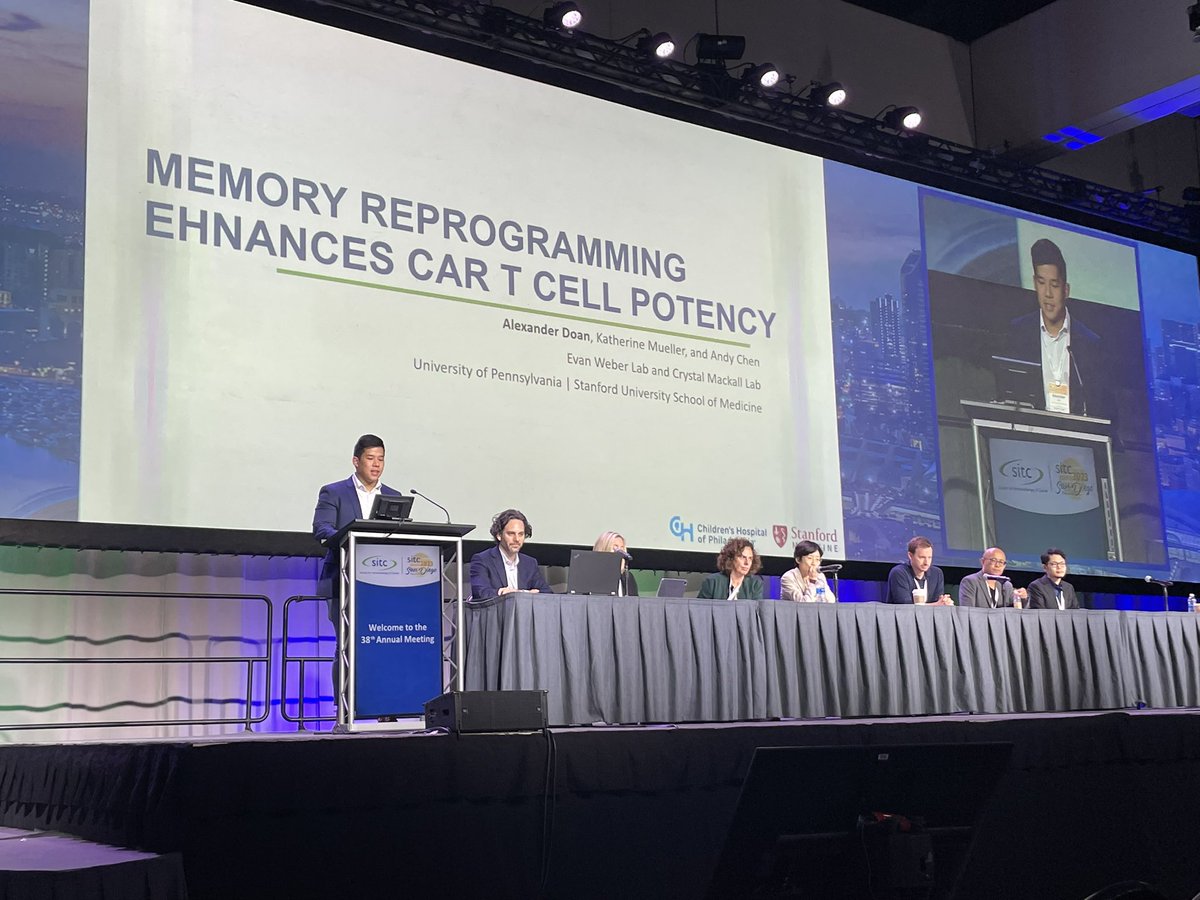
CONGRATS to my brilliant mentee @alexdoan96 for receiving a @sitcancer Young Investigator Award! He'll be giving a short talk on memory reprogramming in CAR T cells at the annual meeting in November. Can't wait!
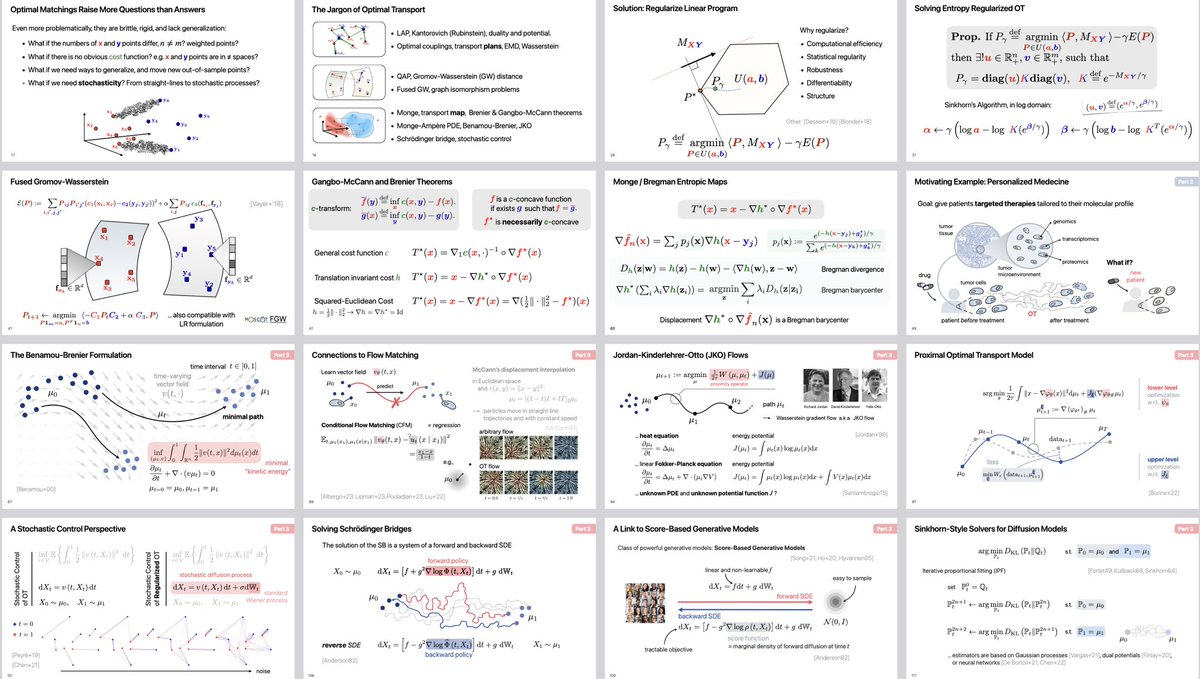
How does optimal transport allow us to study dynamical systems? How does it connect to control theory, flow matching, & diffusion models? How is it advancing molecular biology research?
Find the answers in our tutorial! Recording, slides, & script under
https://t.co/mVLRkfTFZ2.
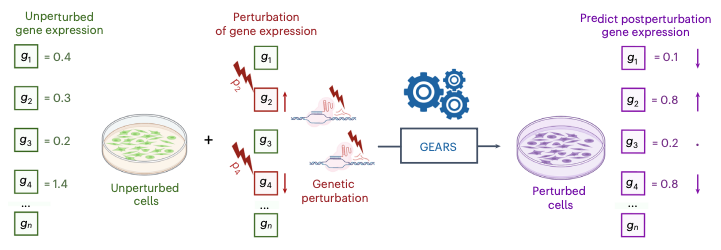
📢 Exciting News! Our latest paper is now out in Nature Biotech 🌱🧬 We developed GEARS---an AI method to predict cellular responses to genetic perturbation. 🧪🔬
🔗 Link to the paper: https://t.co/pyhBTWrsGf
🧬 Unraveling genetic interactions in cancer, regenerative medicine, and more is a complex puzzle. GEARS harnesses the power of deep learning and a gene relationship knowledge graph to predict transcriptional responses to single and multigene perturbations using single-cell RNA-sequencing data. 🧠📊
🧪 What's unique about GEARS? It can predict outcomes for gene combinations that have never been experimentally perturbed before. 🚀
🔍 In a combinatorial perturbation screen, GEARS displayed a 40% higher accuracy compared to existing approaches. It identified distinct genetic interaction subtypes with remarkable accuracy and pinpointed the strongest interactions twice as effectively as previous approaches. 💥
📈 With GEARS, we're opening up new avenues for designing perturbational experiments and gaining deeper insights into the diverse effects of multigene perturbations. 🛠️
Join work with amazing @yusufroohani and @KexinHuang5.