#ScienceSaturday
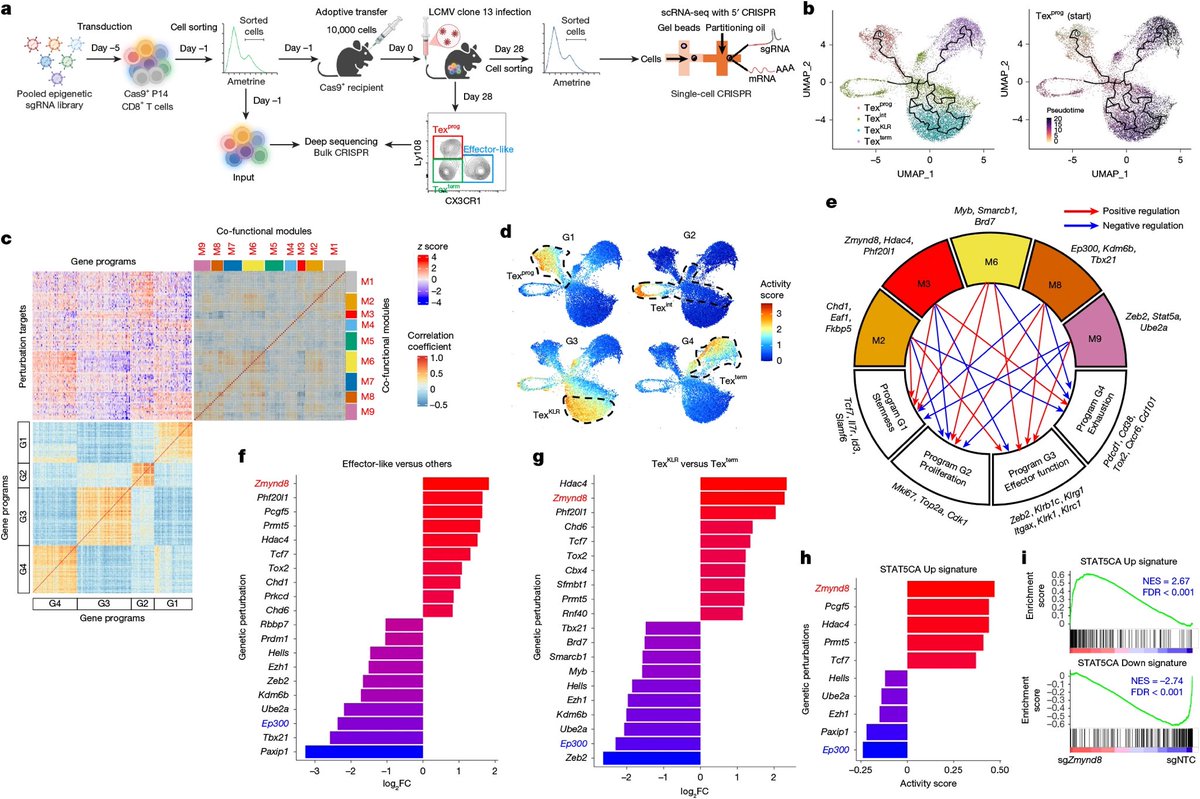
🧬 What if we could help the immune system’s cancer-fighting T cells regain their ability to attack tumors, even after they become exhausted?
🔬 New research published in Nature identifies a potential way to do just that. Scientists found that targeting a protein called ZMYND8 can restore signaling pathways that help CD8+ T cells maintain their cancer-killing abilities, rather than progressing toward a more dysfunctional state.
🛡️ Why does this matter? T-cell exhaustion is a major challenge in cancer #immunotherapy. When T cells are exposed to persistent signals from cancer cells, they can gradually lose their ability to mount an effective attack. Researchers found that removing ZMYND8’s inhibitory influence strengthened IL-2 signaling, which helps support T-cell activity and function.
💡 The findings are especially promising because targeting ZMYND8 enhanced antitumor activity in preclinical models, particularly when combined with IL-2 therapy or immune checkpoint blockade. The researchers also observed improvements in human T cells in laboratory studies, offering insight into the potential relevance of this approach.
🚀 Although more research is needed before this strategy can be translated into patient care, the study offers a new avenue for investigating how we might strengthen the immune system’s response to #cancer.
📖 Read the full study in Nature:
https://t.co/tB2nK8KIrN
@hongbo_chi@StJudeResearch@StJude
What comes after M1/M2? In our Perspective with @FGinhoux in @ImmunityCP we explore how single-cell technologies and AI can decode the gene programs macrophages use across tissues & microenvironments, and how this modular view could transform immunotherapy
https://t.co/o3CgVmKWBZ
Exclusive: When Tessa Montague learned about #CRISPR, the gene-editing system that was supposed to make it easy to modify any organism, she set her sights on the cuttlefish. The Columbia University neuroscientist dreamed of injecting its embryos with genes that would prompt its neurons to fluoresce as they fired.
The flashes would let her track how this tentacled creature's brain controls one of its most striking behaviors: camouflaging itself by copying patterns it perceives in its surroundings onto its skin. Unlike most animals, she says, “cuttlefish can actually tell us what they see.”
Six years and thousands of embryos later, she has reached a milestone: seven cuttlefish that glow red under fluorescent light. Every cell in their boneless bodies contains a gene encoding a synthetic fluorescent protein—even their eggs and sperm, which means their cuttlebabies glow, too.
The work, posted as a preprint, marks the first time anyone has successfully added a new gene to a cephalopod. https://t.co/URTEOdc5za @NewsfromScience
Checkpoint inhibitor immunotherapy works best in the morning...because myeloid suppressor cells are most active in the evening...
https://t.co/7Dj1meYu0U
This is supercool. I remember that when I started my PhD at the Max Planck Institute of Biophysics in Frankfurt, Georg was next door in the Department of Biophysical Chemistry, and the Channelrhodopsin-1 paper was just published with a lot of buzz and excitement!!!
@slavov_n@EdwardAnderton7 I decided to include *one* negative result in a recent manuscript we submitted. Reviewers feasted on it and tried to use it to destroy the whole thing… lesson learned. Never doing it again. *sigh*
Happy to share our new paper in @Nature “Type 2 immune history trains lung macrophages for viral disease tolerance” https://t.co/GuXIZLAiT7 the work was fearlessly led by @PayalYokota Thanks to all our collaborators! @nyulangone@nyugrossman
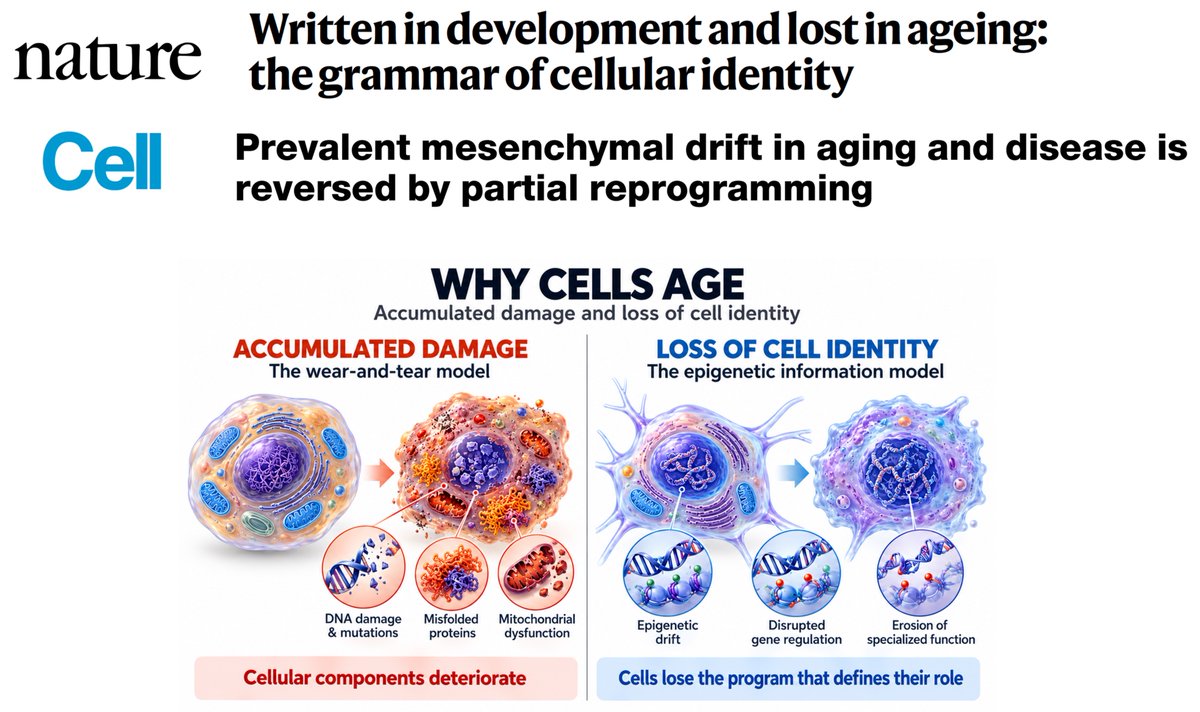
Why do our cells age?
It's not just wear and tear, accumulated damage.
Loss of cell identity takes center stage.
A @Nature review today by @gladyshev_lab and connection with prior work that substantially advances the science of aging.
In the new Ground Truths.
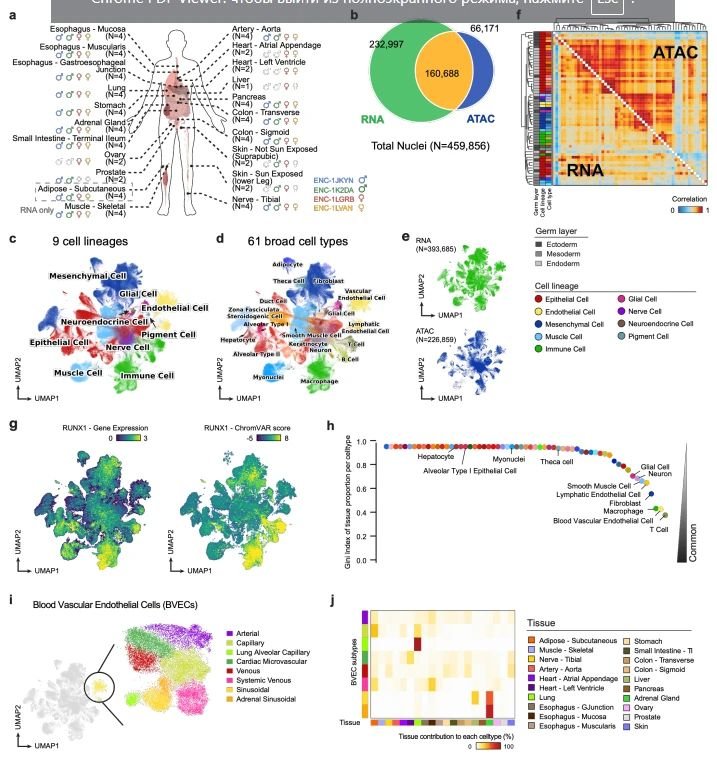
Fan et al. presented a single-nucleus multi-omic atlas comprising 459,856 transcriptomic and chromatin accessibility profiles from 21 adult human tissues and four donors, including paired measurements from 160,688 nuclei:
https://t.co/IDs1gVDHIL
#SingleCell#SpatialBiology
Scientists from Stanford and UCLA just found a hidden "off switch" for heart scarring. When the heart is stressed, the cells that cause dangerous scar tissue (fibrosis) get switched on by three chemical sensors working together. Blocking all three at once — but not just one — stopped the scarring in human heart tissue and in mice. This could become a new type of heart failure drug.
https://t.co/gaEvsXiruW
Thank you to Boston Children’s Hospital for highlighting our recent publication, describing:
Receptor Free Signal Transduction.
https://t.co/FcxoYjNB3n
Cell-cell interaction tracing usually depends on protein labels, which tell you that an interaction happened but not who talked to who. So we turned to RNA labels to scale interaction tracing to library scale.
2/9
Inflammation can leave a structural mark on the genome. Using base-pair resolution chromatin conformation data, @BenceDaniel2, Andy Chen, and @SandorDanielne show that immune memory to inflammation can be stored in the 3D genome. @PNASNews@4DNucleome
https://t.co/umxtAWVZmg
How does interferon-alpha interfere with clonal evolution in human blood stem cells? We address it here @natureGenet: https://t.co/vPChdqnYzS
🎉 Congrats to our super talented students Chhiring Lama, @danielle_isakov! Wonderful collab w/ Ron Hoffman. @WCMC, @WCMCPathology
🧵⤵
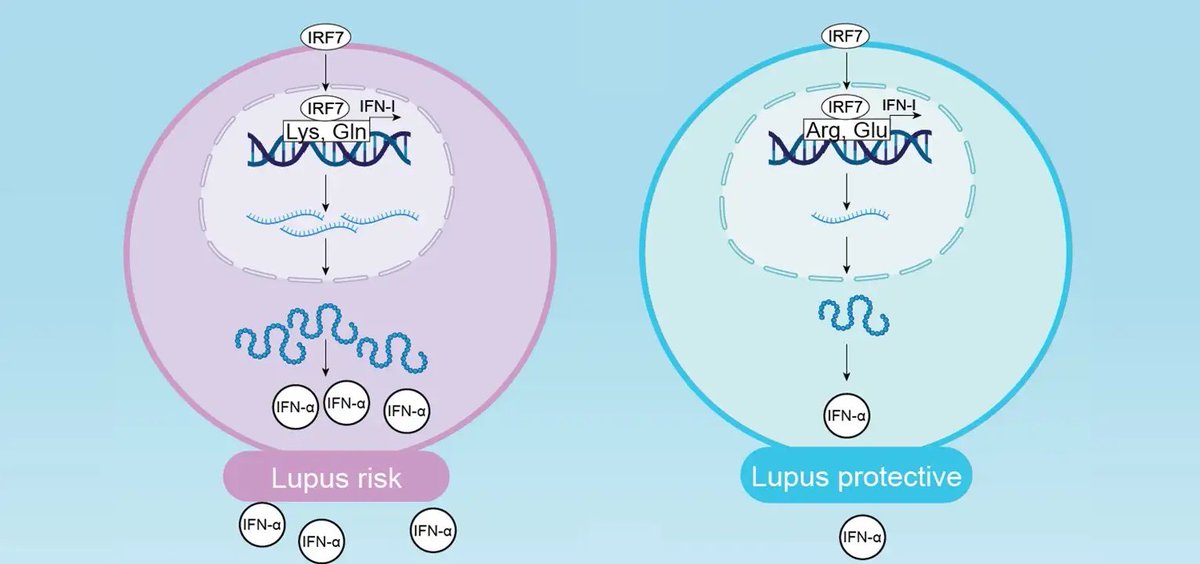
Delighted to publish this with my friends in @AJHGNews@CincyChildrens@Kottyan_Lab
Congrats @samuel_viro@CincyImmunology
IRF7 haplotype amplifies activity with immunological risks and benefits
https://t.co/3xStwgTRHc
https://t.co/9KBcmlYkl8
https://t.co/0vcoTeLu4i
CRISPR made gene editing programmable, eventually scaling to genome-wide screens! 🧬 What if we could do this for proteins? 🤔 We built a mammalian screen using language model-designed peptide guides to screen protein "knockdowns" across disease targets.
📜: https://t.co/qeV9Yp5bFq
👇🧵