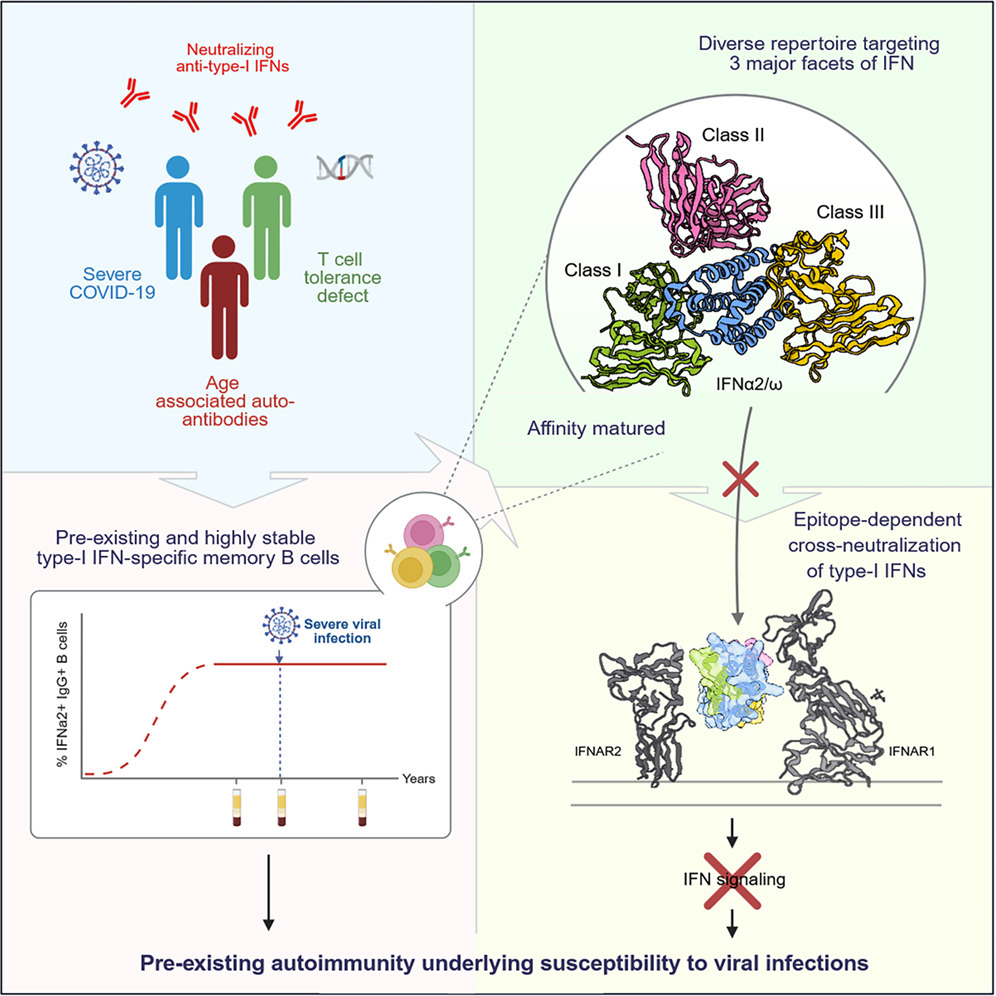
Excited to share our recent work describing the broadly cross-reactive and protective flavivirus NS1 antibody in @DWatterson_ @ProfPaulYoung and Prof. George Gao and Yi Shi. 1/n https://t.co/MgtxG282oX
AI for structural biology: given the right harness, tools, and compute, your preferred AI agent can tackle tasks such as building a protein structure from a cryo-EM density map.
In this case, Claude assembled a structure, compared its reconstruction to the published structure, then used ChimeraX to create these visuals and make this short presentation video.
🔉 CEPI is urgently accelerating the development of three investigational vaccine candidates towards clinical trials in response to the deeply concerning Bundibugyo ebolavirus epidemic.
More in the press release: https://t.co/9Me8RVv3CH
As Ebola outbreaks continue, a broad pan-Ebola neutralizing antibody that boosts the breadth & potency of partner antibodies marks a promising step toward next-generation Ebola therapeutics.
https://t.co/gYZm8zdNGm
#npj_Viruses@SpringerNature@WHO
Great to see #DRC post the initial genomes from May 2026 Bundibugyo Virus Disease Outbreak.
It helps improve diagnostics, track transmission, and accelerate development of vaccines and therapeutics.
Transparent, real-time data sharing is essential for outbreak control.
https://t.co/ovQjvgFnv3
Impressive! Genome sequence of the virus causing the outbreak in DRC/Uganda shared. That will allow checking which types of assays can be used
https://t.co/SSEnfXHsDN?
Our new paper in @ScienceAdvances shows that TLR7, a viral RNA sensor, amplifies influenza-mediated vascular inflammation and dysfunction in pregnancy, leading to adverse maternal and foetal outcomes. https://t.co/g6zG2bDjxy
@Gemmagoesviral@noxbiology@OXIBgroup@RMIT_CRSH
Can we program cells like computers — using RNA?
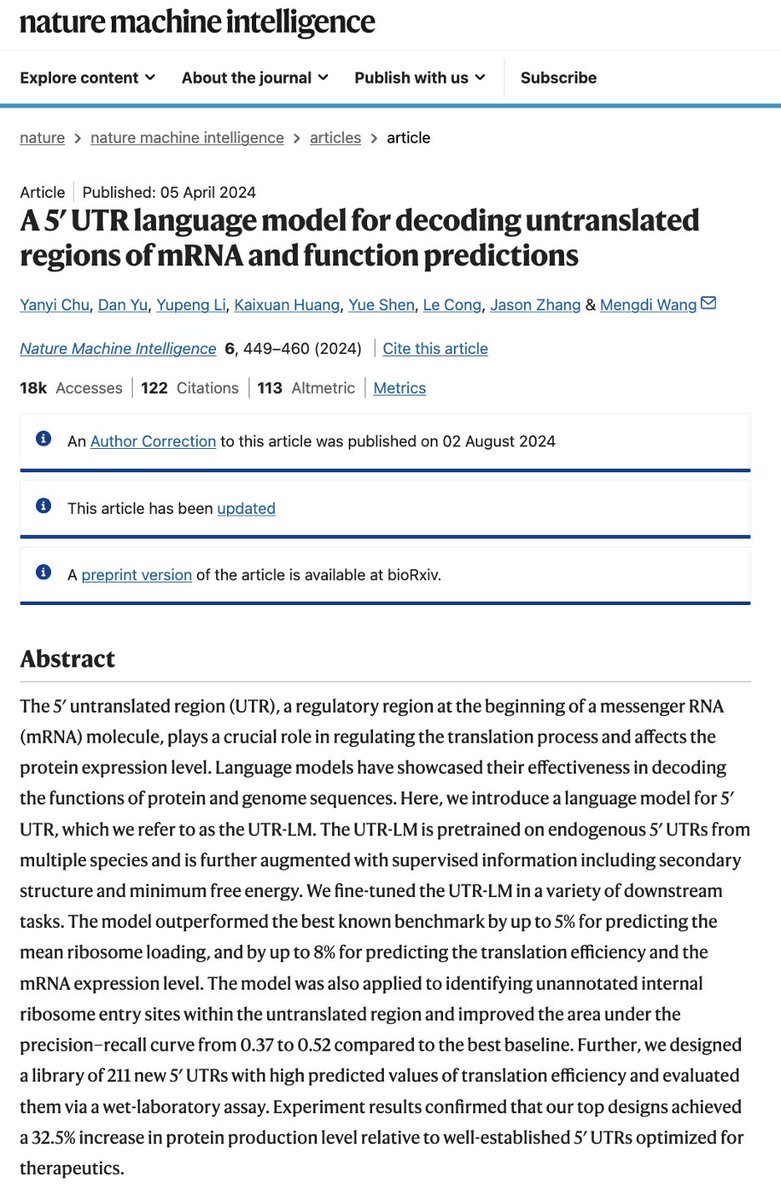
Two years ago, our group trained the first language model to decode the regulatory grammar of 5′ UTRs in mRNA, published in Nature Machine Intelligence.
Today, we’re excited to share the next step, also in Nature Machine Intelligence:
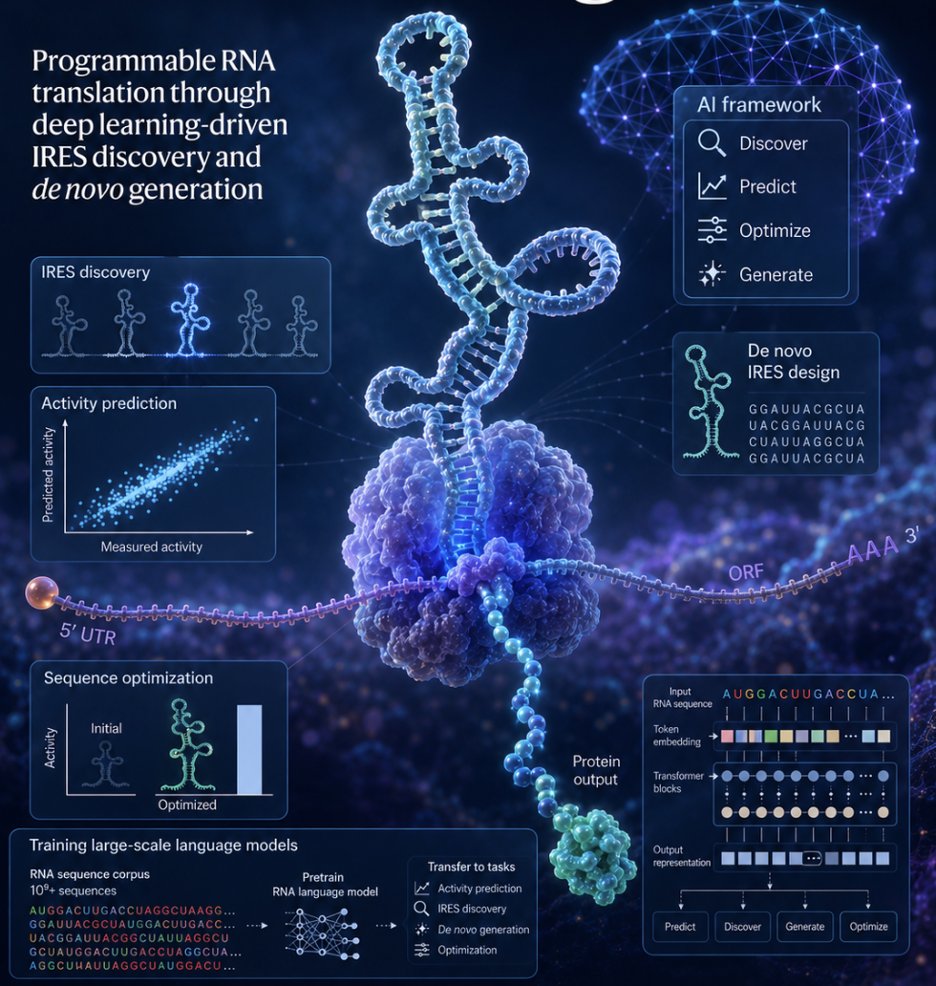
“Programmable RNA translation through deep learning-driven IRES discovery and de novo generation.”
We built an AI engine to discover, predict, optimize, and generate IRES elements — RNA control modules that regulate translation initiation.
This brings us closer to programmable RNA systems that control when, where, and how strongly proteins are produced inside cells.
AI is no longer just helping us read biology.
It is beginning to help us write it and harness it.
The future of computing may not only run on silicon — it may also run inside living cells.
#AIForBiology #LLM #AI4S #AI #RNA #MachineLearning #Bioengineering
SCMB's Dr Rhys Parry explains why the Hantavirus is very different to COVID and why the ‘Andes virus’ won’t cause the next pandemic. Read more in his article in The Conversation - https://t.co/AVlAh3qPSR.
Update on #hantavirus:
As of 12 May, 12h00 CEST, a total of 11 cases, including 3 deaths, have been reported. Nine of the 11 cases are confirmed, and the other 2 are probable. All are among passengers or crew on the ship.
We expect more cases given the dynamics of spread on a ship and the virus’ incubation period.
At the moment, there is no sign that we are seeing the start of a larger outbreak.
Passengers and crew are being followed up in their countries, where WHO recommends a 42-day quarantine at home or in a facility starting from day of departure from the ship.
WHO Technical Note for the disembarkation & onward management of MV Hondius passengers & crew https://t.co/wl8ZnCYARZ
📝 Conserved pathogenesis of ancestral & contemporary Oropouche virus in a murine pregnancy model (led by @tilstonlunel ) — out in Nature Comms 🦟 #Oropouche
https://t.co/QnlR5d10Mv
Excited to share a project using AlphaFold-guided design to identify functional nanobody binders to the itch receptor MRGPRX2! Excited about this and other computational approaches
Grateful to all especially leads @epharvey3@katherine_susa https://t.co/dTTdr36vSn @NatureComms
You've probably been reading a lot about hantavirus, currently tied to an outbreak on the MV Hondius. Our team at the @pandemiccenter has an in-depth look into the cases so far in this week's Tracking Report.
https://t.co/Xtv1g6Ks7l
⚠️Hantavirus update.
So now there is an 8th case in Switzerland (ship passenger that disembarked early, not particularly unwell).
The French ‘case’ isn’t a real case, he is simply a contact for now who was on the flight to Johannesburg with the sick Dutch case (we will need to wait 8 weeks to see if he becomes symptomatic and tests positive).
Further cases are not unexpected though.
Current cases remains early generation H2H spread on ship.
We can expect a few second or third generation cases from flights or healthcare facilities where these patients are treated.
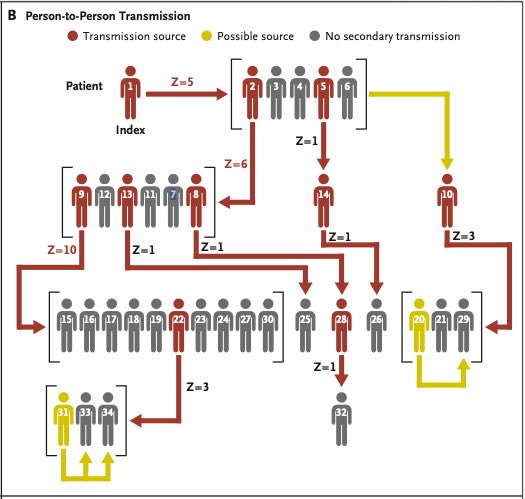
My previously reviewed article from @NEJM documents the person-to-person transmission dynamics in the Argentina outbreak:
34 cases, 11 deaths, four generations of human-to-human transmission.
This virus has very low pandemic risk, it’s too deadly and it’s R0 with isolation is far too low.
https://t.co/uVtr20FB3r