📌 WORLD SEXUAL HEALTH DAY 2026
Rwanda has made important progress in advancing sexual and reproductive health, from expanding family-planning services, lowering adolescent age of consent and youth-friendly care to strengthening sexuality education, improving maternal health outcomes and placing SRHR higher on the national agenda. Our policies and strategies demonstrate a clear commitment to improving access to quality SRHR services.
But progress must not become complacency.
Too many adolescents and young people still face stigma, misinformation, judgment and financial or geographic barriers when seeking SRHR information and services. Teenage pregnancy remains a concern, while gaps in access to family planning and other essential SRHR services continue to affect those who are most underserved.
This #WorldSexualHealthDay , we recognize how far Rwanda has come, but we also call for the work that remains.
We call on health institutions, policymakers and development partners to move beyond policies and programmes on paper and ensure that services are accessible, affordable, confidential, inclusive, youth-friendly and responsive to people’s real needs. We need comprehensive sexuality education, reliable SRHR commodities, stronger protection from sexual violence and coercion, as well as services that uphold bodily autonomy, informed choice and dignity.
Every body deserves sexual health. Every body deserves dignity. Every body deserves rights.
#WorldSexualHealthDayRw #SRHR4EveryBodyRw
World Menstrual Hygiene Day 28th May
Today, as Rwanda joins the world in observing Menstrual Hygiene Day 2026, we reaffirm a simple but powerful truth: menstrual hygiene is not a privilege, it is dignity, health, and a fundamental human right. Every girl and woman deserves access to accurate information, affordable menstrual products, clean water, safe sanitation facilities, and supportive environments that allow them to manage menstruation safely and confidently. Yet, stigma, silence, and limited access to menstrual hygiene services continue to affect the education, well-being, confidence, and opportunities of many girls and women across the world.
This year’s #MHDay2026 is a call for collective action in our schools, homes, workplaces, and communities. We must continue strengthening menstrual hygiene management in schools through access to WASH facilities, safe spaces for girls (Icyumba cy’Umukobwa), menstrual products, and reproductive health education, while also creating supportive workplaces and homes where menstruation is discussed openly and respectfully.
Together, let us break harmful myths, end period shame, and build a #PeriodFriendlyWorld where no girl misses school, no woman faces discrimination, and they can manage menstruation with safety, support, confidence, and dignity.
#MenstrualHygieneDay2026Rw #PeriodFriendlyWorldRw
Real change happens when communities lead the conversation. Their experiences guide stronger strategies to address HIV, TB, and Malaria and ensure no one is left behind. #LetCommunityLeadRw#PeopleCenteredResponse
Nothing About Us Without Us: Community Leadership is the Foundation
Effective #HIV, #TB, and #Malaria responses depend on #communities owning the #data, #discussion, and #decisions.
At the #Rwanda#CSOs and #Communities’ Stakeholder Consultative Workshop on #iCLM Priority Setting, convened by @RwandaNGOForum to shape the NSP 2027–2030 and the @GlobalFund GC8 Funding Request, this principle was evident.
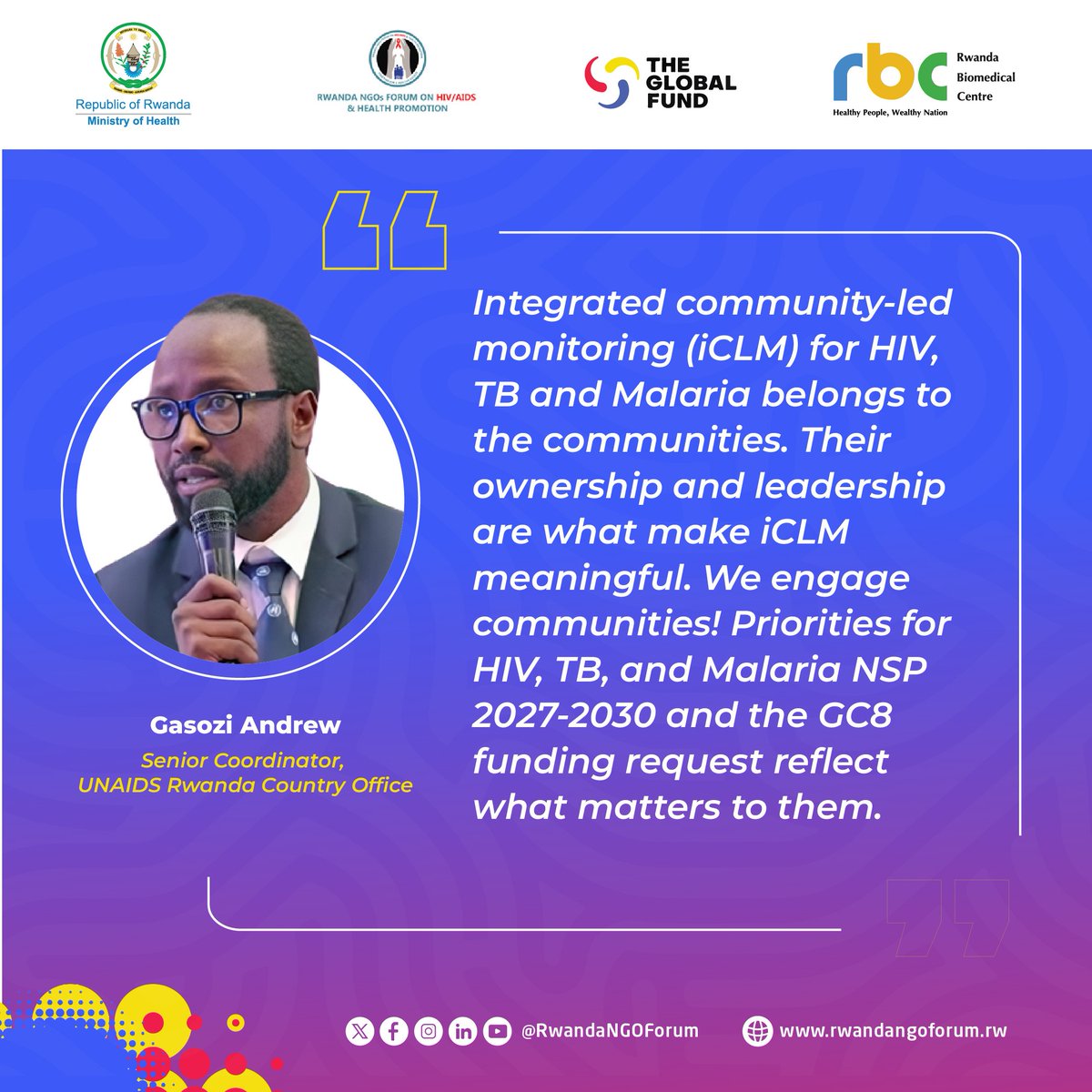
We were inspired by @AndrewGasoziNtw, Senior Coordinator at the @UNAIDSRwanda Country Office, whose words capture the essence of the conversation:
"Integrated community-led monitoring (#iCLM) for #HIV, #TB, and #Malaria belongs to the #communities. Their ownership and leadership make #iCLM meaningful. We engage #communities! Priorities for #HIV, #TB, and #Malaria NSP 2027-2030 and the GC8 funding request reflect what matters to them."
Why is this important?
Because programs only work when #communities shape them, monitor them, and speak for themselves. The principle is non-negotiable: Everything for #communities, without #communities, works against them.
We must move people from the periphery to the high-level decision-making table. #Communities should participate not as beneficiaries, but as leaders and equal contributors.
✅Ownership: #iCLM isn’t just a data collection tool; it is the #community’s voice. #Community-owned data reflects reality, not assumptions.
✅Leadership: When those at risk, living with, or affected by the diseases, and fighting them daily, set priorities, resources are allocated effectively and equitably.
✅Accountability: We cannot design solutions in a vacuum and expect them to work on the ground. True accountability means #communities drive the response.
The upcoming #HIV, #TB, and #Malaria NSP 2027–2030 and the @GlobalFund GC8 funding request must continue to boldly reflect #communities’ priorities. #Community voice must drive better policies, stronger accountability, and responses that save lives.
Civil society leaders and #communities will continue to shape these critical documents through consultative and development workshops, sharing #community priorities, and providing feedback on drafts. This active involvement ensures that both #HIV, #TB, and #Malaria NSP2027-2030 and @GlobalFund GC8 funding request are grounded in real experience and drive change where it matters most.
Thank you to @AndrewGasoziNtw, @RwandaNGOForum, and all civil society organizations and #community leaders for driving this agenda forward. The path to ending #HIV, #TB, and #Malaria is paved with #community-led evidence. #LetCommunityLeadRw #PeopleCenteredResponse #HealthIntegration #CommunityData #HealthForAll
@nsanzimanasabin@JNdayizigiye@HindHassan_@CMuvunyi@BrianChirombo@CDCRwanda @ambafrancerw @expertisefrance@unwomenrwanda@unicefrw@PIH_Rwanda@ITPCglobal@ICAP_ColumbiaU@GFAN_Africa@ahfrwanda@PEPFAR@Avega_Agahozo_@dreamvillage6@AmahoroR@Imbuto@ASOFERWA2@PSF_Rwanda@CaritasRwanda@sfhRwanda@ALMA_2030@HAImedicines@EUinRW@NLinRwanda@InterfaithRda@rrpplus@uphls@ASOFERWA2@ABASIRWA2@ambafrancerwa@PeterASands@DMbituyumuremyi@Knooliet@BernardMuramira@CrescenceMUKAN1
From Recipients to Decision‑Makers, Communities Lead Rwanda’s Health Priorities
During the #Rwanda CSOs and Communities’ Stakeholder Consultative Workshop on iCLM Priority Setting to inform #HIV, #TB, and #Malaria#NSP 2027–2030 and @GlobalFund GC8 Funding Request, organized by @RwandaNGOForum, we witnessed a shift in how health responses are shaped in #Rwanda. Community voices are not just heard but actively direct the setting of health priorities.
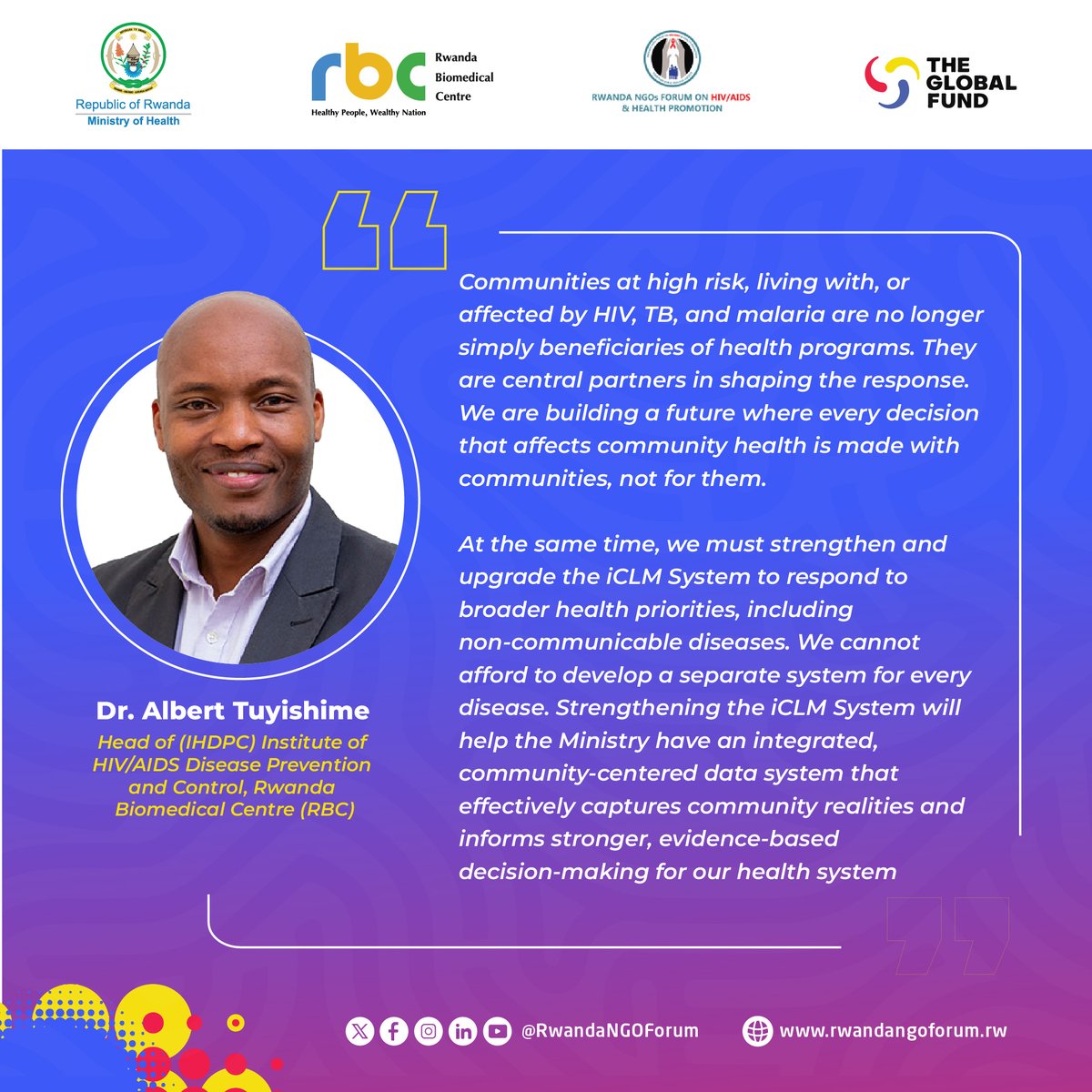
Representing @RwandaHealth and @RBC_Rwanda, Dr. Albert Tuyishime (@TuyishimeAlbert), Head of Diseases Prevention and Control Department (HDPC), delivered a people-centred call to action that expands our vision for the future: Communities are no longer just recipients; they are leaders, partners, and decision-makers. Those closest to the challenges are also closest to shaping the solutions too.
✅ When communities lead, responses are more effective and sustainable.
✅ When communities lead, no one is left behind.
✅ When communities lead, we move closer to ending HIV, TB, Malaria, and other public health threats.
When we talk about fighting #HIV, #TB, and #malaria, and increasingly, the rising tide of non-communicable diseases (#NCDs), we must acknowledge that data is our compass. However, the most accurate data does not come just from labs and hospitals; it comes from the community at high risk, living with, or affected by diseases and conditions.
For too long, the global health architecture has suffered from “vertical syndrome,” building separate data-collection systems and monitoring tools for every disease priority. This is not only inefficient; it is unsustainable. It fragments the service users’ experience and creates a massive burden on those at the front lines.
The strategic move to strengthen and upgrade the #iCLM System is a must-do in health system strengthening. By strengthening the #iCLM System to respond to broader health priorities, including #NCDs, we are doing two critical things:
1. We respect the community’s time and save resources: The #iCLM System streamlines data collection, allowing a peer educator or community monitor to collect information for multiple diseases at once, eliminating the need for three separate appointments. This saves the community time, speeds up responses, and conserves resources.
2. We are democratizing data: The #iCLM System captures the realities of the community. It ensures that when the Ministry makes a decision, whether about resource allocation or policy change, it is informed by evidence that reflects the ground truth.
This is the essence of building a resilient health system. It’s a recognition that community expertise is just as critical as boardroom expertise, and a commitment to making decisions with communities, not just for them.
@RwandaNGOForumcommends this forward-thinking approach from @RBCRwanda and @RwandaHealth. This is how we build a future that is sustainable, equitable, and truly healthy for all. Rwanda’s integrated, community-led model can offer valuable lessons for other countries and organizations aspiring to strengthen their own health systems.
This is the future we are building. A future led by community. #LetCommunityLeadRw #PeopleCenteredResponse #HealthIntegration #CommunityData #HealthForAll
@nsanzimanasabin@JNdayizigiye@HindHassan_@CMuvunyi@AndrewGasoziNtw@BrianChirombo@CDCRwanda@ambafrancerwa@expertisefrance@unwomenrwanda@unicefrw@PIH_Rwanda@ITPCglobal@ICAP_ColumbiaU@GFAN_Africa@ahfrwanda@PEPFAR@Avega_Agahozo_@dreamvillage6@AmahoroR@Imbuto@ASOFERWA2@PSF_Rwanda@CaritasRwanda@sfhRwanda@ALMA_2030@HAImedicines@EUinRW@NLinRwanda@ncdalliance@RwandaNCDA@InterfaithRda@rrpplus@uphls@ASOFERWA2@ambafrancerwa@PeterASands@DMbituyumuremyi@Knooliet@BernardMuramira@CrescenceMUKAN1
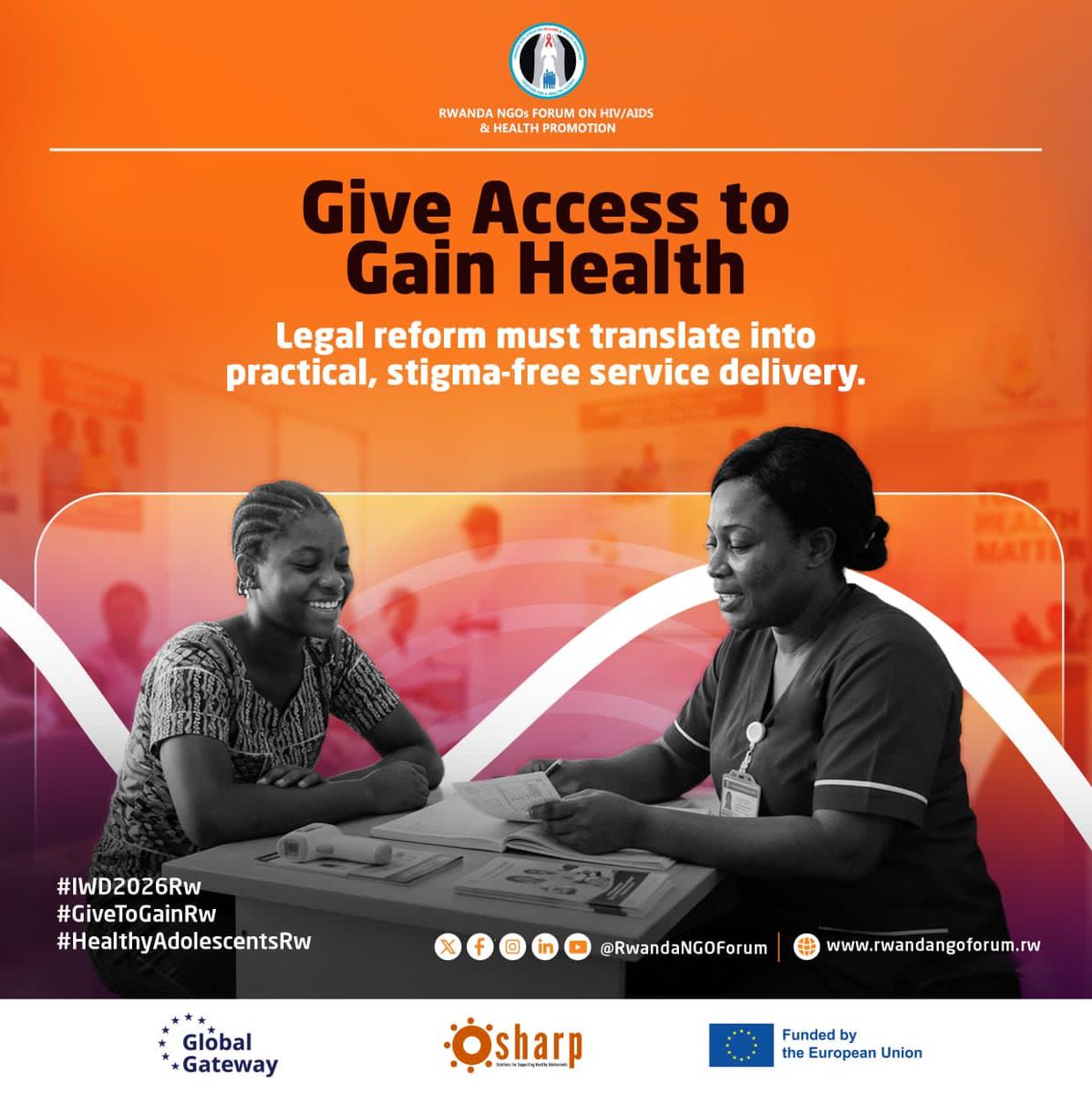
Adolescents thrive when they have access to trusted information and supportive healthcare. Let’s ensure services meet their needs with dignity and respect.
#IWD2026Rw#GiveToGainRw#HealthyAdolescentsRw
Adolescents have the right to accurate information and accessible sexual and reproductive health (#SRH) services. While laws and policies exist to support access to healthcare, many young people still face barriers when seeking these services. Misconceptions about adolescents’ rights, stigma around discussing SRH, and fear of judgment often discourage young people from visiting health facilities, leaving many without the support and information they need to make informed decisions about their health.
For adolescents to truly benefit from SRH services, healthcare systems must be welcoming, respectful, and responsive to their needs. In many communities, especially in rural areas, gaps remain in the availability of youth-friendly services and in the attitudes of some service providers. Expanding youth-friendly corners in health facilities and strengthening the capacity of healthcare providers to deliver non-judgmental, confidential, and adolescent-centered care is essential to ensure that young people can seek help without fear or stigma.
Access to #SRH services is not just about having laws in place, it is about ensuring those laws translate into real, practical access for adolescents everywhere. By addressing misconceptions, strengthening service delivery, and prioritizing adolescent-friendly healthcare, we can create an environment where young people are empowered with the knowledge and services they need to protect their health, plan their futures, and thrive.
#IWD2026Rw
#GiveToGainRw
#HealthyAdolescentsRw
Shared responsibility drives meaningful progress. Together we are shaping better health services for communities affected by HIV, TB & Malaria. #CommunityImpact
United by Purpose: How Collaboration Drives Meaningful Impact
This week, @RwandaNGOForum hosted a Stakeholder Consultative Workshop to inform the #HIV, #TB, and #Malaria NSP 2027-2030 and the GC8 Funding Request. The workshop brought together CSOs, the Private Sector, partners, and communities at high risk, living with, or affected by #HIV, #TB, and #Malaria. Our Chairperson, Bernard Muramira (@BernardMuramira), highlighted the value of community development and diversity as our strength.
Civil Society Organizations (#CSOs) and Community-Led Organizations (#CLOs) often work in silos, each with its own mandate and expertise. Yet, as @BernardMuramira emphasized, when we unite for the shared goal of serving communities, our collective power grows. Our diverse group of stakeholders offers a spectrum of knowledge and resources. This diversity is our greatest asset, not a challenge.
1. Diverse expertise: The Private Sector brings innovation and efficiency. CSOs bring deep, grassroots connections and advocacy. NGOs contribute specialized experience in program design and implementation.
2. Diverse reach: By collaborating, we avoid duplication of efforts and ensure critical services reach every corner of the community. Together, we maximize the meaningful impact we aim to achieve.
3. Diverse solutions: Complex community issues rarely have a single, simple fix. By bringing together minds from different backgrounds, we generate more holistic, creative, and sustainable solutions that truly reflect the community's needs.
@RwandaNGOForum's commitment to collaboration reflects the belief that no single entity holds all the answers; together, we share the responsibility for greater success.
Each stakeholder's unique contribution is vital. United by service, our collaboration drives meaningful, lasting change and improves services for those at risk or affected. #LetCommunityLeadRw #UnitedByPurpose #DiversityIsOurStrength #CommunityImpact #OneHealth
@CDCRwanda@ambafrancerwa@expertisefrance@nsanzimanasabin@JNdayizigiye@HindHassan_@CMuvunyi@TuyishimeAlbert@AndrewGasoziNtw@BrianChirombo@unwomenrwanda@PIH_Rwanda@ICAP_ColumbiaU@ahfrwanda@PEPFAR@Avega_Agahozo_@dreamvillage6@AmahoroR@Imbuto@ASOFERWA2@PSF_Rwanda@CaritasRwanda@sfhRwanda@ALMA_2030@HAImedicines@EUinRW@NLinRwanda@InterfaithRda@rrpplus@uphls@ASOFERWA2@ambafrancerwa@PeterASands@DMbituyumuremyi@Knooliet@BernardMuramira@CrescenceMUKAN1
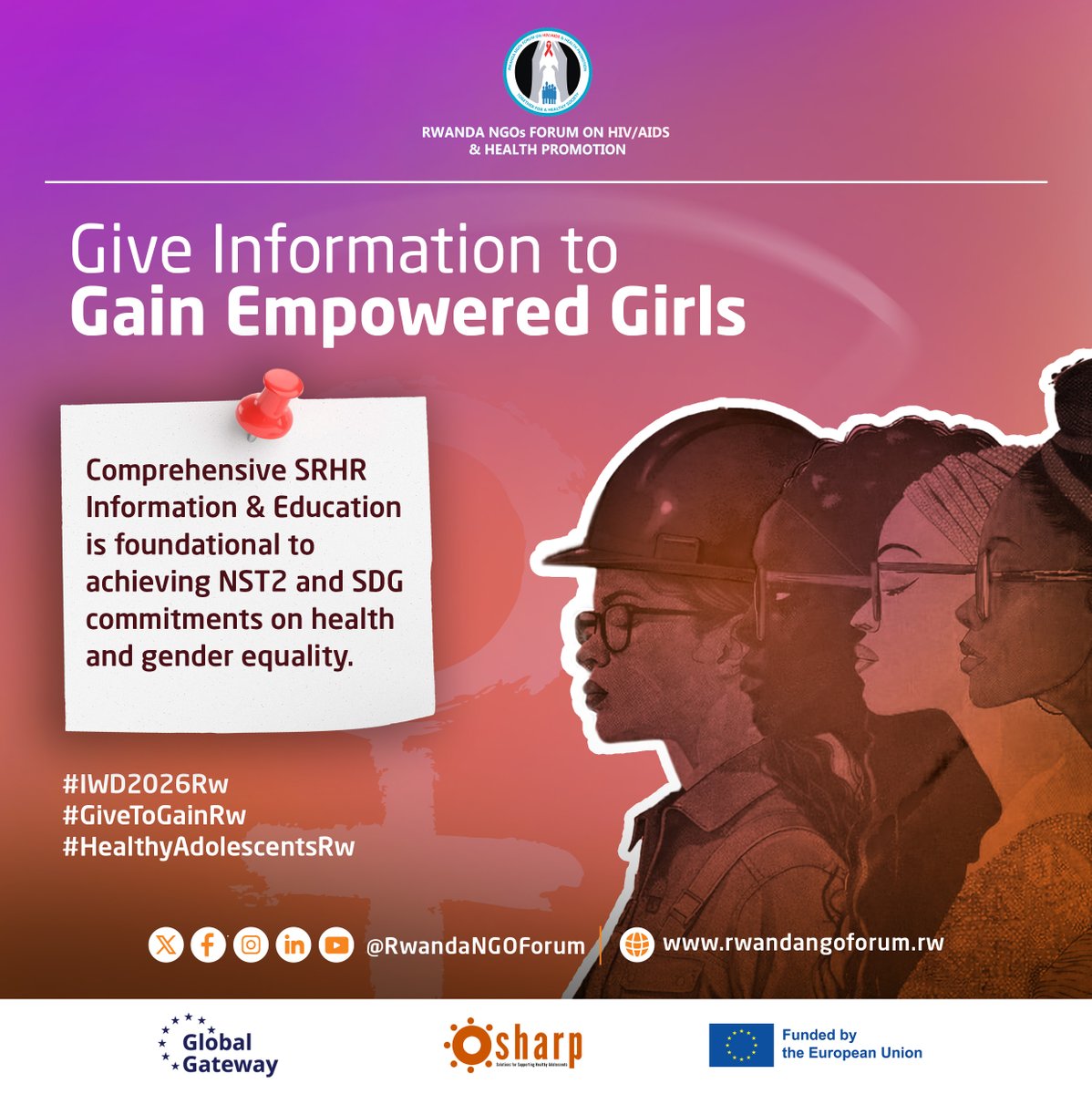
Give Information to Gain Empowered Girls
Rwanda has made significant progress in advancing adolescent sexual and reproductive health. The expansion of youth-friendly services, improved access to modern contraceptives, a stronger legal framework regulating health care services, and continued reduction in maternal mortality reflect a national commitment to protecting girls’ health and rights. Compared to previous decades, adolescents today have greater awareness and more platforms to access information than ever before. This progress proves that when systems invest in knowledge and access, lives improve.
Yet important gaps remain. Misinformation about sexual and reproductive health persists, stigma continues to silence young people, and open conversations between parents and adolescents are still limited in many communities. Without accurate, age-appropriate, and stigma-free information, girls are left vulnerable to unintended pregnancies, unsafe practices, and missed opportunities to make informed choices about their futures.
This Women’s Day 2026, under the theme “Give To Gain,” we call for greater investment in comprehensive sexuality education, stronger parent-adolescent communication, and responsible digital awareness campaigns. When we give girls accurate information, we gain confident decision-makers, healthier families, and a stronger nation.
#IWD2026Rw
#GiveToGainRw
#HealthyAdolescentsRw
Youth Leading the Change. Futures Worth Protecting.
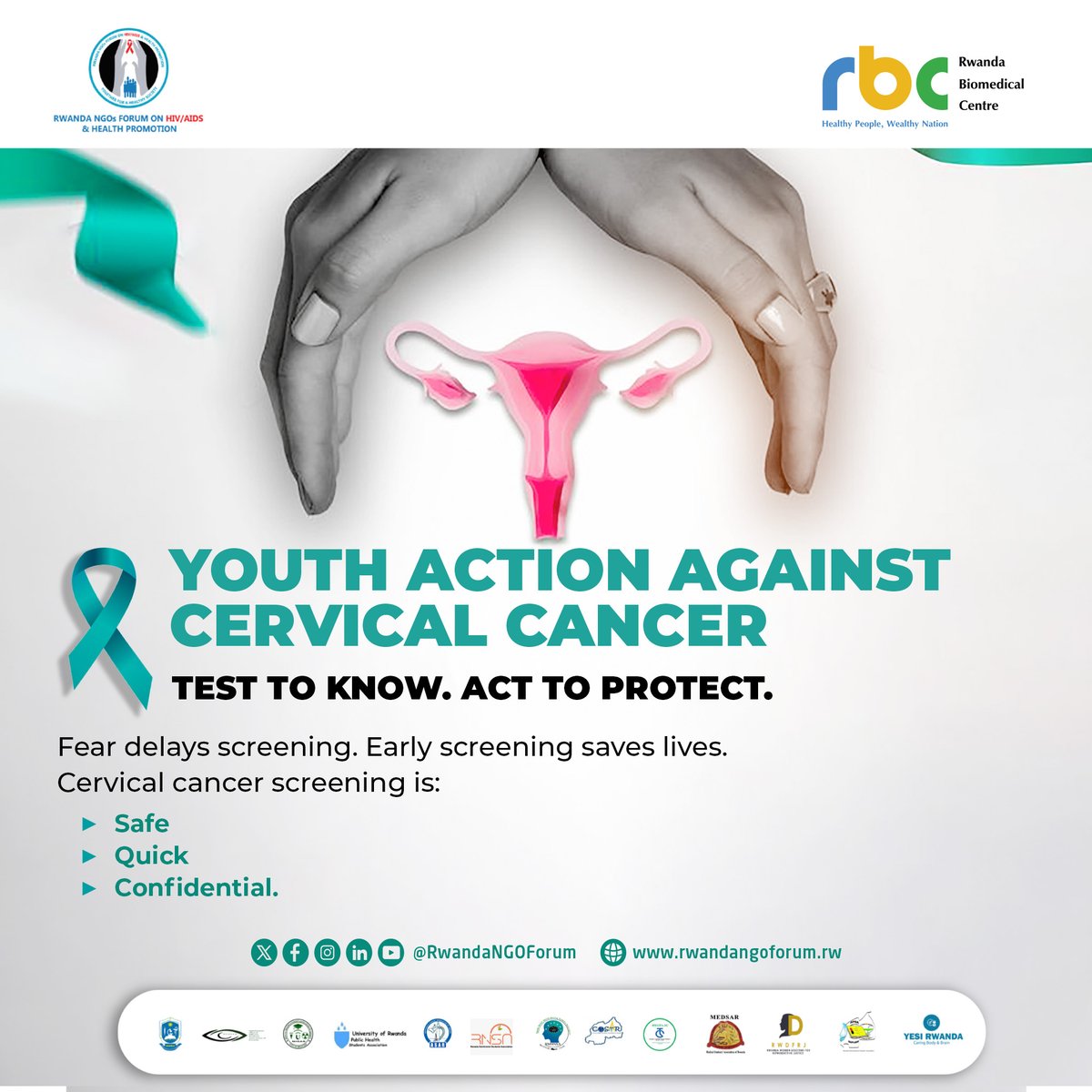
Today, @RwandaNGOForum , in collaboration with youth-led and student organizations and associations, launches Youth Action Against Cervical Cancer, a call for young people across Rwanda to lead the movement for prevention, awareness, and early detection. The campaign aligns with the #Rwanda #Mission2027 cervical cancer elimination strategy.
Cervical cancer is preventable and treatable when detected early. The power to change the story is in our hands.
We are amplifying one clear message: Test to Know, Act to Protect. The Human Papillomavirus (HPV) vaccine and cervical cancer screening save lives.
No woman or girl should be left behind because of vaccine hesitancy, being an out-of-school girl, poverty, stigma, fear, misconceptions, or lack of information.
Let us all be part of the journey. Encourage a sister, a friend, or a mother, start the conversation, seek screening, and support HPV vaccination.
Together, we can prevent cervical cancer and build a healthier generation.
#YouthAgainstCervicalCancerRw
#TestToKnowRw
#ScreeningSavesLivesRw
@RwandaHealth@UwinkindiFranco@RBCRwanda@WHORwanda@RwandaNCDA@CDC_Cancer@RwCancerRelief@AfriCF@bciea@GlobalFundWomen@SU2C@ncdalliance@uicc@WHO@GlobalFund@UN_Women@WCRF_CA@CosarOfficial@HDIRwanda@medsar_rwanda@Yesi_Rwanda@urphsa@HAImedicines@Knooliet@TungaChristian@Loui_Ngabonzima
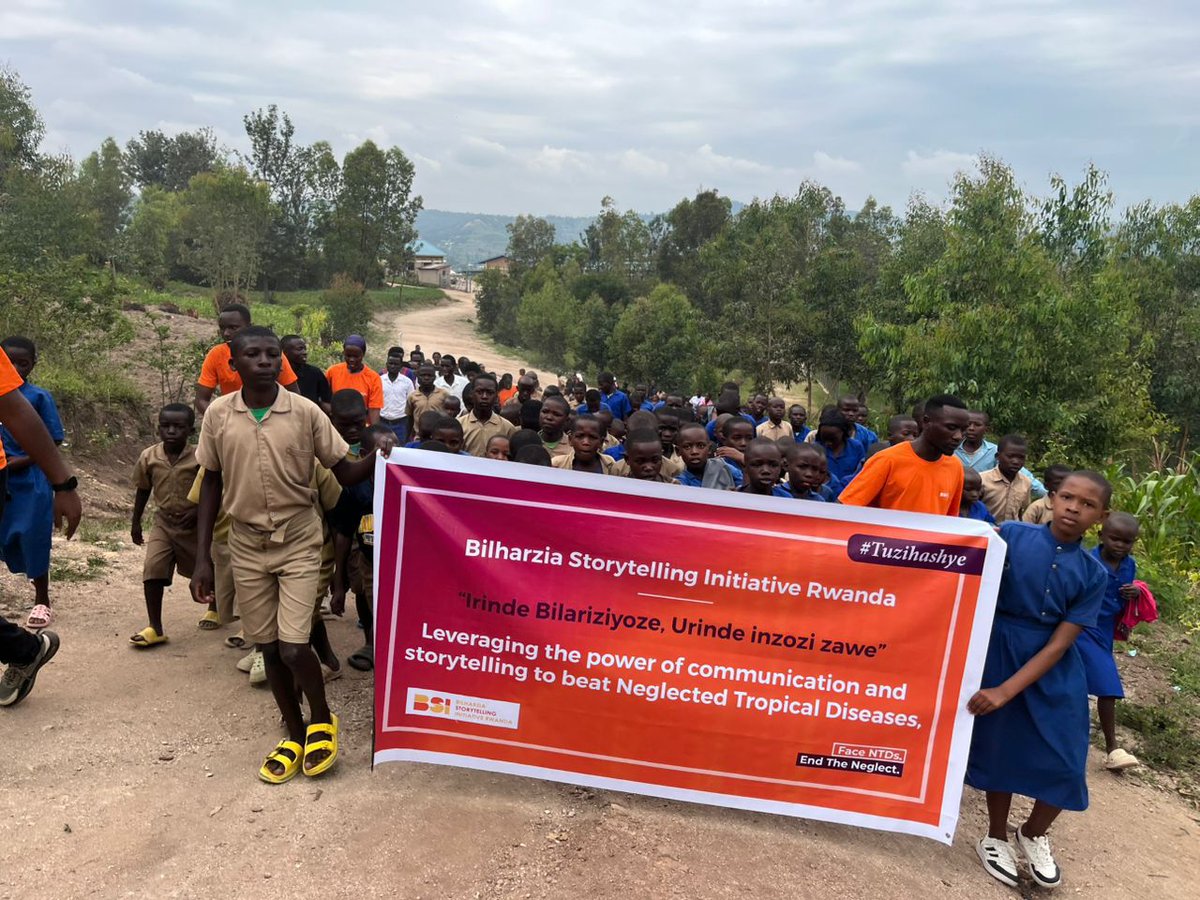
Rwanda's Road to 2030: Advancing NTD and Leprosy Elimination Through One Health Action
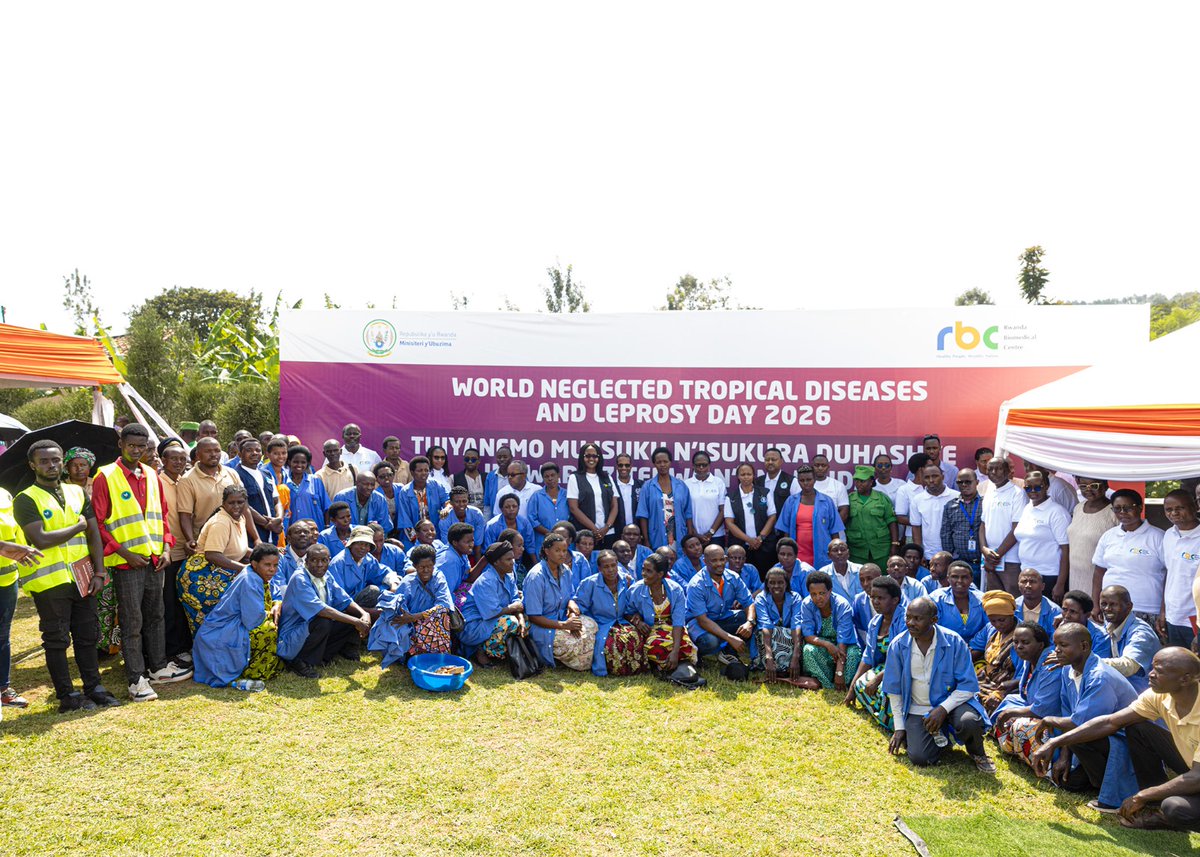
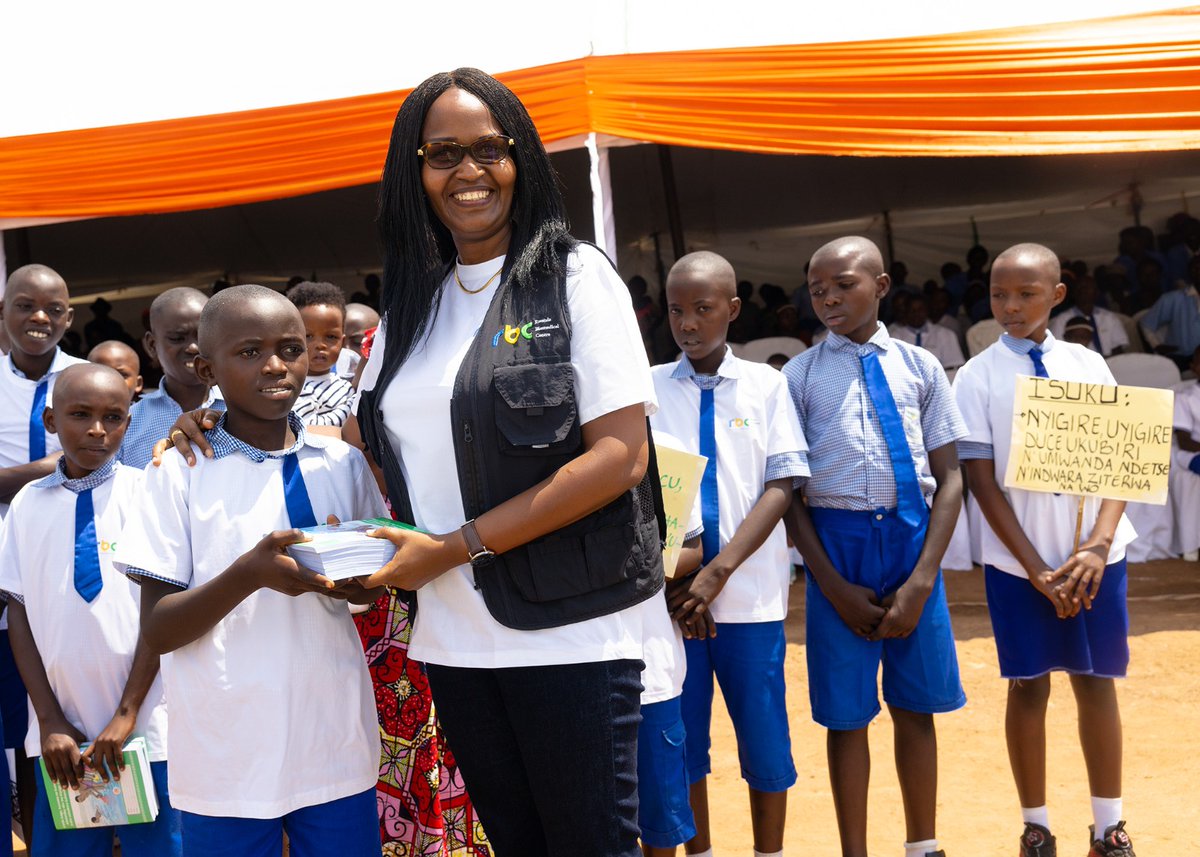
@RBCRwanda, in collaboration with @RwandaNGOForum, under the support of @TheENDFund and partners, including @WHORwanda, Heart and Sole Africa (HASA), Welfare for Animals Guild Rwanda (WAG), and others, has today led the national celebration of World #NTDs and #Leprosy Day, themed "Tujyanemo mu isuku n'isukura duhashye indwara ziterwa n'umwanda."
Gathered in @RuhangoDistrict, #Rwanda celebrates significant gains, including the elimination of Sleeping Sickness and a drop in intestinal worm infections from 66% in 2012 to 39% in 2022. These results prove what happens when communities, partners, and stakeholders take coordinated action.
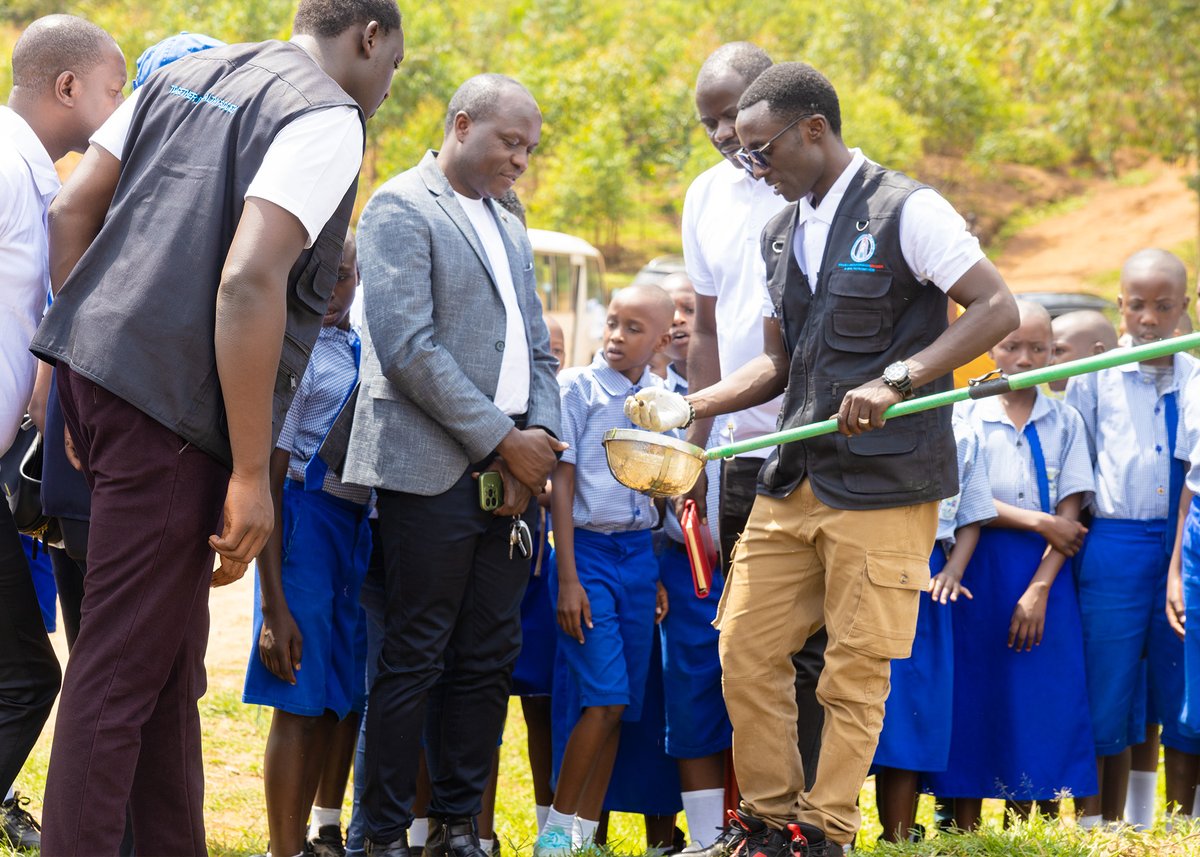
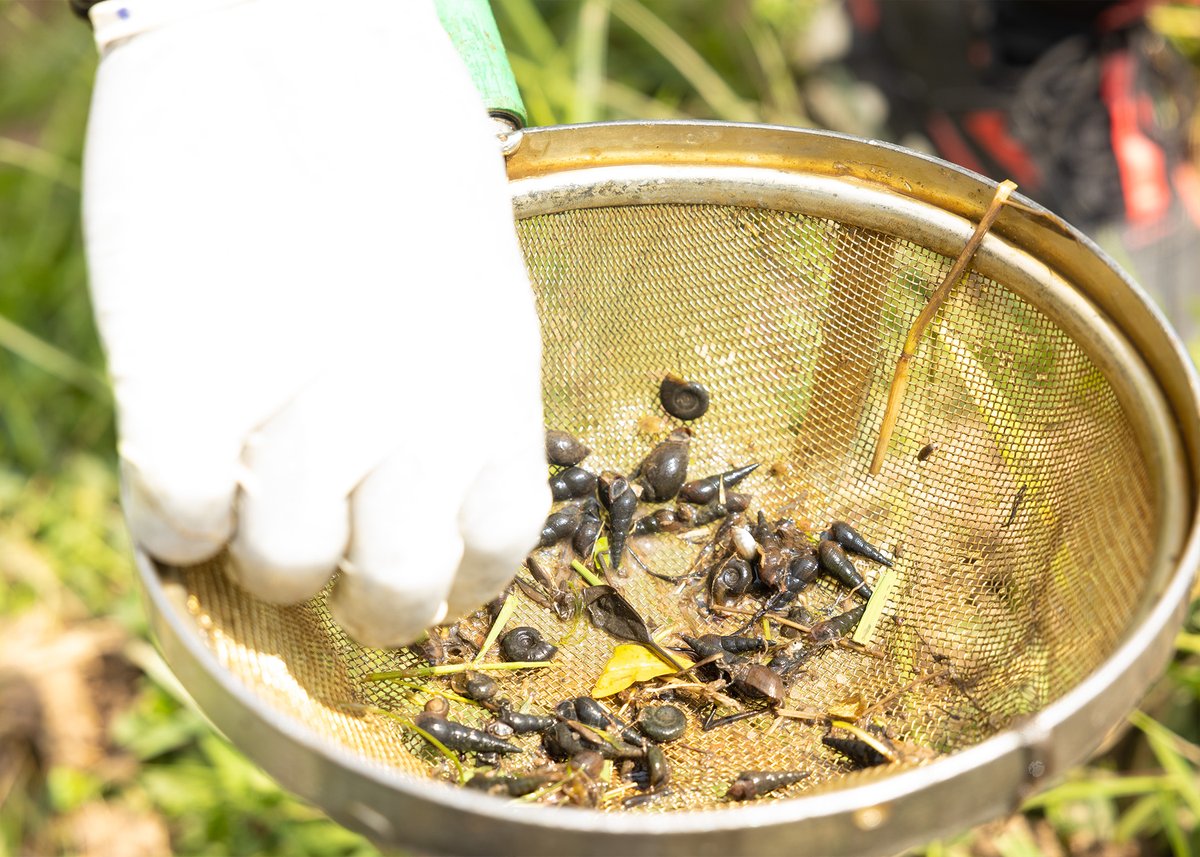
But the Last Mile is still ahead. Districts, including @RuhangoDistrict and @BugeseraDistr, continue to face Schistosomiasis (SCH) and Soil-transmitted helminths (STH). Sustained community effort and a One Health mindset remain essential.
Dr Isabella Mukagatare, @RBCRwanda representative, emphasized that progress depends on everyday actions: "Collaboration between government institutions, Civil Society, private sector, and communities is essential in the fight against neglected diseases and leprosy. By improving hygiene, raising awareness, and bringing health services closer to the people, we can make significant progress." Her words point directly to simple steps: clean homes, safe water, and timely care.
Leprosy remains misunderstood. It is curable and does not spread through casual contact. Stigma delays treatment and harms families. The @WHORwanda Head of Mission and Country Representative, @BrianChirombo, called for immediate action to protect dignity: "By acting now to improve hygiene and end stigma, we ensure that no one is left behind." Ending stigma and harmful myths is equally important as taking medicine."
The message for every #Rwandan is clear: maintain hygiene, use safe water, report symptoms early, and participate in Mass Drug Administration (MDA) campaigns.
As the @RwandaNGOForum Executive Director, @Knooliet, reminded all partners and stakeholders, "Defeating NTDs and Leprosy is not possible through the health sector alone; it requires strong collaboration between water and sanitation, local government, agriculture, education, environment, and infrastructure sectors. Collaboration among all these sectors is a cornerstone, not a choice. We must view multisectoral coordination and collaboration as a continuous commitment rather than a one-time event, aligning our programs and budgets to maximize impact."
Together, #Rwanda moves toward the 2030 #NTDs elimination goals.
#UniteActEliminateRw #IsukuHose #WorldNTDsDay
@RwandaHealth@RwandaLocalGov@RwandaAgri@RwandaSouth@Rwanda_Edu@merckgroup@unicefrw@UNDP_Rwanda@WorldBankAfrica@ENDinAfrica@UNITAID@gatesfoundation@FCDOGovUK@GlobalFund@SCIRwanda@USAIDRwandaMD@RockefellerFdn@ELMAPhilanthro@AmrefAfrica@IntraHealth@MSF@AfricaCDC@SciDevNet@HealthPolicyW@TheLancet @FightSchistoRw
Accès aux soins en Afrique 🌍
Kigali sacrée n°1 !
Une réussite inspirante qui place l’Afrique de l’Est en tête, tout en reconnaissant avec modestie les défis qui restent.
Des avancées concrètes, de l’ambition et encore du chemin à parcourir
https://t.co/PgmbNvi1YK
Our SHARP Champions, Harerimana Tito (@harerimana_tito ) a social media influencer and Rt. Rev. Antoine Nzayisenga (@antonzayi2014 ), a Faith leader, are raising their voices to call for an end to Technology-Facilitated Gender-Based Violence (TFGBV).
As digital spaces become central to how we learn, work and connect, no one should face harassment, threats, or online abuse. Their message is clear: protecting women and girls online is a shared responsibility, and every action counts, from speaking out to reporting harmful behavior.
Together, we can build a safer, respectful, and empowering digital environment for all.
#16DaysRw
#EndGBVRw
#EndTFGBV
#NoExcuseRw
#HealthyAdolescentsRw
Knowledge + Prevention = Protection. Stay informed. Stay safe.
Information is your strongest defense against HIV.
#WADRwanda2025#SustainAndAccelerateRw
4 DAYS TO WORLD AIDS DAY 2025!
As the countdown to #WorldAIDSDay continues, we are reminded that HIV prevention starts with the choices we make every day. Protecting yourself and others is a shared responsibility, practice safer sex, use condoms correctly and consistently, consider PrEP if you are at higher risk and seek supportive, youth-friendly health services available across Rwanda. When you take action, you safeguard not only your own wellbeing but also the health of your community.
Prevention remains one of the most powerful tools in the HIV response. By staying informed, breaking stigma, encouraging testing and supporting people living with HIV , we strengthen Rwanda’s collective resilience in the journey toward ending AIDS by 2030.
Together, we can sustain and accelerate the progress already made and build a healthier, more inclusive future for all.
#WADRwanda2025
#SustainAndAccelerateRw
#ResilientCommunitiesRenewedResponse
#WAD2025











![RwandaNGOForum's tweet photo. Nakora iki nkomeje kugira ibimenyetso bya malariya kandi namaze imiti ya malariya nandikiwe?
Mu rugamba rwo guhashya Malaria mu Rwanda, hari amakuru mashya buri wese akwiye gusobanukirwa kugira ngo ubuzima bwacu bukomeze kumera neza.
Kenshi twibaza tuti: “Kuki hatakoreshwa ubwoko bumwe gusa bw’imiti bwari busanzwe buhari?”
Igisubizo ni uko gukoresha ubwoko bumwe gusa bw’imiti igihe kirekire bituma udukoko dutera Malaria tugezaho tukamenyera uwo muti. Ibi bituma umuti ugabanya imbaraga, bityo udukoko tukagira ubudahangarwa kuri wa muti. Kugira ngo ibi bitabaho, u Rwanda rwatangije uburyo bwo gukoresha imiti y’ubwoko butandukanye (Multiple First-Line Treatment [MFT]). Ibi bituma udukoko tudashobora kumenyera imiti yose icyarimwe, bityo ubudahangarwa bwayo bugakomeza kuba bwinshi mu guhangana n’indwara.
Ikindi kibazo abantu bakunze kwibaza ni: “Nakora iki nkomeje kugira ibimenyetso bya Malaria kandi namaze imiti yose nahawe?”
Iki ni ikimenyetso kigaragaza ko udukoko dushobora kuba twaranangiye (resistance). Iyo bimeze gutya, ntukagure indi miti cyangwa ngo utegereze. Urasabwa kwihutira gusubira kwa muganga cyangwa kureba umujyanama w’ubuzima. Iyo ugiye kwa muganga hakiri kare, baragusuzuma, bakaba banaguhindurira umuti ugezweho kandi ufite imbaraga zihagije zo guhashya utwo dukoko twari twaranangiye (resistance).
Ibuka ko kwisuzumisha no kurangiza imiti uko wayandikiwe ari rwo rufunguzo rwo kurandura Malaria mu Rwanda.
#KuranduraMalariyaBiheraKuriNjye #MultipleFirstLineTreatmentRw
@RwandaHealth @RBCRwanda @WHORwanda @RwandaLocalGov @Rwanda_Edu @REBRwanda @RwandaAgri @RwandaAgriBoard @PSF_RWA @RwandaMoD @Rwandapolice @RCS_Rwanda @RwandaEast @RwandaSouth @RwandaWest @CityofKigali @RwandaNorth @GisagaraDistr @GasaboDistrict @Nyarugenge @KicukiroDistr @BugeseraDistr @NyagatareDistr @KireheDistrict @NgomaDistrict @GicumbiDistrict @Muhangadis @RusiziDistrict @KarongiDistr @RubavuDistrict @MusanzeDistrict @JhpiegoRwanda @sfhRwanda @ahfrwanda @Sfrwanda1 @InterfaithRda @ProfemmesTH @nsanzimanasabin @YvanButera @DMbituyumuremyi @TuyishimeAlbert](https://pbs.twimg.com/media/G8sONR6W0AASdbX.jpg)


