New preprint from our lab @NIH! #KIF1A has been known for decades, but its role in axonal lysosomal vesicle transport was unclear. We show it is essential—and reveal a selective gate controlling which lysosomal vesicles enter mature axons.
https://t.co/lPqyKYQDtV
Out now. A collaboration with Sofia Lövestam, Masato Hasegawa and Sjors Scheres. We report that tau filaments extracted from the brains of individuals with Alzheimer’s disease and corticobasal degeneration breed true in the brains of wild-type mice. https://t.co/hAgJiZhBFY
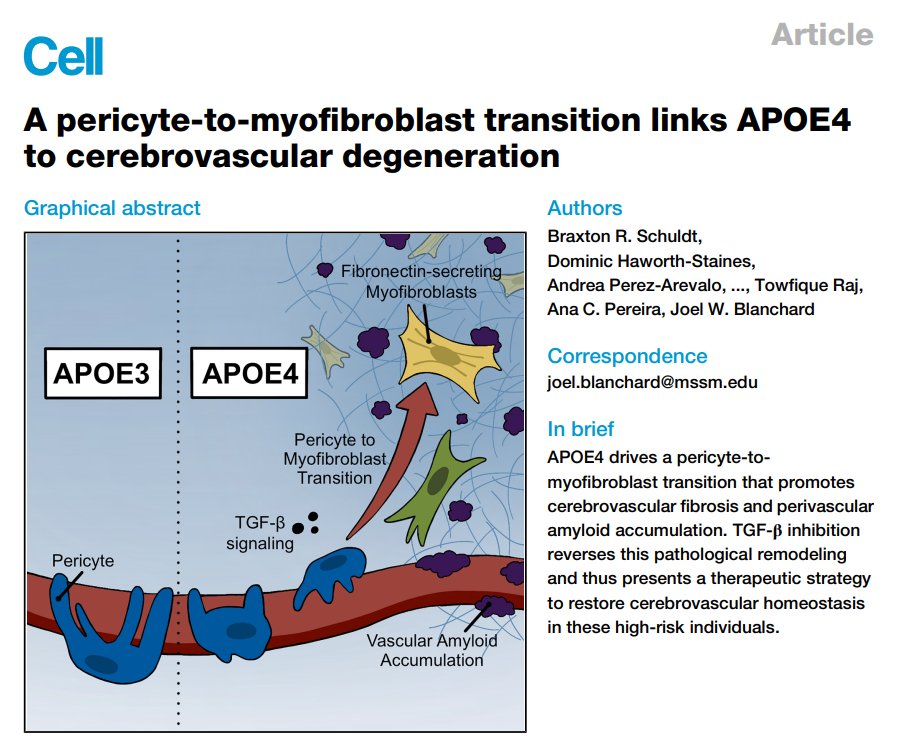
Blood vessels in the brain deteriorate in Alzheimer’s, especially in APOE4 carriers. But what drives this damage?
Our new study, out now in @CellPressNews , uncovers a mechanism linking APOE4 to vascular fibrosis and amyloid accumulation in the brain. 🧠🧬
New TYP lab paper out today in @PNASNews from former PhD student Zach Augur and postdoc @FogoGarrett all about how astrocytic BAG3 coordinates Alzheimer's proteostasis proteins! Read all about it here: https://t.co/BWh6nkkyc4
Thrilled to see PsychAD published! 🧠
A journey begun in 2019: 60+ investigators, 8 institutions, 1,494 human brains—illuminating brain aging and disease.
Supported by NIA. Made possible by the generosity of donors and families.
https://t.co/12ZRfmEbEE
https://t.co/Ffag0esAWr
One unsolicited piece of advice for new #gradstudents. Don't settle on ALL of your #rotations before school starts. Use the first semester to explore. Talk to people! Check out labs and areas that you haven't considered! Go outside of your comfort zone! Let yourself be surprised!
The FDA has cleared a blood test developed from technology invented at WashU Medicine to aid in diagnosing Alzheimer’s disease. The test, PrecivityAD2, can detect amyloid plaque biomarkers with over 90% accuracy.
https://t.co/niCuqn8MY3
MAPT splicing modulators reduce 4R tau and rescue tauopathy phenotypes in human neurons and in a mouse model | Science Translational Medicine https://t.co/FpOtOOlD86
Happy to share the lab's new work characterizing the impact of a youth-associated protein on microglial function. Congrats to 1st author Brittany Hemmer, w/ excellent contributions f/ @philippi_sarah and all co-authors!
@IcahnMountSinai@SinaiBrain
Paper: https://t.co/aoSEgjomN4
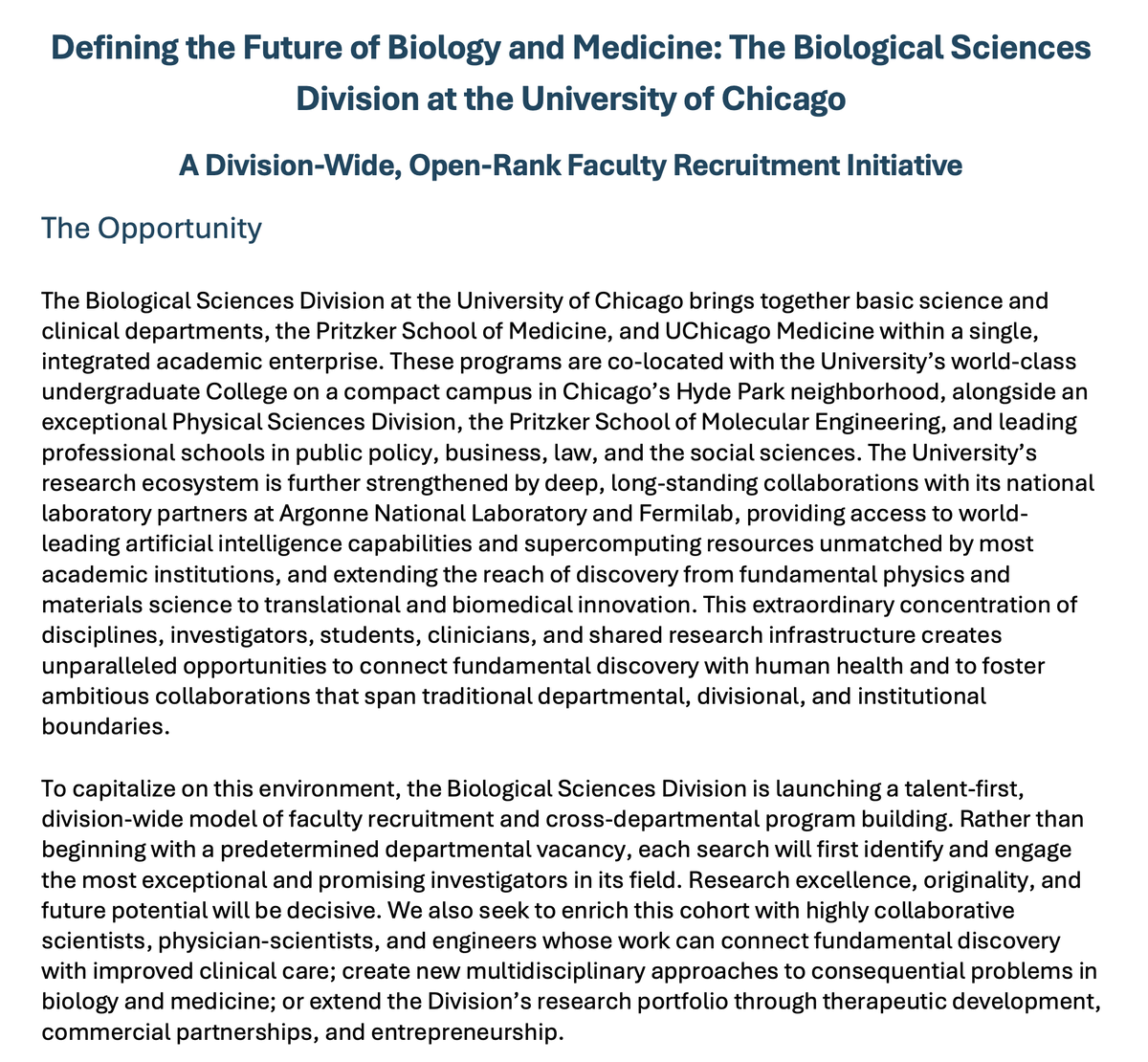
Huge faculty recruitment effort at the University of Chicago -- a division-wide, open-rank search looking to hire about 20 faculty across 5 research areas in biology. Come be our colleague!
Full announcement: https://t.co/FoVLJpHqNS
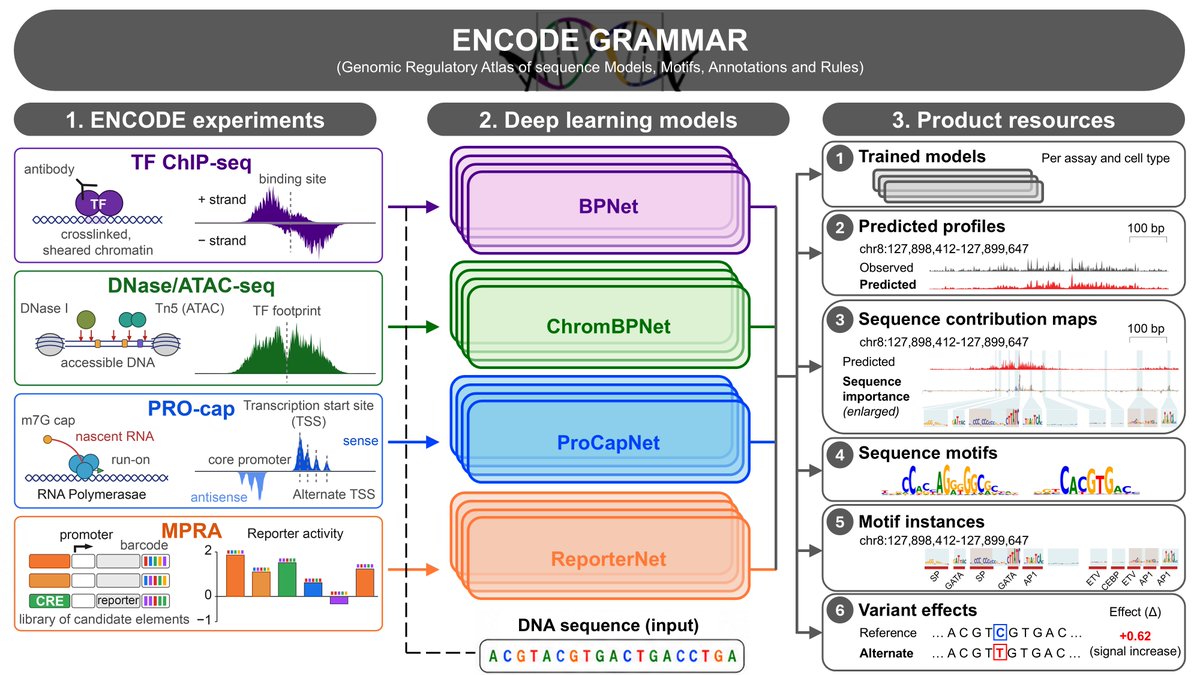
Very excited to announce ENCODE GRAMMAR (Genomic Regulatory Atlas of sequence Models, Motifs, Annotations & Rules): 3,865 experiment-specific deep learning model sets and sequence annotations for decoding human regulatory DNA. 1/
Excited to see our work now published https://t.co/oa2wneGAIX!
Lysosomal dysfunction has long been considered a hallmark of aging, but we still know remarkably little about what actually changes inside lysosomes as organisms grow old. Using rapid lysosome isolation and metabolomics, we built the first atlas of lysosomal aging across tissues.
How do lipids influence aging?
We find that membrane lipid composition impacts neural stem cell aging and 'rejuvenation'!
HUGE congratulations to @xiaoaizh on her paper just published at @ScienceAdvances!! 🤩🍾
And a big thank you to all our collaborators!
A thread 🧵...
I'm excited to announce that our study, Transcriptional regulation of disease-relevant microglial activation programs, has been published this morning in Neuron: https://t.co/uvEea95LV8. We discovered functional regulators of six microglia activation states!
New pre-print from us! We compare two iPSC-microglia protocols, and take a look at the cell autonomous and non-cell autonomous effects of MAPT mutation:
https://t.co/SDy6jUKFgd
TDP-43 subtypes shape transcriptomic signatures in Alzheimer's disease https://t.co/lyAxL7ZxXa
@PrudencioLab
Excited to share our new transcryptomics study in AD where we use quantiative measures of pathological pTDP-43 and pTau to discern changes resulting from each pathology.
We are excited to announce that Dr. Ana Maria Cuervo @AMCuervoLab will be our next ISMND webinar speaker!
Selective #autophagy: fighting #neurodegeneration one protein at a time
May 14, 2026
10-11am (ET)
Host: Dr. Hui Zheng
Registration: https://t.co/303q7lokpj